Before the Catskills: Gilboa’s Fossil Forest
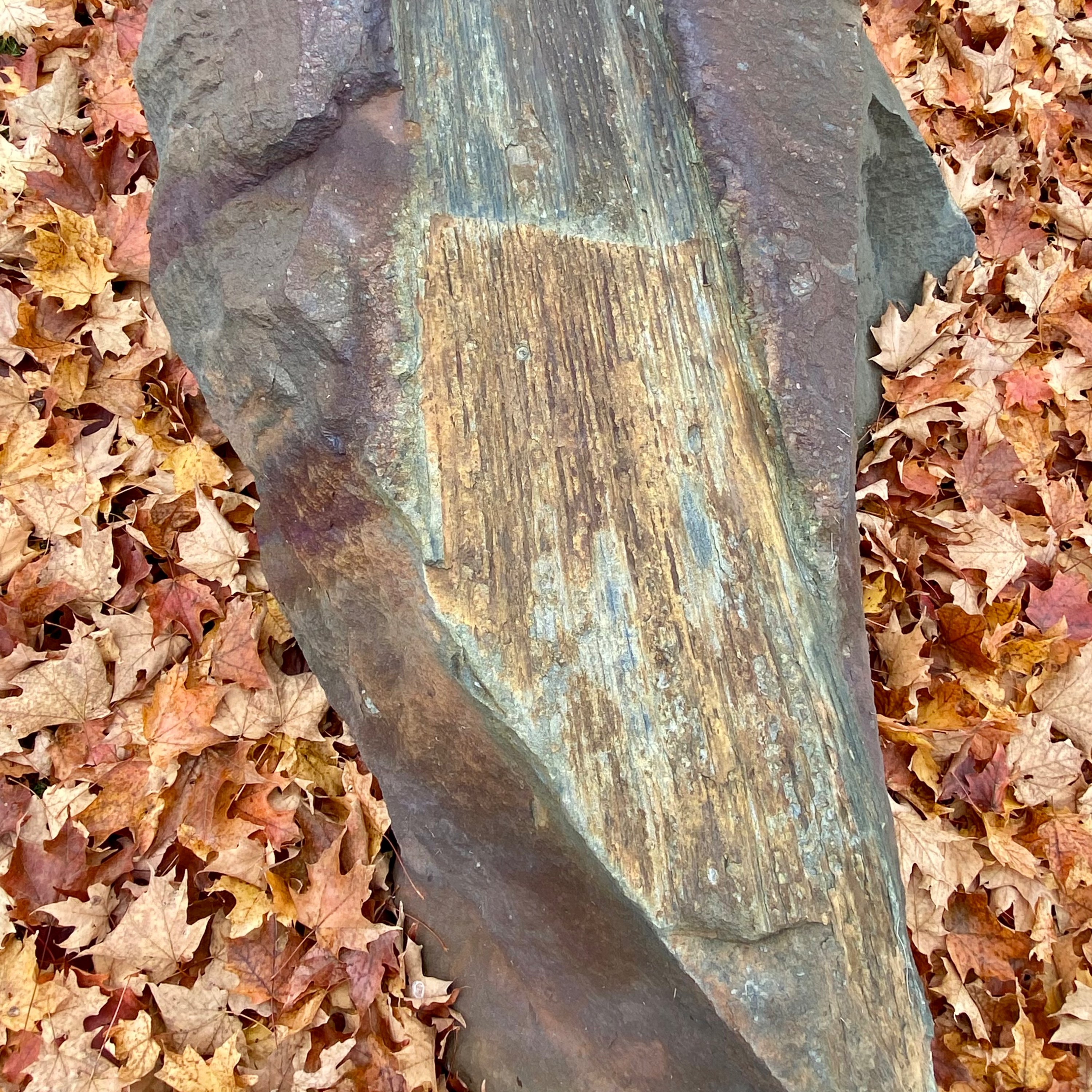


Did you know the Catskill region was once tropical—and south of the equator?! In this episode, Brett Barry visits the Gilboa Museum and Juried History Center to explore one of the oldest fossilized forests on Earth. Education Chair Kristen Wyckoff shares her decades-long passion for paleobotany, the story behind Gilboa’s world-famous Devonian tree stumps, and discoveries unearthed during the Schoharie Reservoir construction, dam restoration, and creek bed fossil hunts.
From lungfish and sea scorpions to the mysterious “snake tree,” we dig into the prehistoric past of upstate New York and learn how mud, minerals, and mural magic preserve a forest that predates the Catskills themselves.
🪨 Highlights
🌴 Gilboa’s tropical past—when the region was south of the equator
🦴 Fossil discoveries during Schoharie Reservoir construction
🎨 Kristen’s murals and museum exhibits
📚 A children’s book adventure through the Devonian
🐟 Sea creatures, spore trees, and sedimentary surprises
🏛️ How a generous hometown alum helped build a fossil-focused museum complex
🔗 Resources
Visit the museum: gilboafossils.org
Kristen Wyckoff’s children’s book: Dennis’s Devonian Adventure
Learn more: The Catskill Fossil Forest by Stein, Hernick, and Mannolini
📍 Broadcast Info
Kaatscast is now broadcasting a public radio edition! Saturdays at 11 AM on WJFF Radio Catskill (90.5 FM). Subscribe wherever you get your podcasts and follow us on Instagram @kaatscast.
Transcript by Jerome Kazlauskas
[00:00:00] Kristen Wyckoff: If you're a geologist, you've heard of Gilboa, New York. Not many around here maybe who realize, though, how world-famous we are.
[00:00:10] Brett Barry: Gilboa, New York, situated at the top edge of the Schoharie Reservoir, boasts one of the oldest forests in the world, like 380 million years old. The trees are gone, of course, but the fossils remain and depict a Catskill forest unlike anything we know today. Tropical fern-like trees inhabited the edge of land and sea at a time when the lungfish made its first forays onto land. This is such ancient history that the Catskills themselves weren't even here. This is before continental drift brought us to our current location in the Northern Hemisphere. Hundreds of millions of years ago, the Catskill region was south of the equator. In current-day Gilboa, Kristen Wyckoff serves as education chair of the Gilboa Museum and Juried History Center, and she's an avid fossil hunter whose impressive tree fossils comprise a permanent exhibit at the museum, and her enthusiasm for Gilboa's paleobotanical treasures is unmatched. I met up with Kristen at the museum and asked about how that passion first took root.
[00:01:27] Kristen Wyckoff: Okay, well, I've been interested in the fossils for many, many years ever since I moved to Gilboa about 40 years ago. Our museum is in its 20th year. Here, the Gilboa Historical Society wanted to have a museum, and the town hall had been hit by the 1996 flood, and they were building a new town hall and post office out of the flood zone, so we were able to remove this building and bring it up out of the watershed area where there are floods all the time, and most of the people wanted to represent the Village of Gilboa. Gilboa was the largest village in Schoharie County in 1850, and it was unfortunately sacrificed for the Gilboa Reservoir [Schoharie Reservoir] for New York City's watershed, so I asked him at that time, "Can I just have one wall?" I have a lot of fossils that I can put on a display, and I wanted to paint a mural of the Devonian forest, and so that's how I started getting involved. Now, I'm the education chair. I'm also the President of the Historical Society, and we were very fortunate to know a man named Nicholas Juried, who was a 1947 graduate of Gilboa School, and he came to this museum when it was just one room. We had everything crammed in here in one room, and he was just amazed at the twin focus that we had here, honoring the people of the Village of Gilboa and sharing with the world these world-famous fossils, so he wanted to do something for us, and the next year he came and said, "I want to build a history center," and he did, and it's beautiful, and then the following year he said, "I want to build a pavilion," and he did, and then last year he wanted to build a community room art gallery. We started it in the fall, and he passed away in January at the age of 95, and he was just such a generous, wonderful man, and we're going to miss him.
[00:03:23] Brett Barry: The museum complex that emerged thanks to Nicholas Juried's altruism now boasts a spacious promenade of fossils and murals painted, of course, by Kristen Wyckoff. Well before Kristen's own fossil journey began, the Reverend Samuel Lockwood was called to preach in Gilboa in 1852, and he was enamored by the region's rich fossil trove. In addition to his religious calling, Lockwood was an avid naturalist who would uncover the first of Gilboa's fossilized tree trunks. Seven decades later, major excavation for New York City's Schoharie Reservoir would reveal many more.
[00:04:05] Kristen Wyckoff: The fossils were discovered in the 1800s. Some of the people in the Village of Gilboa did know that these looked like fossil trees and were sent to paleontologists, but they really became world famous when they did the reservoir, and Gilboa was chosen because it was in a valley, a deep valley, and it had over 240 tributaries that flowed into this valley, and New York City knew that this was going to be a reservoir that was going to fill up quickly and was very much needed at the time. The water goes by a tunnel from here all the way to the Ashokan Reservoir, and from there, it actually goes under the Hudson River and down to New York City. I think a lot of people know this, but those that may not realize that it was quite an aqueduct system that was built in the early 1900s, so the paleontologist at the time was a woman, and her name was Winifred Goldring, and she is the one that really made these fossil tree stumps famous. They found over 40 tree stumps in this one quarry where they were building the dam, and she knew these fossil trees were something very rare, and they're found in very few places because you have to realize plant fossils. How do they become fossilized? You know, something really climatic happened here in the Devonian Period, and this is going back 380 million years, and she's the one that brought all these theories together and had a beautiful display at the New York State Museum all the way up until 1979, I think, when they built the new museum and that display. I had a mural, and I kind of copied that—I put a mural in the middle of the wall here with the stumps and fossils on either side and in front of it, and I also have a Devonian lungfish starting to crawl out of the water, and that's very symbolic of this time period. This is the first time period where plants and trees grew on the earth, and all the life at that time was in the water, except some minute insects and spider mites, types of things, so I'm painting this mural 20 years ago, and wouldn't you believe it, a group of New York State paleontology employees had found the whole entire tree with the crown attached in a quarry 10 miles from here. They found out it was a bottlebrush palm because we actually have pictures of this beautiful crown they discovered, and it was a 28-foot-long tree that fossilized horizontally, which was very rare. All the other ones were stumps that were rooted right where—in the quarry where they were, where their trunks broke off and floated off onto the Devonian sea. This was a real rarity, and they changed a lot of the theories about this—it's called "Eospermatopteris," the name of the tree.
[00:07:03] Brett Barry: The next breakthrough would come in the early 2000s when troubling signs of deterioration in the Gilboa Dam, now 80 years old, prompted a massive renovation.
[00:07:17] Kristen Wyckoff: New York City started renovating the Gilboa Dam. It was literally falling apart, and fortunately they did that right before Hurricane Irene, but they allowed a group of paleontologists to go back into this riverside quarry where the original 40 stumps were discovered, and it allowed them to map it out. They found 35 more stumps at that time in 2010, and they made more discoveries. They discovered several new tree species that had never been found that old before, and one of them's nicknamed "the snake tree." It's Tetraxylopteris, and so there was a lot of new information that was being picked up at that site. In fact, one of them was all the stumps they discovered where the inner core was, where we thought that was the actual tree stump, and that's how I painted the first original mural, looking right at the fossils, thinking that this is what they looked like right on down to the ground, but they discovered that they all had these root skirts. They were surrounded by roots. The bases, or the stumps, were found. There's huge root mounds all the way around each base, so that's when they were like, "Well, bingo!" These trees had, like, protection around their bases. They had this root skirt that gave them stability. A lot of storms came and dumped all this debris on them, and that's how come they became fossilized, so this was really exciting, so that following year, I think it was 2011/12, I had to repaint the Devonian forest in all the new theories of what it looked like, and so it's been—it's been so much fun being a part of this museum for the last 20 years. Just so many things have been discovered, and you never know when you go fossil hunting down here in the Schoharie Creek what you're going to find.
[00:08:57] Brett Barry: So let's roll way back to the Devonian Period. What does that mean? That was a geological time period stretching back from about 419.2 million years ago to 358.9 million years ago. What was so special about that period?
[00:09:18] Kristen Wyckoff: Well, it is a very special period because it's the first time that plants and trees grew on the earth, so it changed. Oh my gosh, the oxygen level and the CO₂ level—for the first time you're creating—the trees are absorbing some of the CO₂ and giving an awful lot of oxygen, and these tree fossils that were discovered, they've dated around 380 million, so they're right in that time period of the Devonian Period, and it, the Devonian Period, is called "the age of the fish." The eurypterid is our state fossil.
[00:09:50] Brett Barry: Yes, New York has a state fossil, and it's a sea scorpion.
[00:09:55] Kristen Wyckoff: We have a little tiny one here in our museum. It's only about 3 inches long, but in Syracuse, New York, they actually found one that's 8 feet long, so it was—it was quite a monster in the water, and you have to remember, we were underwater all the way from Gilboa all the way out to Ohio in the Devonian sea, so the western part of New York State was underwater, and that's why we have—we just have a lot of fossils in New York State: crustaceans, trilobites, eurypterids, as I said, cephalopods, squid-like things, and right up until the Devonian sea, the edge of the Devonian sea where we are in Gilboa, we're on like a delta kind of where we have both. We have the underwater creatures, and we have these plant fossils. You can kind of understand how a crustacean, like a trilobite or a seashell, could become fossilized, but try figuring out how a twig or a little fern leaf or something became fossilized—it's really something dramatic.
[00:10:52] Brett Barry: How does that happen? How does something as delicate as a leaf get fossilized?
[00:10:58] Kristen Wyckoff: They were dumped on.
[00:11:00] Brett Barry: Dumped on by...
[00:11:01] Kristen Wyckoff: Sediment in these storms, these mountains that just constantly were sending freshets of fresh water down to the Devonian sea, which was salt water, so it was kind of an in-between type of scenario, but always creating mud and dirt and suffocating the life. Then, as the tree decomposed, it was replaced with minerals, and that's basically how they were formed, and the same with a twig or a tiny branch, you know, they were totally dumped on and were able to become a fossil.
[00:11:42] Brett Barry: So the Catskills in this period were very different climate-wise. It was tropical, and I think what most people don't realize is that the Catskills weren't here. We drifted, so we were equatorial, right? Tell me about what the Catskills were and where they were in this period of time.
[00:12:06] Kristen Wyckoff: Well, you're very right. We were below the equator, and we were connected with Europe and North and South America altogether, kind of like one big giant continent, and the Eospermatopteris was probably the most common tree up and down the entire continent because they have actually found, you know, evidence of it in England and down in Venezuela, you know, so the environment was tropical, definitely.
[00:12:34] Brett Barry: What kind of tree was this? Is it? I'm looking at your paintings, and they look large, but the canopy looks different. The bark looks different. It looks like they're spores rather than seeds, so was it related to ferns more than it was to trees?
[00:12:48] Kristen Wyckoff: Yes, we have descendants today like club moss. That's one tree I haven't mentioned that they discovered. The oldest lycopod, it's called, and you could see pockmarks where there were leaves, and if you've ever seen club moss, it's like identical. Only giant, like a tree, and Eospermatopteris is like a bottlebrush palm, and I think many of your palms in South America would look a lot like this tree. Then, the snake tree is the really unusual one. It grew along the ground, and it is a true woody plant too, more so than Eospermatopteris. It's just very unusual that they found it embedded in the bedrock in this one quarry by New York City. When they were allowed in there to map it out, they found this 6-inch-wide trail with, like, little roots off of it, and it was attached to a crown, which was even more amazing, and yes, these are all reproduced by spores. Seeds and flowers had not evolved yet.
[00:13:52] Brett Barry: And so this area of the Catskills just happened to be south of the equator: a warm climate. Everything was ripe for these trees to establish themselves. Afforestation, the opposite of deforestation, is a forest coming out of nothing, or not nothing, but something totally different, and the conditions were ripe to not only host these trees but to preserve them in some way for us to discover hundreds of millions of years later.
[00:14:22] Kristen Wyckoff: Yes.
[00:14:23] Brett Barry: Is most of the fossil forest where the reservoir is now?
[00:14:27] Kristen Wyckoff: Yes, the most fossils they've ever found are pretty much right there by the reservoir and the dam. The quarry still exists, but New York City has covered it back up. They really don't want people going in there, I don't believe, but the one crown that was found, which was like this whole tree that was discovered, was discovered 10 miles from here on top of a mountain, which blew my mind because all the stumps have been found pretty much around 1,100-1,200 feet elevation. This tree was discovered at 2,200 feet elevation, and I was like, "Wow, how do they know this is Eospermatopteris?" And I had to—really, they invited me up to the New York State Museum to see it, where they had literally pieced the trunk together like a puzzle. It was so thin, and there's a very distinct spot on these stumps where the roots attach, and this went all the way down to the roots, and it was very visible, and, of course, they have a lot more reasons why they know the Eospermatopteris.
[00:15:29] Brett Barry: Gilboa has a claim to fame with this fossil forest. It's one of the oldest in the world. It was considered the oldest-oldest until recently, when they discovered another one very nearby, so still in the Catskills region. Can you tell me about that one, and how interesting that the oldest forest fossils in the world are right here in the Catskills? How is that even possible?
[00:15:52] Kristen Wyckoff: Yes, it's another exciting discovery. It's this quarry in Cairo, New York, which is near Catskill. It's about 40 minutes from here, from Gilboa, and there they find roots all over this quarry, and there are roots of Eospermatopteris, the Gilboa tree. There are roots of other types of trees, which is very interesting. This is what's so significant. They found gigantic roots of Archaeopteris, which is a more modern tree. It's never been found this old before, and here it is living next to Eospermatopteris, and the whole quarry is being mapped out as we speak, and there are field trips that go there from the New York State Museum. You can't go there without a tour guide, so it's being protected, but yes, they've discovered it's 2 to 3 million years older than the Gilboa Forest, so now we've—we were called among the oldest tree forests in the world, but it is very interesting that it's all found right here in Upstate New York.
[00:17:00] Brett Barry: And 2 million years in geological time is nothing, so you're still way up there in terms of prestige?
[00:17:08] Kristen Wyckoff: Yes, and I do have a nice little display here for the Cairo Forest, and I did a small painting depicting what it might've looked like, and it too was next to a body of water. You know, water would flow over, and then it would dry up and back and forth, and so it's quite a big area. We have a great book here at the museum that is the most recent book on all these findings, and it's "The Catskill Fossil Forest Book" by Dr. Bill Stein, Linda Hernick, and Frank Mannolini, the three main people in our country that study these trees.
[00:17:45] Brett Barry: And if that book is just a bit over your head, I understand that you came out with the children's book. Can you tell me about that?
[00:17:52] Kristen Wyckoff: Yes, I just came out with my first children's book. I've been working on it for 10 years. I wrote the story over 10 years ago, and I illustrated all the illustrations in it. It's called "Dennis's Devonian Adventure," and it's about a boy and his father, and they go fishing on the Gilboa Reservoir, or it's actually called the Schoharie Reservoir, and the father explains all about the village and a little bit about the trees, and all of a sudden, Dennis catches a prehistoric armored fish, and the fish takes him back to the Devonian Period, and the fish actually teaches him all about these discoveries and what the trees look like. He brings them in the water and shows them all the underwater creatures and gets chased by a eurypterid, and I'm not going to tell you what happens at the end, but I do highlight quite a bit of the museum at the end of the book, and a couple of my paintings are here. One that everyone loves is where all the people are gone, and it's a very symbolic painting of the Village of Gilboa underwater with the dam, and there's faces in the cloud, and it's just of all the people that lived here in Gilboa.
[00:19:03] Brett Barry: If it weren't for that big reservoir project and all that construction and excavation, would we know less about this fossil forest?
[00:19:14] Kristen Wyckoff: Definitely. In fact, at my ending—of every tour, usually—I say the positive things that come out of something like this is the Gilboa fossils. Number one, they would've had discoveries of some, but nothing of this magnitude—would they have found 40 stumps in one quarry if it hadn't been for the dam? And then also we live in a very pristine environment now.
[00:19:37] Brett Barry: When is the museum open? What are your seasons?
[00:19:39] Kristen Wyckoff: Okay, we are open every weekend from Memorial weekend till Columbus Day weekend, Saturdays and Sundays 12:00 to 4:00, but now that we have this gallery, we're actually going to extend our season this year. We're starting a month-long show of small works. It opens the day we have our holiday boutique, which is November 16th. It's a Sunday. The art show will open that day, and we're hoping everybody's going to do small works of art that are more affordable for Christmas, possibly. We've got a really great group of, like, 20 local artists that's very talented, people that have been supporting us all summer, and we think they'll continue, so every Saturday from November 16th to December 13th, which is a Saturday, that's our holiday bottle auction fundraising. People bring a wrapped bottle on that day, and you auction them off, and you can't open your bottle until the end of the program. It's kind of fun. That's our main fundraising event before Christmas, and then it gets just too difficult in January. For March, it's just—we really slow down because you never could deal with how much snow you're going to get and plowing and all that.
[00:20:52] Brett Barry: How can people find out more and stay in touch with this museum?
[00:20:57] Kristen Wyckoff: The best way is gilboafossils.org, our website, which has all the events that we have every year. It has an online gift shop too, which my book is in [the children's book is on—in it], in "The Catskill Fossil Forest Book," which I highly recommend for anybody that's interested in this. If you become a member, you get our email blast every week, which is great because it reminds you to let you know what we're doing next weekend or whether we have a new art show, or you can just contact... I'm the contact on gilboafossils.org. I'm the email, and I'm also the cell phone that you can call and get. Give me your email, and I'll make sure that you're on our contact list.
[00:21:39] Brett Barry: As we were wrapping up our conversation, I was still taken by Kristen's enthusiasm for the fossil forest and her personal investment of rocks and time in the museum's impressive exhibit, so I asked her, "How did you get into fossils? Where did that original interest come from?"
[00:21:59] Kristen Wyckoff: Okay, my dad was the earth science teacher in Middleburgh Central School, and my mom was an artist, and I kind of—we did things like fossil hunting on weekends. We went cave exploring. We went camping. We did so many things growing up, and so when I married my husband and he was from Gilboa, we moved to Gilboa. At first, I didn't know anything about this Devonian forest that much, and so I was going to paint a mural in my living room, and I wanted to do everything green, and my husband said, "Well, what do you think about the Devonian forest?" You know, we're known for that here, and I was like, "Oh my gosh, that's perfect." That was my first mural I did, and then a friend showed up at our house who'd heard about it, and he was a fossil collector, and he shared with us where you find these fossil stumps and said that they were under the reservoir and you'll never find one, but that's not true. Many of them are along the streams all around here, all different kinds of plant fossils, and then my husband and I, we got the bug—just go on weekends whenever you can, and when it gets really dry like now when the streams are very low, you have a lot of fun.
[00:23:09] Brett Barry: And you and your husband would dig for a living, right? So you were in another business, that of excavation, in a way?
[00:23:17] Kristen Wyckoff: Yes, we were a well-drilling company, AquaTech Water Services, and oh, my husband—he just found so many unique things all over the whole north [Upstate New York]. I mean, we traveled all over, down to New Paltz and across the river, Northern Schoharie, Montgomery County, you name it, we've been all over, and so he just loved picking up things—he even would, like, in Woodstock, one time I think he was down like 300 feet in a—a fossil came up. It was always exciting.
[00:23:47] Brett Barry: And you have to be a fossil hunter or have an eye for that, or you don't know what it is.
[00:23:51] Kristen Wyckoff: Exactly, you really get an eye after we've been, you know, finding these for over 40 years now, so I have a pretty good eye [once people bring me fossils a lot], want me to identify things, but if I can't, I've got a great support group. I've got Dr. Bill Stein from the Binghamton area, who is the plant fossil expert mostly, and then Dr. Chuck Ver Straeten, the state geologist at the New York State Museum, often helps me, but it is hard to take pictures, and sometimes they just have to bring them here or go to the New York State Museum.
[00:24:26] Brett Barry: Kristen took me outside to view even more fossils, many of them too large for the indoor exhibit, and she showed me a recent acquisition courtesy of another family member who works with rocks.
[00:24:38] Kristen Wyckoff: I got a call from my brother-in-law, Harry Wyckoff, who's a rock crusher, and he took a picture and sent it to me and said, "Should I crush this rock?" And I was like, "Whoa, definitely not," and then he dropped it off. It was from Southside Oneonta, a beautiful fossil crown, and it has the actual vine tree of Eospermatopteris, the snake tree, and it has—this is what's amazing—these croziers, they're called, and they're fertile sporangia. You could see the branching on both of these rocks and see how it's got that rusty brown color.
[00:25:17] Brett Barry: That's gorgeous. So this rock is shaped like a shark's tooth, but it's huge. It's probably about 6 feet wide and has this beautiful pattern of fossils throughout the whole face of it.
[00:25:31] Kristen Wyckoff: Yeah, I would say this is the crown part of the snake tree, all these different twigs and branches. It was—it was a very twiggy crown. They really don't think they were leaves. They think they were like twigs.
[00:25:44] Brett Barry: This looks heavy.
[00:25:46] Kristen Wyckoff: Yeah, very heavy. We had to have it moved a few times too because we built this addition, so it's always fun moving these things. I got a couple more over here that are really nice.
[00:25:59] Brett Barry: Kristen kept the tour going, pointing out fossilized tree trunks, plants, and sea creatures that inhabited this corner of the earth some 380 million years ago. You can see some of them on the Gilboa Museum website, gilboafossils.org, and then plan your own visit to the museum for a firsthand experience. Kaatscast: The Catskills Podcast is a production of Silver Hollow Audio. Transcripts by Jerome Kazlauskas, announcements by Campbell Brown, and I'm Brett Barry, host and producer. Kaatscast is now broadcasting from WJFF Radio Catskill Saturdays at 11:00 AM. Tune in at 90.5 FM or on wjffradio.org for our hour-long broadcast featuring updated and expanded stories plus brand-new material, and, of course, you can visit us anytime at kaatscast.com and wherever you get your podcasts. Please subscribe, rate, and review to help other listeners discover the show, and you can follow us on Instagram [@kaatscast].
[00:27:09] Campbell Brown: Kaatscast is sponsored by The Mountain Eagle, covering Delaware, Greene, and Schoharie counties, including brands for local regions like The Windham Weekly, Schoharie News, and The Catskills Chronicle. For more information, call (518) 763-6854 or email mountaineaglenews@gmail.com.


