Songs from the Woods: Steve Koester of Two Dark Birds
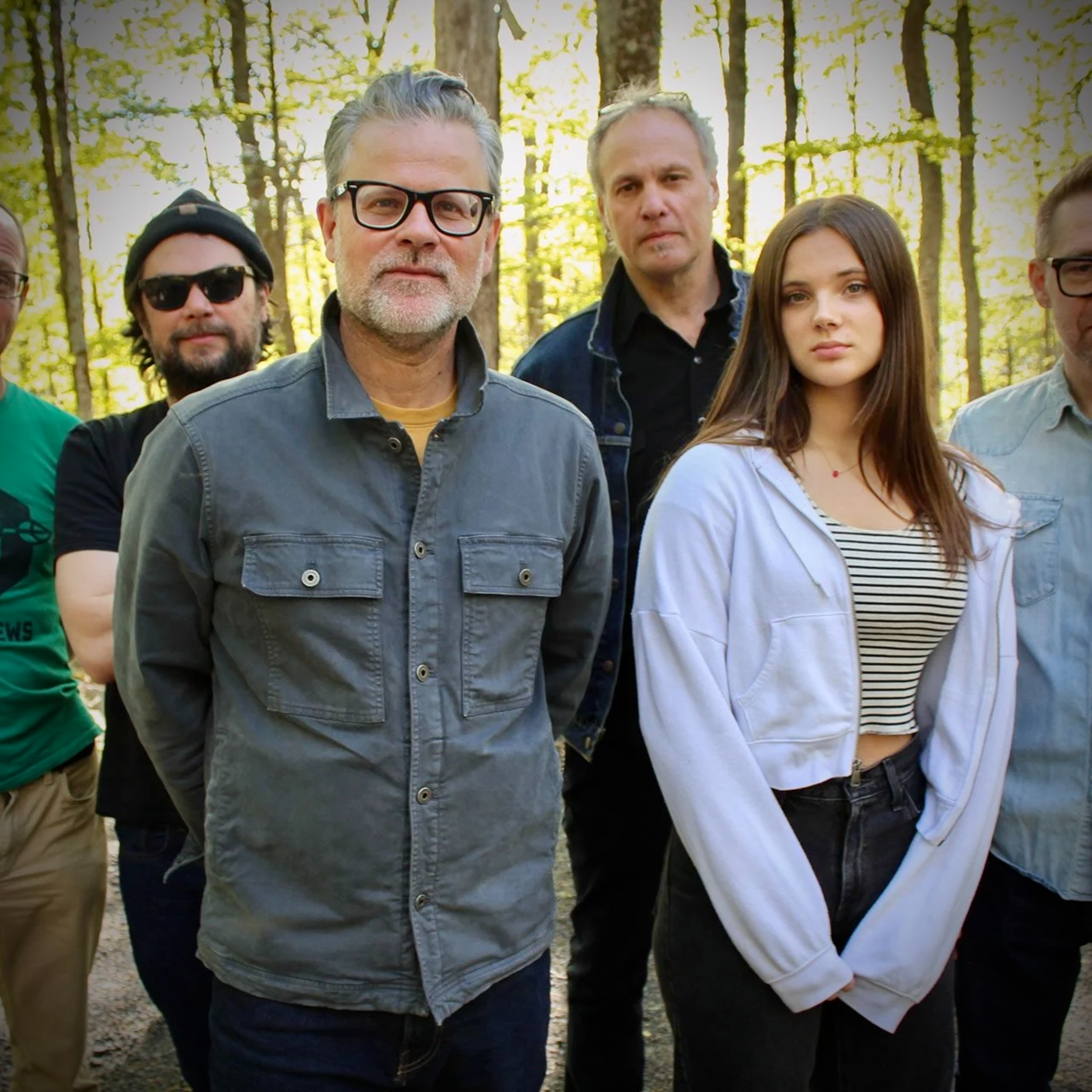




Singer‑songwriter Steve Koester, the creative force behind Two Dark Birds, joins Brett in the Kaatscast studio for a deep, generous conversation about songwriting, place, and the long arc of making music in the Catskills. With the band’s fifth studio album, Dreamers of the Golden Dream, Vol. 1, arriving February 27, Steve reflects on the evolution of his sound—from full‑band records to quiet, introspective work and back again—and how living in the mountains continues to shape his writing.
Steve shares the origin story of Two Dark Birds, the move from New York City to the Catskills, the band’s shifting lineup, and the role of analog recording in a digital world. He talks about the emotional terrain behind songs like “Born to Fall,” “Good Boy Good,” and “Kid, I’m Fried,” and performs several tracks live in the studio.
The conversation also explores the realities of releasing music in 2026, the joys and limits of streaming platforms, the resurgence of vinyl, and the creation of Steve’s independent label, Vfib Records.
Music Featured
“Born to Fall” — live in studio
“Good Boy Good” — from Dreamers of the Golden Dream, Vol. 1
“Kid, I’m Fried” — live in studio
“Girl of Summer” — album track (closing)
Links & Resources
Two Dark Birds — https://twodarkbirds.com
Vfib Recordings — https://www.vfibrecordings.com
The Woods Studio (Todd Adelman) — https://thewoods.studio
Bearsville Theater — https://bearsvilletheater.com
Photo credit: Sam Erickson
[00:00:00] Steve Koester: I spend [sometimes] years writing a song and months putting together a song, and then the videos are put together much more quickly and with less thought, and so it's like you just want to make sure, like, this lives up to the song enough. Alright, great.
[00:00:20] Brett Barry: Steve Koester is the lead of the band Two Dark Birds, which is releasing its fifth studio album, "Dreamers of the Golden Dream." Their music has been called "poet grade" and "quietly experimental," a kind of backwoods witchery brimming with pastoral energy and light. Steve joined me in the Kaatscast Studios to talk about Two Dark Birds, their latest album, and what goes into writing, recording, and distributing music in a neo-analog world. I'm Brett Barry, and this is "Kaatscast: The Catskills Podcast." Hello, Steve Koester, welcome to the show.
[00:01:02] Steve Koester: Hi, hi!
[00:01:03] Brett Barry: If there's any journalistic disclosure to be had here, it's that I've long been a fan of Two Dark Birds and of you, Steve, so... but I won't let that cloud the hardball questions that are coming up, alright?
[00:01:15] Steve Koester: Alright.
[00:01:16] Brett Barry: So you are releasing your fifth studio album, "Two Dark Birds: Dreamers of the Golden Dream (Vol. 1)"—release date of February 27th?
[00:01:25] Steve Koester: That is correct at the end of the month here.
[00:01:28] Brett Barry: Let's rewind a little bit, and could you tell me what is the origin story of Two Dark Birds?
[00:01:34] Steve Koester: So Two Dark Birds formed it back in 2008, when I just moved to the Catskills from New York City. I have had a couple bands in the city, and those had sort of run their course, and I was living up here and playing with some people from the city still and people up here, and I just sort of had a new feeling for, you know, something that was sort of more rooted in this area, and I feel like a lot of the Two Dark Birds sound grew out of living up here and living, you know, living in the woods, but also the, you know, the sort of music that runs, you know, historically through this area. We just started a family, a kind of new life, and a new band—that's where we started.
[00:02:22] Brett Barry: Where'd the name come from?
[00:02:24] Steve Koester: Two Dark Birds was a song that I had written after 9/11, and it was sort of framed in a particular way. The song didn't survive, but I liked the band name, and I don't like to be too specific about it because then band names are weird, and they all—and in some ways they all kind of suck, you know, and it's like, and they're only important until you hear the music. You know, they're like, "You're like, 'Oh, that name,'" and then you hear the music, and you associate the two, so I like, I try to just like, keep it sort of an open, open page.
[00:02:58] Brett Barry: Yeah, interesting that it was a song that was never meant to be, though.
[00:03:01] Steve Koester: Yeah, yeah, it was like the song didn't make it, but the title did.
[00:03:05] Brett Barry: So let's rewind even further. What's your story? Where do you come from, and how did you eventually make your way to the Catskills?
[00:03:12] Steve Koester: So I grew up in Milwaukee, Wisconsin. I ended up in Minneapolis after I'd gone to college with a punk rock band, and we were there for five years, and then we all got in a van and drove to New York City, and I lived in New York City for quite some time making music and loved New York City deeply. I lived in the Lower East Side and Brooklyn, and I loved the music scene there, and at a certain point I realized I was spending the bulk of my off time in Fort Greene Park looking at trees, and if your favorite part of New York City is, like, looking at trees in a park, you're definitely living in the wrong place, and I had a friend who lived out in Roxbury, and so we were somewhat familiar with the area, and we hightailed out here.
[00:04:05] Brett Barry: So you've been a full-timer here since when?
[00:04:08] Steve Koester: 2007, so we're all—and we're almost at the 20-year mark.
[00:04:12] Brett Barry: So you've, you have as of this month, released five albums: 2008 self-titled, 2011 "Songs for the New," and 2017 "Bow."
[00:04:24] Steve Koester: Yep.
[00:04:24] Brett Barry: And a 2020 reservoir, which was actually also the soundtrack to an audiobook of "Nina Shengold's Reservoir Year: A Walker's Book of Days," which was produced right here at Silver Hollow Audio, so there's a nice connection there, and that was mostly instrumental.
[00:04:39] Steve Koester: Yeah, yep.
[00:04:40] Brett Barry: Can you describe the evolution of those albums?
[00:04:43] Steve Koester: Yeah, the first two records were full band records. You know, the first record, the self-titled one, is very much a band in the studio. There's a lot of instrumental interplay. We're done pretty much live. The second one, "Songs for the New," has a lot more string arrangements. It's sort of like a really, really broad palette, and then the third one, Jason Mills, who's the drummer for Two Dark Birds, had some pretty serious medical issues for a couple of years, and really we weren't able to do the band thing, and so the third record, "Bow," it was him doing that, and I also got very involved with the Zen Mountain Monastery, and things got very quiet and small, and so I made that record's, like, it's really a lot of just me and guitar. It was like light arrangements made it with Chris Maxwell over in Woodstock, and then "Reservoir" was really acoustic and had no words, which felt like it was sort of like the end of this arc, you know, that it started with these bigger band records and then slowly got quieter and quieter until there were no words left, and then sort of in the last five years, I started writing a lot of songs with, like, lots of words again, which has always been a bit of my forte, like, the sort of lyrical element. Some of them are more topical, you know, sort of more living in this world, and they felt like they were songs with a different sort of energy, and so this new record has, you know, has the full band performing live and in some ways echoes the earlier records, but, you know, having been through that arc, it sits differently, I think.
[00:06:32] Brett Barry: It has different graphical energy too. It has big, you know, big bold words and different photography involved, and also some music videos. Is that a first?
[00:06:43] Steve Koester: We've made some music videos in the past. We made one for "Black Blessed Night" and another one for a song from "Bow" that were both very Catskillian in nature and, you know, sort of vibey, woodsy kinds of things. With the new music, it seemed like it needed a new visual world. I started playing with this, like, sort of like bold yellow font and big words, and it just seemed to sort of, sort of fit the music, or I hope it fits the music. It's like you can never—you can never quite tell, but it did. It feels like a little break from the previous visual world that we lived in. A friend of mine who's a graphic designer was like giving me hell because the font we use is Arial, which is like, and I did it kind of purposely. It's like, you know, the most generic font of all time, but yeah, for graphic designers out there, you can bag on us.
[00:07:39] Brett Barry: Yeah, well, there's a reason that it's used for a lot, the same for Helvetica, which has a whole documentary about it, which is fascinating.
[00:07:45] Steve Koester: Yeah, yeah, Arial's like, you know, it's sort of like the poor man's Helvetica.
[00:07:49] Brett Barry: But they cost the same.
[00:07:50] Steve Koester: Right.
[00:07:53] Brett Barry: Well, how about you play a song for us? You've got a guitar there on your lap, and let's put it to use.
[00:08:00] Steve Koester: Yeah, okay, this song is Born to Fall. It's on the new record.
[00:08:06] [Song]:
(Born to Fall)
Caroline’s out on the left coast
Don’t you know she has the very most
Beatrice has less, stuck in the upper middle west
She’s turning slowly into a ghost
And me, I’m up here in these mountains
I lean my face into the May day breeze
I’m taking stock at last, collecting up the facts
I’m counting all of the trees
It’s true I never caught that big break
But Bea, she never caught a break at all
Some are born to wealth and grace
Some are born to document this place
And some are just born to fall
Beatrice was was such a sweet kid
But she never could find a solid friend
She’d offer them almost anything
And they’d leave her weeping in the corner of the gym
For Caroline, it came so easy
She had them calling on the rotary
Twist that slinky cord around her little pinky, lord
she had boys all wrapped around her knees
Now Bea is three days deep in it
At a house that’s no one’s home
The curtains tight
The coming of the light
All you ever wanted was to never be alone
Beatrice calls up sister Caroline
Who’s at the beach house with her girls
She says, I know that this ain’t right
It’s the middle of the night
But I just had to see
If I was still tethered to this world
And me I’m still up here in these mountains
Where the aster rides the August wind
I’m putting down some stakes
Dreaming that I’m faking fate
I’m counting up all of our sins
[00:13:14] Brett Barry: Steve Koester with Two Dark Birds, and Beatrice, who I just feel like I want to invite to dinner and give a big hug to because it seems like she's had a tough time.
[00:13:25] Steve Koester: Yes, very true, yeah.
[00:13:26] Brett Barry: Are there real people behind your characters?
[00:13:29] Steve Koester: Yeah, often I'm sort of writing outward from my life, and sometimes they're tangentially related to my life, and sometimes they're more closely related, and, you know, this definitely grows up out of—it grows out of the family I grew up in.
[00:13:45] Brett Barry: And, you know, what is your process in terms of lyrics and music, and how does it all come together? What comes first?
[00:13:54] Steve Koester: Usually, for me, the lyric.
[00:13:55] Brett Barry: Mm-hmm.
[00:13:56] Steve Koester: You know, I just—I am constantly writing songs or poems or ideas down, and then I'll, then I'll, with the guitar, sometimes with the piano or sometimes other sources, people send me something, you know, I'll have a musical idea, and then I'm like, "Oh, can I marry this musical idea to these lyrics?" And sometimes it's some—sometimes it's kind of like auditioning the lyric to the music. It's like, "Does that sit with that? Does that sit with that?" Yeah, and then, you know, once in a while, I, you know, I sort of get, like, a song that will show up whole cloth, like words and lyrics, but that's less common.
[00:14:38] Brett Barry: Are you building toward an album when you write, or do you have lots of songs and are then able to pick what seems to fit together?
[00:14:47] Steve Koester: Yeah, and this—the latter, you know, I write a lot of songs. At a certain point, like, I can see a grouping, and I'm like, "Oh, this is kind of an album."
[00:14:57] Brett Barry: Mm-hmm.
[00:14:57] Steve Koester: Like with "Dreamers," it was—I had sort of written all these songs that were, some of them were personal, and some of them were more topical, and they sort of seemed to group together in this place, and, you know, this is like—this is "Dreamers (Vol. 1)," and there's going to be a volume two, so there ended up being a lot of songs, and so these ones seem to sort of fit together, but there's a lot of leeway when you write songs. It's not like writing a, you know, a book. You know, it's like, as long as there's some sort of, like, emotional cohesion between them. You know, it seems to work.
[00:15:38] Brett Barry: This album was recorded here in the Catskills [as I guess most of your albums are] ever since Two Dark Birds began. Tell me about where this one was recorded.
[00:15:51] Steve Koester: The album was recorded at The Woods Studio [Todd Adelman's studio]. He built it several years ago and built a just a beautiful studio in The Woods there. That's sort of aimed towards analog recording, you know, sort of old-school equipment, beautiful microphones, tape machines, beautiful old analog board, and so Todd was the producer, and we, Jason Mills, Josh Roy Brown, Tyler Wood, Mark Lerner, my daughter Iris, and I went in the studio and recorded pretty much live, you know, mostly it's a band in a room.
[00:16:34] Brett Barry: How long did that take?
[00:16:36] Steve Koester: Like so many records, like the sort of the basics for it were recorded over, you know, a four- or five-day period, and then finishing it took months and months, you know, sort of just tying up the ends and doing mixes and...
[00:16:50] Brett Barry: And all the mixing and rerecording happened at the same studio with—was that just basically you and Todd together?
[00:16:56] Steve Koester: Yeah, well, and, you know, sort of bringing in, you know, bringing in various band members for overdubs. We did a little bit. You know, there—everybody has a studio in their house. All musicians have studios at this point, and so we did a little bit of, like, you know, you get a song and you're like, "Oh, this sounds cool," but it'd be cool to have, like, you know, a little synth part or whatever, and, you know, everybody sort of like returns to their little home studio and tweaks it, and I did some, like, some songs I'd sung in the studio. I'm like, "I don't like that," and I sung them at home, and they seemed to sit better. We did a bunch of keyboard overdubs with Tyler Wood, who's not only a great keyboard player but, like, a really good producer, and we did a bunch of stuff at his place too.
[00:17:39] Brett Barry: So you mentioned your other bandmates, and I'm familiar with a few of them. How about we play a song with the full group?
[00:17:49] Steve Koester: Right on.
[00:17:51] Brett Barry: So let's go ahead and play...
[00:17:53] Everyone: Good Boy Good.
[00:17:53] Steve Koester: Yeah.
[00:17:54] Brett Barry: Yeah, Good Boy Good, which has a companion music video we can talk about as well.
[00:18:30] [Song]:
(Good Boy Good)
You were raised to never complain
Zip that lip, show no pain
You were raised to swallow the shame
Keep it tight, the secret strange
All they ever wanted was
A good boy good boy
Good good boy
Good boy good
So all you ever gave them was
A good boy good boy
Good good boy
Good boy good
Cords slacks chafe, big wheel dawns
GI Joes rage, suburban lawns
And later yet at the wooden desk
Fill those ovals neat, the leaden test
I want to smash
Everything in my path
I want to smash everything
You all grown up, you a steady man
Work that steady job, play the steady hand
Earn that steady pay each and every day
Steady now boy, swallow that strange
[00:19:58] Brett Barry: That's a clip from Good Boy Good off the new Two Dark Birds album, "Dreamers of the Golden Dream (Vol. 1)," and that's one of the songs off the new album, which has a companion video.
[00:20:11] Steve Koester: Yes, there's...
[00:20:11] Brett Barry: So there you must have thought there was something really special about that one to give that extra production value.
[00:20:17] Steve Koester: Well, it's—it was the first single off the record, and, you know, in the age of social media having a little visual to it is helpful.
[00:20:27] Brett Barry: Yeah, that's the thing, right? Social media and music or any kind of audio aren't... don't have a natural match. There's such a huge video component, and everything has to have video, so even if it's a still frame.
[00:20:39] Steve Koester: Yeah.
[00:20:40] Brett Barry: Sometimes it's the only way to get audio out there to that world.
[00:20:43] Steve Koester: Yeah, and in terms of traction and sort of like tricking the algo, it's like you need a little visual, and so that's, you know, and we'd done some videos in the past, you know, this was more of a lyric video [we're working from] already created video footage and sort of building off that, and so, yeah, I hope it, you know, it's funny because it's like I spend [sometimes] years writing a song and months putting together a song, and then the videos are put together much more quickly and with less thought, and so it's like you just want to make sure, like, does this live up to the song enough? Alright, great, get it out there.
[00:21:24] Brett Barry: So that footage existed. You didn't shoot that?
[00:21:26] Steve Koester: Yeah, yeah, yeah, yeah, I use video editing software that has, like, a whole giant library.
[00:21:34] Brett Barry: Oh, wow!
[00:21:35] Steve Koester: Yeah.
[00:21:35] Brett Barry: So mix and match until it...
[00:21:36] Steve Koester: Mix and match, and it's—I've worked with it a little bit before, and recently I've done—we did a couple videos for this album, and I was like, "Oh, you know, there's some cool stuff in there," and I think it's like, if you can get it to sort of speak artistically, hopefully we accomplish that, you know.
[00:21:55] Brett Barry: So I'll scratch out the next question: who's the boy in the video you don't know?
[00:21:58] Steve Koester: He's a guy. He's real actually. I will say he's an actual human being.
[00:22:03] Brett Barry: Yeah, that's good. You never know these days. What else can you tell me about that song?
[00:22:08] Steve Koester: It's Good Boy Good. You know, there's a million rock songs sort of written for the bad boy, you know, like a sort of classic thing, and this was a song that I felt was like a sort of a shout-out to people who toe the line. I grew up in a pretty conservative suburb in the Midwest in a fairly conservative time, and where—those sort of like confine, you know, there's sort of like a claustrophobicness to it. You know, in many ways, I got out of there, and I'm—I would say that, like, on the good boy/bad boy scale, I'm sort of like somewhere in between. I've definitely had a foot in each camp, but this song was sort of about people—guys mostly—this sort of idea of masculinity and toeing the line and, you know, sort of like the trappings of that and sort of where it leads to this sort of like anger.
[00:23:11] Brett Barry: Was that the full band we were hearing there?
[00:23:12] Steve Koester: That's the full band, Mark Lerner on bass and Jason Mills on drums.
[00:23:16] Brett Barry: Do you write those parts?
[00:23:17] Steve Koester: I do not, so I mean, that's kind of how it works. You know, that song's a great example. We have a We have a song. I bring it in to the guys, we kick it around, you know, they come up with their parts... I like to work with musicians who are really good, and I work with them because I like what they do, and then I let them do their stuff, and, you know, we've all been doing it for so long. It's like you just have a feel. Is this the right feel? You know, I'll—maybe I'll say, like, "Hey, I'm thinking of, like, you know, something like sort of, you know, Bill Withers-esque or Stax-ish or whatever," and everybody kind of knows the, you know, the short code for that, but I'm not writing the parts.
[00:24:02] Brett Barry: This album was released by Vfib Records, which is another story I'd like to delve into here.
[00:24:10] Steve Koester: Yeah.
[00:24:10] Brett Barry: So that's your record label?
[00:24:12] Steve Koester: Yes.
[00:24:13] Brett Barry: Tell me how that came about and why.
[00:24:16] Steve Koester: I definitely backended into kind of running a record label. I had previously been in other bands with my band Punchdrunk and Koester and Maplewood. We'd worked with some great independent record labels, kind of, you know, one down south, one in Germany, and one was a New Jersey label. I had positive experiences with working with these indie labels, and when I started doing Two Dark Birds, I was like, "I'm just going to—I'm just going to do this myself." Over the years, we put out a few things, and over time I sort of realized that there were a lot of other artists that would benefit from a label such as ours. In some ways, we're not like a traditional label. We're not going out and looking to sign bands, and we're not doing, you know, a ton of PR, but we do provide, you know, sort of a—it's a little bit more of a co-op than a label. It's not necessarily a Catskillian/Woodstock thing, but it's definitely centered here, and then last year, Iris, my daughter put out an EP under her name, "Iris Clementine."
[00:25:24] Brett Barry: What does it take to release and distribute music in 2026?
[00:25:29] Steve Koester: Boy, you know, in some ways it's simpler than ever.
[00:25:33] Brett Barry: Mm-hmm.
[00:25:33] Steve Koester: It's like, you know, a lot of people are extremely hostile, from the artist's side, are extremely hostile towards Spotify. I understand that they're—the way they pay their artists is not great, but from a consumer side, people love Spotify. This is where people listen to music, and to say particularly if you're an artist like I am or like the Vfib artist that have, like, you know, a limited audience. It's like we're not going to not be on Spotify.
[00:25:58] Brett Barry: Mm-hmm.
[00:25:59] Steve Koester: It's just like telling people not to listen to the music, so that's the—there's that digital piece, and that's really how most people hear your music these days. We also—this record we're putting out is on vinyl, and most of our stuff we put on vinyl too, which is—it sort of just exists in a different way to have this artifact, to have this thing in the physical world, and people who are deeply into music tend to be, you know, people who buy vinyl, especially people with—I was going to say, especially people of a certain age, but honestly, I see it sort of echoing down as well, like, you know, people, you know, like, you know, 20-year-olds who are into music too are like, "Yeah, you know, like, I'm going to get a turntable. You know, it just seems like a thing still."
[00:26:49] Brett Barry: I think everyone's getting worn out on something that you can't actually feel or hold or own in a way. You know, Spotify has the ability to just take a song down if they feel there's a reason to, and so you never really know how secure that ecosystem is.
[00:27:09] Steve Koester: Yeah, for sure, and, you know, and honestly, you know, who knows what's going to replace this iteration of digital music? You know something—the physicality of having a vinyl record is like that'll exist for at least a little bit longer.
[00:27:25] Brett Barry: Long enough.
[00:27:26] Steve Koester: Long enough for me to be around.
[00:27:27] Brett Barry: We're still using our parents' vinyl, right, so it's...
[00:27:29] Steve Koester: Yeah, totally, totally.
[00:27:30] Brett Barry: It seems to hold up.
[00:27:31] Steve Koester: Yeah, for sure.
[00:27:33] Brett Barry: Is there money to be made, or is this, you know, obviously—it's a passion? Everybody is doing this because they love doing it.
[00:27:43] Steve Koester: Yep.
[00:27:43] Brett Barry: Does it pay the bills even in terms of getting the music out there?
[00:27:47] Steve Koester: No and no, it hasn't, but like my engagement with the music business has been, I mean, [I do know many musicians] I play with many musicians. I know many bands who make a living at it and are able to do that very early or not very early. I, you know, I spent like a good decade like banging my head against the wall, and frankly, I dislike it. I couldn't handle being that poor. You know, either you get lucky or you're—or you're okay with just like living this like very shaky existence, and I was like, "I need to sort of put art in one pile and a living in the other pile," and so I, you know, I decided to make my living a different way, and then I was, and it was really healthy for me, frankly, and that—I was able to see music as this, you know, as this other as art, you know, and, you know, yes, I've made some money on music, but, you know, particularly like, you know, things like movie and TV placements pay well. If you tour a lot, you can make some money, but, you know, we don't have a broad enough audience to do that, so in essence, like, I try not to worry too much about the money aspect.
[00:29:06] Brett Barry: Yeah, and separating it into separate baskets, as you say, is a way to keep the creative thing fun...
[00:29:11] Steve Koester: For sure.
[00:29:12] Brett Barry: ...and for it not to drive bitterness into your life, which was not [what the intention was ever].
[00:29:18] Steve Koester: For sure, and, you know, it's like I definitely felt some of that bitterness creeping in, and I and many musicians my age are just, like, so bitter that they're paralyzed, and they don't want anything to do with it, and it's like at a certain point, I was like, "I just need to let the music be the music and not ask anything else from it," and that's a challenge and an ongoing challenge to, like, keep it in that spot, but for me it's healthier if I approach things that way.
[00:29:46] Brett Barry: This is good advice for any creative.
[00:29:48] Steve Koester: Right.
[00:29:49] Brett Barry: I think that music is just one part, yeah.
[00:29:51] Steve Koester: Yeah, give up your dreams, those dreams of fame, but there are...
[00:29:56] Brett Barry: But balance them with...
[00:29:57] Steve Koester: Balance.
[00:29:58] Brett Barry: Other things that you enjoy that you're not pouring your heart into us in the same way.
[00:30:03] Steve Koester: There's—I mean, there's a lot more musicians and artists like me than there are. You know, Axl Rose, you know, Lady Gaga-level stars. You know, most people who engage with music are doing it in a way that they're not becoming wealthy and famous, but like that sort of—that dream, that fable is so deep in our culture. It's like, you know, people are like, "Oh yeah. Oh, you play music. Are you a rock star?" I'm like, "No, not even 10 miles from it, you know."
[00:30:38] Brett Barry: So, Steve, there's quite a few songs in this album that I was immediately attracted to. One that I really enjoyed was Kid, I'm Fried. Do you want to tell me a little bit about that?
[00:30:46] Steve Koester: Yeah, sure, so Kid, I'm Fried. First of all, it's for people who are really paying attention to Two Dark Birds. It's the third part of a trilogy. The first one was blown. The second one was Pie Eyed, and this is Kid, I'm Fried.
[00:31:01] Brett Barry: So much for my super fandom. I didn't make any of those connections.
[00:31:04] Steve Koester: Nobody would except for me and it because they're spread out over whatever 15 years, but they're, you know, it's sort of like the arc of partying is how I see it, and “Kid, I’m Fried” is where things land, but the title of that song [it came from when I lived in Minneapolis], there was a band called Run Westy Run, and there was a drummer for that band that told me the story about—he lived in Texas, and he worshiped ZZ Top, and as a kid he was at a hotel with his parents, like, but Dad was part of some convention or something, and ZZ Top was also playing in town, and he was like 11 or 12. He just started playing drums, and he got into an elevator, and there's Frank Beard, the drummer for ZZ Top [which, as you may or may not know]. Frank Beard is the only guy in ZZ Top who doesn't have a beard—so brilliant, right? So he gets into—he gets in the elevator with Frank Beard, and he's like, "Oh my God, you're Frank Beard from ZZ Top, you know, like, I worship you. I play the drums because you play the drums." I'm, you know, I blah, blah, blah, and he's just like yammering on about what a huge fan he was. Frank Beard doesn't say a single thing, but the elevator stops at the floor. Frank Beard is wearing big mirrored sunglasses. As he exits the elevator, he lowers his sunglasses, and he just looks at the kid, and he says, "Kid, I'm fried," and so that story had already stuck [always stuck with me], and I think as a—when I first heard this story, I sort of identified with the kid, but, as time went by, I started to identify more with Frank Beard, and that's a little bit where this song comes from.
[00:32:46] [Song]:
(Kid, I’m Fried)
I’ve been low, I’ve been high
I’ve been damn near close expired
I’ve been bad and I’ve been good
Dallas Texas, Hollywood
I’ve tried and I’ve tried
But I’m still not satisfied
Kid, I’m fried
I’ve been pinned, I’ve been wired
I’ve been passed out by the bonfire
I’ve been up and I’ve been down
I rode the rails like a rodeo clown
I’ve lied and I’ve lied
I’ve been justifiably vilified
Kid, I’m fried
Well I’ve been lose and I’ve been tight
I stayed out late most every single night
I’ve been blown, been tongue-tied
Been pie-in-the-face pie-eyed
I was born, I lived large
And now I’m ready for the junk pile
Kid, I’m fried
Marley stoned, I’ve been that guy
Been Waylon drunk and Willie high
The lizard dance, the funeral pyre
You know I’ve wallowed in the mire
I’ve shucked and I’ve jived
I’ve left the house with not an eye dry
Kid, I’m fried
[00:35:45] Brett Barry: Steve Koester from Two Dark Birds. Steve, that's beautiful.
[00:35:47] Steve Koester: Thanks.
[00:35:49] Brett Barry: And I understand you are playing live [coming up soon] here in Woodstock?
[00:35:55] Steve Koester: Yes, we're playing in March, on Sunday, March 1st, at the Bearsville Theater, and we're also playing in Brooklyn the night before, Saturday, February 28th, at Barbes in Brooklyn.
[00:36:11] Brett Barry: What's that experience like? Is that something that is enjoyable for you—to be there with people listening in a live venue? I imagine that that's something entirely different.
[00:36:22] Steve Koester: Yeah, yeah, I love playing live, and it's, yeah, it's—this band is great, and it's like the songs really come to life, and we tend to take them, especially the longer songs, around like the more it sort of starts heading out in interesting directions, and, you know, it's like Tyler and Josh are just like really, really colorful creative musicians, and so I try to give them as much leeway to kind of do their thing, but yeah, I love playing live. I love playing. You know, there's something that happens to music when there's an audience. That's a beautiful thing.
[00:37:06] Brett Barry: How much are the Catskills influencing the music you're putting out these days?
[00:37:10] Steve Koester: I mean, I feel like it's so, like, sort of the bedrock of what I do, and even though this album's, like, a bit of a growth, it definitely feels like it's, like, within, you know, there's a line that draws it to all the other ones. "Reservoir" and "Bow" and "Songs for the New" felt, like, deeply Catskillian—not only in sound, but sort of in theme, you know, it's like, "Oh, there was a lot of, like, sort of nature songs." This record kind of has less of that, but it's still in there.
[00:37:46] Brett Barry: Yeah, well, your Catskills—your band is Catskills, and so...
[00:37:50] Steve Koester: Yeah, yeah, it's like it's unavoidable, and I feel like we, you know, we're still feeding off a lot of the—a lot of—we pull a lot of things through our music, and I have extremely broad musical taste, but, you know, there's a bedrock sort of like Dylan-Van, you know, Van Morrison kind of thing. That's Karen Dalton, you know, all those sorts of like those sixties/seventies bands. It's like, you know, there's definitely that thread.
[00:38:22] Brett Barry: Well, thank you so much. I really appreciate you sitting down and chatting and enjoy your music very much and am looking forward to coming to see you live and to seeing this album come out.
[00:38:34] Steve Koester: Thank you, Brett. I love being here.
[00:38:37] Brett Barry: I'm going to play one more song from the album to close the show here.
[00:38:40] Steve Koester: Cool.
[00:38:40] Brett Barry: Is there anything you want to tell me about Girl of Summer?
[00:38:44] Steve Koester: Girl of Summer is the first song on the record, and it's a meditation kind of on a, you know, particular moment and a particular person and kind of how that moment can be the ever moment, you know, sort of like how a moment can open up and sort of, you can pull all of life through it. Is that too much burden for a single song?
[00:39:16] Brett Barry: That seems pretty...
[00:39:17] Steve Koester: It's a song about a girl in the summer and this, and then there's, like, and it's like, you know, there's The Boys of Summer, which is the Don Henley song, and, like, this was, like, sort of my, this was my sort of winky take on that because there's a lot. There's also, like, a whole radio classic rock thing that sort of burbles through that, like that, you know, that is burbling through the character's mind.
[00:39:37] Brett Barry: And on another frigid February Catskills day, I think we're all excited about a girl of summer, so here...
[00:39:44] Steve Koester: A little bit of summer, right?
[00:39:45] Brett Barry: Here it is. Thanks, Steve.
[00:39:46] Steve Koester: Alright, thank you.
[00:40:00] [Song]:
(Girl of Summer)
You taught me how to be sweet again
I’d forgotten, and you taught me
How to be sweet again
Bull pens and dope dens
Places to warm up, places to cool down
It was always in between
But never go time
Well, it’s all go time now
Or really now is all go time
So let’s go…
Take my hand
Bar stools and minions
The slaves of Amsterdam
Damn this river, darn these socks
And fuck this line of thinking
I see you blinking in the sun
You’ve got your wool cap pulled far down
And your fake fur boots on
This is the moment of incarnation
This is the moment, you’ve been waiting
This is the moment, this is the moment
This the moment, do not blink
This is the moment, do not think
This is the moment
And the radio plays
What the radio plays
And the radio plays
What the radio plays
Let the radio play
Whatever the radio does play
Bill Joe and Bobby Sue, Jack and Diane
Billy Jack and Billy Joel, Billy Jean and Barbara Ann
Goodbye Norma Jean
Goodbye Yellow Brick Road
Goodbye Hello Goodbye
Goodbye to all that, forever, goodbye
Is this the end of the road?
Or is it just the beginning
Or is it just the road
I see you sashay across the back yard
In your knit scarf
And your gift-store Adirondack moccasins
Surface winds and tail fins
Mossy rocks and grandpa clocks
Take my hand
Never leave me …
[00:42:34] Brett Barry: For album info, music videos, shows, and more, head over to twodarkbirds.com, and for more about this podcast, there's plenty to discover at kaatscast.com. I'm Brett Barry, host and producer. Production Intern: Sierra DeVito. Transcriptionist: Jerome Kazlauskas. Please don't forget to subscribe wherever you get your podcasts, and if you can, leave a review—hopefully a positive one—so more people will discover the show. Thanks for being a listener, and we'll see you next time.
[00:43:10] [Song]:
… I’m gonna miss you when I’m gone
You’re gonna miss me when I’m gone
I’m gonna miss me when I’m gone
And it won’t be long




