Tasting Italy with Pogliani Select, Purveyors of Olive Oil & Balsamic


In this episode, we visit Pogliani Select, purveyors of artisanal, estate‑grown olive oils and aged balsamic vinegars sourced directly from small family farms across Italy and Croatia. From the hills of Tuscany and the groves along the Adriatic to a tasting room in the Catskills, we explore how these Old‑World traditions travel across continents — and why the craft behind them matters.
This conversation is part tasting, part education, and part journey into the people, places, and practices that shape truly exceptional oils and balsamics.
What We Cover
🫒 The origins of Pogliani Select and how they curate estate‑grown oils and balsamics
🫒 What “estate‑grown” and “small‑batch” actually mean — and why they matter
🫒 How to taste olive oil and balsamic like a pro
🫒 Why the Catskills are a natural home for a Mediterranean tasting experience
🫒 Stories from the Italian and Croatian producers behind the bottles
🫒 How education shapes Pogliani Select’s mission as purveyors
🫒 Tips for choosing and using high‑quality oils and balsamics at home
About Pogliani Select
Pogliani Select partners directly with multi‑generation family farms, importing oils and balsamics that reflect place, tradition, and meticulous craft. Their mission blends purveying with educating — helping people understand not just what they’re tasting, but the heritage behind it.
Takeaway
This episode is an invitation to slow down, taste with intention, and appreciate the craftsmanship behind oils and balsamics that carry centuries of tradition — now poured and shared in the Catskills.
Cover image credit: Meigan Arnone
Transcript by Jerome Kazlauskas
[00:00:00] Brett Barry: On a shelf in my pantry and maybe in yours, there's an attractive Italian-branded bottle that touts the extra virgin cold-pressed olive oil inside, but a less conspicuous code on the back of that bottle lists four separate countries where those olives were grown, and Italy isn't one of them. Welcome to "Kaatscast: The Catskills Podcast." On this episode, we are dropping in on a Catskill tasting room where purveyors Walter Pogliani and Mike Fish are importing the very best olive oils and balsamics from family farms in Italy and introducing them to Hudson Valley and Catskill kitchens. We arrived at Pogliani Select's 18th-century stone tasting room, where a fire was crackling in the old Dutch hearth.
[00:00:59] Walter Pogliani: My name is Walter Pogliani, and this is Mike Fish, and we're Pogliani Select. That's the name of our company, and what we do is we pride ourselves in working with small producers in Italy and now also Croatia. For producers that are very similar to farms here in the Hudson Valley, where they really care about what they produce, like the smaller organic farms that we find here, we find that there's a really great melding of the two together, and that's what formed our company.
[00:01:39] Brett Barry: Are either of you from Italy or have roots in Italy?
[00:01:42] Walter Pogliani: My family—I'm the first generation—are Italian immigrants. They came from Genova. Before that, they came from after World War II. It was an island that belonged to Italy and it fell into Yugoslavia after World War II, particularly the area of Istria, the peninsula of Istria, which has old Roman and Venetian heritage. It's a wonderful area. It belonged to Austria-Hungary. It belonged to Italy. It belonged to Yugoslavia. Three generations of my family were born there, and each one was born in the same house, but they have different countries on their passports and birth certificates.
[00:02:28] Brett Barry: So speaking of old houses, tell me about this one.
[00:02:30] Walter Pogliani: This one here, this house, we've had now for over 30 years, and this house was abandoned when we found it. It belonged to the Van Loon family. It was originally sitting on 175 acres. This room that we're sitting in, or standing in, I should say, is a stone. It was a one-room stone house that was basic family living quarters on 175 acres and built about 1710. About 1790, they built the house above it. As the family and generations got more money, they expanded the family home.
[00:03:11] Brett Barry: So this tasting room is in the heart of the original home.
[00:03:14] Walter Pogliani: This is in the heart of the original home. The heart is here, the bake oven is here, the beam ceilings, everything, as original as possible. The windows are all original, the doors are original, and all the hardware is original...
[00:03:29] Brett Barry: Where did you both come from, and why did you land here?
[00:03:32] Mike Fish: Well, we both traveled a lot to Italy. We had a lot of past life experiences, particularly with other professions. Walter was involved in men's fashion production, and I was involved in media, primarily a lot of covering fashion media, so we ended up in Italy a lot for work, 30-plus years between the two of us, and we would end up spending a lot of time going to wine tastings and olive oil tastings, enjoying that part of Italy and light bulbs would go off about where we were—we would be experiencing an olive oil tasting and talking to a grower—and how much it reminded us of the Hudson Valley. Walter jumped off that idea before I did, as I kept my media job in the city. I was going back and forth, and Walter really grew the business from meeting one producer in Tuscany, which led him to meeting a balsamic producer in Modena, and after working with a lot of small orders, we found kindred spirits with farmers in the Hudson Valley. They gravitated towards what we had because they really saw that we understood how balsamic was made, how the grapes were grown, and the difference between different kinds of olives in different regions that pressed single-estate olive oil, and we really began to partner with a lot of CSAs, and we found a really beautiful way to marry that world with something that is very intrinsic and very special to the Hudson Valley, and that is a region of community that really cares about what they eat, where their food is grown, and how it's prepared, and how they like to shop for it. To be welcomed into the farming community is not easy, and some of our most cherished and favorite partners are farmers on their farms. We have created some really amazing-tasting programming right on the farm, and there's nothing better than true single-estate pressed olive oil with great greens or aged balsamic on grilled peaches.
[00:05:58] Walter Pogliani: Greens grown right here in the Hudson Valley, which we're so fortunate to have. You know, we started very, very small. We had a very small order when it came here. We thought, "How are we going to start selling this? How will we market it?" And as Mike said, just reaching out to farmers and going where people were picking up their vegetables and just offering them a taste and saying, "Hey, would you like to try a Ligurian oil? Would you like to try a Tuscan oil? Would you like to know the difference between the two?" And that really just snowballed into us, where we are today.
[00:06:33] Mike Fish: In fact, you know, the conversation that we're having with you today is really interesting because this is the kind of conversation that if someone messaged us, let's say through Instagram, and said, "Hey, I've heard about your tasting experience. Can I come to the tasting room?" This is the kind of conversation that we really love. Our business primarily is direct-to-consumer. We have a very small wholesale business, and then during the summer growing season, we have a very robust green market/farmer's market schedule or someplace different every Saturday, and something that's really grown that we really see as growth for us is working with chefs in the Hudson Valley and supplying restaurants.
[00:07:23] Brett Barry: I confided in Walter and Mike that while I had some understanding of how olive oil was made, balsamic vinegar, or just balsamic, was more of a mystery to me.
[00:07:34] Walter Pogliani: It's really fascinating. You know, we work with the Giusti estate, and we've been working with Claudio Giusti now for 10 years. He's the 17th generation of the Giusti family. The business started in 1605, and balsamic was not used as a condiment. Originally, it was an elixir for if people had ailments. It was used almost medicinally. It wasn't until about 1860, when Giusti went to the Paris Exhibition and started showing their products for the first time outside of Italy, that it was picked up as, "Oh my God, this is a great product." It could be used as a condiment, and that's how it happened. In Italy, it was extremely regional. No other region besides the Emilia-Romagna used balsamic. In fact, today Italy is not the biggest market for balsamic.
[00:08:36] Brett Barry: Where does that word come from?
[00:08:38] Walter Pogliani: From balsamum, and balsamum would be like a balsam or like a medicine.
[00:08:45] Brett Barry: Is balsamic only made in certain areas of the world? Is it like champagne?
[00:08:50] Walter Pogliani: Yes.
[00:08:50] Mike Fish: It's a very, very good question.
[00:08:52] Walter Pogliani: Yeah, balsamic must be made in the Emilia-Romagna in the region of Modena.
[00:08:59] Mike Fish: Do they make balsamic in California because they grow grapes? Yes, but balsamic as a product that's made in Modena is also overseen, like many products in Italy, by a consortium that really protects the integrity of balsamic and its ancient production process. Will an Italian look at balsamic that's made in California or Spain as balsamic? No, they won't, and they're really fighting hard to not allow that word of balsamic. It can be balsamic, but to truly be balsamic, it must state that it's balsamic from Modena, balsamic of Modena.
[00:09:48] Brett Barry: In broad strokes, how is it made?
[00:09:50] Walter Pogliani: Balsamic is made by, for instance, our balsamic here is made with Trebbiano and Lambrusco grapes.
[00:09:57] Mike Fish: Would it be a white grape and a red grape?
[00:10:01] Walter Pogliani: Balsamic can have a white grape in it, but it must have a red grape. Otherwise, it does not fall under the category of balsamic or is not recognized as balsamic, and so the grapes are turned into a wine. Basically, they're crushed. Half of it will be allowed to just continue to sit as a wine. The other half is cooked down into what is called the grape must. The grape must is then reintroduced to the pressed wine that's starting to sour, and at that point it starts to go into the aging process. There are five barrels in the process. Each barrel is made of a different wood. Each barrel is filled to the midpoint, and they're left open on the top, just covered with a piece of linen so they can breathe in. They're located in the attics, so they're exposed to the heat in the summer and the cold in the winter. As the smallest barrel starts to evaporate, there is a glass tube called "a ladra" that is placed into the barrel, and the exact amount of liquid that has evaporated is then taken from the second barrel next to it, the second smallest, and that barrel is brought up to the midpoint, and then they go to the third and fill the second until all of the liquid ends up in that smallest barrel, and there's been a chemical reaction along the way with the different woods, and that's what builds the flavor profile.
[00:11:43] Mike Fish: Claudio Giusti would say that their secret ingredient is time, so an old balsamic that's been in the barrels, let's say 20, 50, or 100 years even, will be the most viscous. That's where it's really sweet. Sometimes people get confused with a balsamic glaze. A glaze is a cooked product...
[00:12:06] Walter Pogliani: A young cooked-down product.
[00:12:07] Mike Fish: ...so when you taste a true-aged balsamic like Giusti's historical collection, which ranges in age, let's say, from a 12-year up to a 25 or 25-plus-year, it becomes sweeter, and this is where someone in the kitchen, especially in a Hudson Valley or Catskill kitchen, which is really cool given what we have here, so on pork, on cheese, on fruit in the summer [like strawberries], and then later in the summer, such as peaches. That's where aged balsamic is really special. It really complements the sweet side, anything creamy and...
[00:12:52] Walter Pogliani: Buttery.
[00:12:53] Mike Fish: ...or fatty even, let's say a pasta that uses, like, let's say a prosciutto or ham and peas with a cream, you know, just a finish, and the best way, Brett, for you to taste is to taste the oldest balsamic that Pogliani has in the tasting room, and that is a 25-year balsamic.
[00:13:15] Walter Pogliani: And I'm going to pour some for you right now.
[00:13:17] Brett Barry: Alright, I'm excited.
[00:13:18] Walter Pogliani: Yeah, it's called "extravecchio."
[00:13:21] Mike Fish: Extravecchio?
[00:13:21] Walter Pogliani: And you can see the consistency of it, and this is something that you could pour on ice cream.
[00:13:27] Brett Barry: Looks like chocolate syrup.
[00:13:28] Walter Pogliani: Yeah, try that.
[00:13:31] Brett Barry: Oh, wow! Very raisiny?
[00:13:34] Walter Pogliani: That's what's coming through for you, yeah.
[00:13:37] Brett Barry: A little sour?
[00:13:38] Walter Pogliani: Mm-hmm.
[00:13:39] Brett Barry: But very rich.
[00:13:41] Walter Pogliani: Very rich, and you can see that, like, to put on even egg dishes, like if you would just put a drop or two on something.
[00:13:49] Brett Barry: Yeah.
[00:13:49] Walter Pogliani: Yeah.
[00:13:49] Brett Barry: A little goes a long way.
[00:13:51] Walter Pogliani: Yeah, and here we go. This is a three-medal, which is approximately between 10 and 12 years in aging, and you'll see that it's more liquidy.
[00:14:00] Brett Barry: Mm-hmm.
[00:14:03] Mike Fish: And a little bit more, let's say, acidic because it's younger.
[00:14:08] Walter Pogliani: But this is something that, you know, you could use in a salad dressing or an ingredient in a salad dressing or as an ingredient in a food. If you're making, like, a stew, I like to put in, like, a spoon of this at the end of cooking the stew because he won't recognize the balsamic in there, but all of a sudden you've really, like, kicked up the flavor.
[00:14:29] Brett Barry: This one, I mean, to me, this one has more of a prune...
[00:14:33] Walter Pogliani: It does.
[00:14:33] Brett Barry: ...also very sweet.
[00:14:34] Walter Pogliani: Yes, yes, it does. That prune is very good, and it's a good description for this one.
[00:14:39] Brett Barry: At this point, I was starting to feel a little guilty that I was getting to taste all these great samples while Sierra, our production intern, was recording the experience, so I offered to grab the microphone, and Sierra was offered a 20-year balsamic.
[00:14:55] Sierra DeVito: Oh, wow! That's really good!
[00:14:59] Walter Pogliani: What do you taste?
[00:15:01] Sierra DeVito: I taste like it's sweeter than I imagine. I feel like when I think of balsamic vinegar, I don't think of sweet at all, and it is sweet, and it kind of has different flavors as you—as it like goes down. It's very interesting in that way.
[00:15:14] Walter Pogliani: You know, because most of the balsamics that are on the grocery store shelves happen to be very young and very acidic.
[00:15:20] Sierra DeVito: Yeah.
[00:15:21] Walter Pogliani: That's probably why.
[00:15:22] Mike Fish: For someone's kitchen, an aged balsamic expands your balsamic vocabulary, if you will, so in the spring and summer, strawberries and peaches, and as you get into the summer months, and the barbecue comes out, grilled meats with an aged balsamic—slice your steak, pour a 20-year balsamic—it's really lovely, and then ice cream.
[00:15:50] Sierra DeVito: I was going to say, I remember you mentioning ice cream earlier.
[00:15:52] Mike Fish: Mm-hmm.
[00:15:52] Sierra DeVito: That's got to create such an interesting taste profile.
[00:15:55] Mike Fish: It is. What's lovely about aged balsamic is it's just grapes, as Walter explained. It's aged in five different wood barrels ranging from oak to something more pungent like juniper or cherry, and it's time that gives the balsamic its taste and flavor profile, and really, at the end of the day, it's wood.
[00:16:19] Brett Barry: Another thing that differentiates this from a lot of the things you see in the store would be that it's from a single farm.
[00:16:24] Walter Pogliani: Single-estate: everything is grown, pressed, and bottled on the estate, and, you know, just to add something about the barrels in making balsamic, unlike wine, where you need new, fresh, clean barrels, balsamic uses old barrels. The older the better, and some of the barrels are several hundred years of age, and they even go to the extreme case. If a barrel is starting to leak, they will have coopers come onto the estate, and they will build another barrel around the old barrel just to preserve it and keep using it and carry it forward for another hundred or 200 years.
[00:17:06] Mike Fish: Aged balsamic is a great ingredient, and you may have one or two or maybe three if you're someone who really loves balsamic, and it really has found a happy home in the Catskill and Hudson Valley region, particularly, again, to go back to the raw ingredient that we have here.
[00:17:32] Brett Barry: Sierra and I were offered more delicacies, like 20-year balsamic on 30-month Parmigiano Reggiano, and a little snack of artichoke hearts. Delicious, but it's time to move on now to Pogliani Select's other main focus, olive oil, which is also sourced with care from small family estates.
[00:17:54] Mike Fish: We've worked really hard to source. We traveled to Italy several times a year. We've spent time during harvest and have cultivated some great relationships with multi-generational olive growers and producers. We currently have olive oils from Liguria from the Calvi family, two young brothers in Sicily from their label, Guccione. They took over their grandparents' business about four years ago. We work with two small growers in Tuscany, and soon it [just] actually left Istria and Croatia this week. Something that we're really proud to actually [Brett] tell you today, so "Kaatscast" has an exclusive from Pogliani. We are the importer of record for the United States for a grower out of Istria. Their nickname is Bebe. They are in a region of Croatia.
[00:18:55] Walter Pogliani: It's on the eastern coast of the Istrian Peninsula, and this is the first bottle that's being opened in your honor, so...
[00:19:03] Brett Barry: Wow!
[00:19:06] Walter Pogliani: ...and what we love about this particular olive oil producer is the indigenous olive varieties that are grown in Istria are really exclusive to Istria, and they specialize in monocultivar olive oils. They're very rare olives to begin with, and then they're not mixed with anything else, so you get to taste what that olive really is all about.
[00:19:32] Mike Fish: In olive oil geeky terms, "monocultivar" means it's not a blend.
[00:19:38] Brett Barry: Mm-hmm.
[00:19:39] Mike Fish: It's one single olive that goes in to press.
[00:19:42] Walter Pogliani: And this is called "Buža" in Croatian.
[00:19:45] Brett Barry: Okay, here we go.
[00:19:47] Walter Pogliani: Yeah.
[00:19:48] Mike Fish: "Kaatscast" exclusive first tasting.
[00:19:51] Brett Barry: Oh, wow!
[00:19:51] Walter Pogliani: What do you think of that?
[00:19:52] Brett Barry: That's delicious. That's fresh. That's spicy in the back of my throat.
[00:19:57] Walter Pogliani: Those are the antioxidants, and that's what you want. You want that from olive oil.
[00:20:01] Brett Barry: That's great.
[00:20:01] Walter Pogliani: Yeah, yeah, and, you know, what's really interesting about Istria is the climate itself because it's this small peninsula that juts out into the Adriatic. The climate is very mild. You know, they grow lemons, they grow, you know, fruit and, you know, rosemary and all the different herbs, figs, and the temperatures between day and night, especially on the coast where they're located. There's hardly any change in temperature between day and night. It's maybe a few degrees, and that really contributes to the quality of the olives that are grown in the area as well.
[00:20:43] Brett Barry: So when you discover an olive oil like this, how do you decide how many you're going to bring in, and what does that kind of export situation get from an import situation?
[00:20:54] Walter Pogliani: Well, you know, it's been—the import situation has really, it's been really affecting small businesses, you know, us included. Obviously, we just have to take extra steps, and it's more expensive with much more documentation and tariffs on top of it, so ultimately that increases the price of the product, and, you know, also the dollar exchange right now is very weak. We have weak currency in comparison to the euro, so everything is more expensive.
[00:21:28] Brett Barry: What are the nuts and bolts of it? I mean, what kind of quantities are we talking about? Does it come in bottles like this?
[00:21:33] Walter Pogliani: It does. This is a sample bottle of only 250 milliliters, but we'll be bringing in bottles of this size, which is 500 milliliters, and our first delivery will be 144 bottles, so it's like it's on a pallet, and it's coming by sea, yeah.
[00:21:52] Brett Barry: Old school.
[00:21:52] Walter Pogliani: Yeah, well, you know, there's a lot of weight there, so, you know, it's picked up in Istria. It's then trucked into Italy to Livorno and put into a container and then shipped.
[00:22:04] Brett Barry: And you get it where?
[00:22:06] Walter Pogliani: New Jersey. It comes into Port Elizabeth, yeah, and then we go drive down and pick it up.
[00:22:10] Brett Barry: Wow, that's fun!
[00:22:11] Walter Pogliani: Yeah.
[00:22:12] Mike Fish: Yeah.
[00:22:13] Brett Barry: Unless you have to do it every day.
[00:22:14] Mike Fish: I mean, and look, there's a story there. Walter's family, as he mentioned, is from an island, which is now Croatia. Back when, in the Venetian Empire, it was Italy, so...
[00:22:30] Walter Pogliani: It was the Venetian Empire.
[00:22:31] Mike Fish: Empire.
[00:22:31] Walter Pogliani: Yeah.
[00:22:32] Mike Fish: ...and the island spoke Italian. Italian was Walter's first language. It's an island we traveled to every year in the early fall, and this last September, we really made it a point that this was the season that we were going to go in search of an Istrian oil, to quote a chef friend of ours who we talk about olive oil a lot with that region. Istria is the holy grail of olive oil, given their microclimate. This particular grower has won a lot of prestigious awards. Olive oils go through some pretty serious competition. This oil consistently wins a lot of awards. They're a small grower. We like that, and we also did like the fact that they weren't exporting to the U.S. at all.
[00:23:28] Walter Pogliani: They looked at us and said, "Who are these two guys that are coming knocking on our door looking for olive oil?" And we just, you know, immediately connected with them, and we're small, they're small, and we're really proud of what they do.
[00:23:50] Mike Fish: I want you to try another oil just so this is an oil from Sicily. This is a very green, grassy...
[00:24:00] Walter Pogliani: Herbal.
[00:24:01] Mike Fish: ...herbal.
[00:24:01] Brett Barry: Yeah, it's really fresh.
[00:24:02] Mike Fish: Very fresh.
[00:24:04] Walter Pogliani: This is made with an olive called "nocellara del belice," which is also known as Castelvetrano in the U.S., and here's another one that you're the first one to try.
[00:24:16] Mike Fish: "Kaatscast" exclusive first: we have done so well with Guccione Medio that we're introducing their IGP, which is a protection that the Italian government must certify for this oil and the region that it's from.
[00:24:34] Brett Barry: I knew if I stood here long enough, more bottles would be offered. Ooh, that's really good. Has like a rounder?
[00:24:43] Mike Fish: Yes.
[00:24:43] Brett Barry: It's a little like a little bit of sweetness.
[00:24:46] Walter Pogliani: There are four different varieties of olives in this one blend. He's also very, very small...
[00:24:52] Mike Fish: Very small.
[00:24:53] Walter Pogliani: ...and has won many, many awards.
[00:24:56] Brett Barry: Oh, wow!
[00:24:57] Walter Pogliani: This one's more peppery. It's got, you know, really...
[00:25:01] Brett Barry: Definitely peppery.
[00:25:02] Walter Pogliani: ...definitely peppery, yeah.
[00:25:04] Brett Barry: It's amazing. I've never—I don't know if I've ever experienced that spice before in the olive oils that I've had.
[00:25:09] Walter Pogliani: It's really the antioxidants. It's hitting the back of your throat, yeah, and that's what you want. When clients come here and they start tasting our oils, they compare them to the oils that they've been using, and then it's like a light bulb goes on for them. They're like, "Oh my God, I've never tasted oil like this before."
[00:25:29] Brett Barry: How did they decide?
[00:25:31] Walter Pogliani: Very quickly they usually leave with, like, two or three bottles.
[00:25:34] Mike Fish: You know what? This kind of olive oil in our region—truly, there's nothing better because we have such great farming [vegetables/fruit] by season, local meat, local pork, and local cheese.
[00:25:51] Brett Barry: I think I would—I would want a book to know all the different things I could do with it because my brain is so limited in its thinking about what olive oil or balsamic is for, and obviously there's a whole world of uses.
[00:26:03] Walter Pogliani: Yeah.
[00:26:04] Mike Fish: Yeah.
[00:26:04] Brett Barry: Yeah.
[00:26:04] Mike Fish: And some of those uses are things that you might love anyway, so maybe it's a really good aged balsamic with a great olive oil that you use as a blend on greens. You love to make eggs or pasta.
[00:26:21] Walter Pogliani: If you love a great cheeseburger and you put, like, a great aged balsamic on it, it's phenomenal. I tell people all the time to experiment, you know, mix them up, use them, and get creative. It's a great way of increasing the way that you prepare foods and making it more interesting.
[00:26:39] Brett Barry: So you're going into Italy and Croatia a few times a year and tasting and tasting and tasting and deciding what to bring back.
[00:26:47] Walter Pogliani: And meeting with our suppliers, yeah.
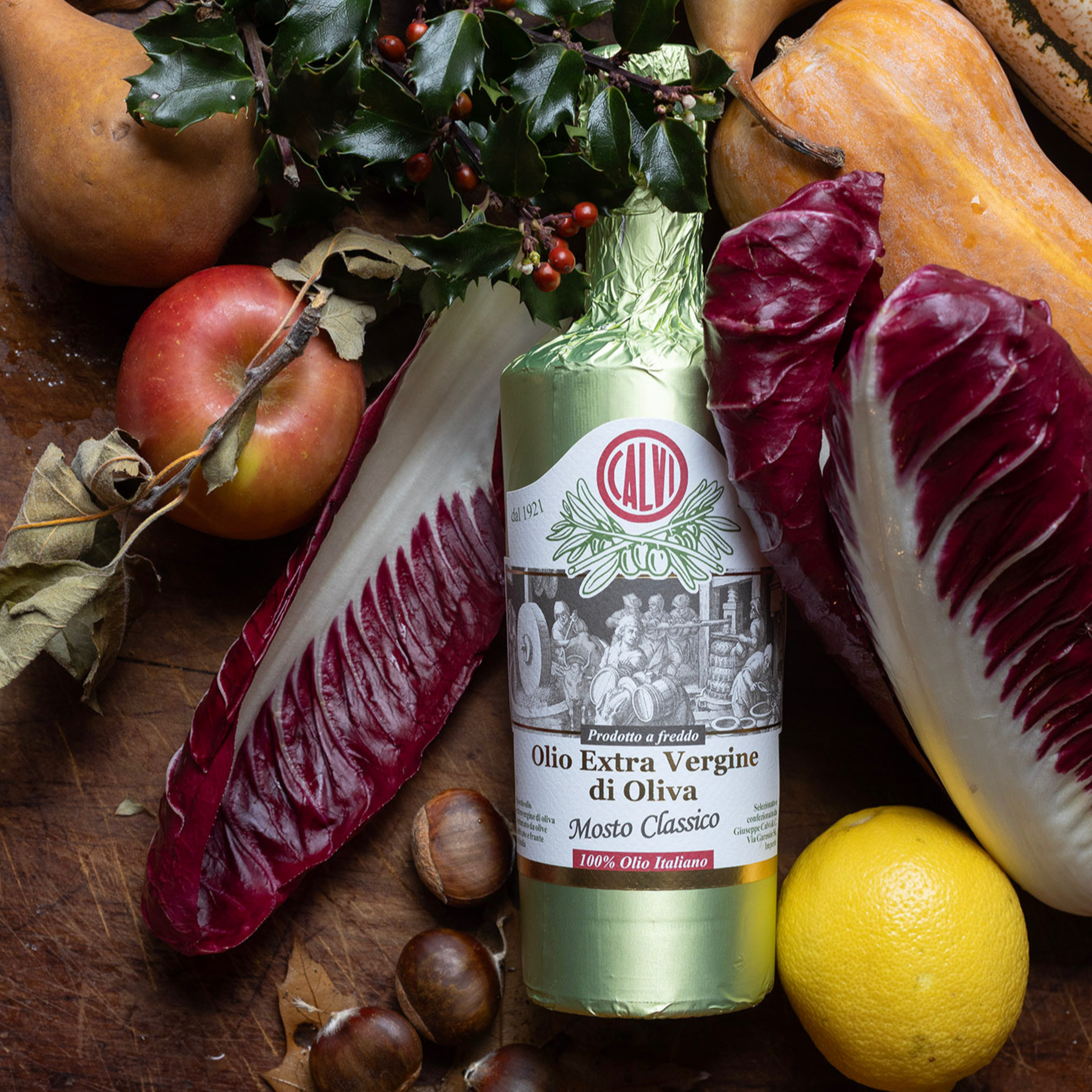
[00:26:49] Mike Fish: Yeah, and that's key. Just as long as we've been working with our balsamic supplier, Giusti, we've been working with a supplier, two brothers in Liguria, outstanding olive oil, the Calvi brothers, Gianni and Luca.
[00:27:04] Walter Pogliani: They grow completely different varieties of olives. They specialize in growing Taggiasca olives, which are indigenous to the region of Liguria, and they make an outstanding oil. Their oils are very mild and almondy and perfect for seafood and...
[00:27:24] Brett Barry: Let me get my spoon.
[00:27:25] Walter Pogliani: Sure.
[00:27:26] Brett Barry: What a bottle!
[00:27:28] Walter Pogliani: This is 100% Taggiasca olive oil, and this is the oil that, you know, is used for making, you know, pesto and seafood. It's very, very mild.
[00:27:39] Brett Barry: It's very mild, yeah.
[00:27:40] Walter Pogliani: Yeah, but lovely, you can see how it would complement seafood and more delicate dishes, which is pretty much what the diet is in Liguria. They don't really use a lot of meat. The terrain is very steep, so all of their olive trees are grown on terraces that, you know, have like 10-foot drops in between the terraces, and, you know, in order to harvest, everything has to be done by hand. They can't get any machinery down there. It's quite labor-intensive.
[00:28:13] Brett Barry: So labor-intensive small batches of importing and exporting—what does that mean for the retail price on a bottle like these?
[00:28:23] Walter Pogliani: It's more expensive. You know, there's no way around it because the criteria that these families use for pressing and growing is much higher than the standard, you know, European legislation requirements. They all press within 24 hours of picking because they all go into global competitions, and that means nothing can sit around for longer than 24 hours because the olives do oxidize, and that will bring the acidity levels higher. You know, it's a 24-hour process once the picking starts day and night. If there's anything that somehow sits around for more than 24 hours, it's sold off to a big olive oil producer, and that's when you start to get into the commercial oils. Not only are the olives a little more inferior or higher in acidity levels, but [then] you have these big giant companies that are mixing olives from different locations just to make oil with higher acidity levels. Then there are second pressings. They will take that leftover mash and sell it off to another producer who will then apply heat to it and chemicals to get more oil and extract more oil out of it. Then there was a third pressing, believe it or not, and that's called "lampante" in Italy, and what that—basically what the translation is—is lamp oil, and that is not allowed for food consumption within the E.U. They use it for mechanical lubrication. However, it does make it into products that come to the U.S. as commercial oils because they allow that to come in, so that's why these products are more expensive.
[00:30:15] Brett Barry: Leave it to us to go with the lamp oil.
[00:30:16] Walter Pogliani: Right.
[00:30:18] Brett Barry: But don't worry, that so-called lamp oil is used commercially and won't be found on the grocery store shelves. Even so, Mike and Walter offered some tips for selecting a high-quality olive oil.
[00:30:31] Walter Pogliani: We spend a lot of time shopping in the States and also in Europe, and especially in the States, we watch people, you know, when they go into a store and how they look at olive oil and balsamic when they go down the condiment aisle and they stare at the wall, and then they usually are attracted by the packaging first, and then they will look at the pricing and then go for something else based upon the price, not knowing what they're buying, so what we do is we give them the opportunity to taste it and to learn about what's in the bottle before buying it because 99% of the people that go into a supermarket or a specialty food store, they don't really know the information's not out there.
[00:31:24] Mike Fish: The back of a label is a really great pro tip for someone who's looking at whether they're in a provision store or a medium-sized grocery store, or even a larger supermarket. When you don't see a country of origin, you might see many countries of origin: olives from Italy, Spain, Palestine, and Greece. You don't see a date, or sometimes you do see a date, and you're really fooled because the date might be like, "We looked at one over the weekend in a store that was dated."
[00:32:00] Walter Pogliani: With an expiration date of '27, but it was pressed in '24.
[00:32:07] Mike Fish: What Pogliani does that makes our jobs sometimes difficult but very rewarding is that these oils that you're tasting today are from the latest harvest, so the last harvest for olive oil was between October and November/December. The first press we got from Tuscany right before Christmas was a six-week-old oil.
[00:32:36] Walter Pogliani: It was made, yeah, and it came in and went out immediately.
[00:32:40] Mike Fish: We got 36 bottles of an unfiltered—what they called "nuovo"—and that is what all small-batch producers, doesn't matter what the region is in Italy, that new first oil unfiltered, is what the locals line up for. It's very cultural. It's in the same way when apples are here first, or it's cherry season, and it's that first weekend.
[00:33:06] Brett Barry: Once I buy an estate oil from Pogliani Select, what's the shelf life?
[00:33:11] Walter Pogliani: The oils because they're new oils. They do have a long shelf life. What we suggest is that you keep it in a cool, dark place, and, you know, traditionally, the Ligurian oils—it's a dark bottle and the foil on top of it because the oils are more delicate, so you want to keep it away from light.
[00:33:34] Mike Fish: In the case of the Pinzimolio from Calvi, why is it in a clear bottle? We want you to see the unfiltered nature of the oil, so this would be an oil that you would take home, and you would just, like, you know, use it now and use it for cooking greens, ungrilled meats, and fish in any preparation that you would use. You would use oil.
[00:34:00] Brett Barry: And the balsamic's much longer?
[00:34:02] Walter Pogliani: Yes.
[00:34:03] Mike Fish: Yes.
[00:34:03] Walter Pogliani: Yeah.
[00:34:03] Mike Fish: Yeah.
[00:34:04] Walter Pogliani: The most important thing for the balsamics is, you know, the expiration dates are usually about 10 years from when they're bottled. They're already old products, but once they start getting exposed to air, the best thing to do is, after every use, just take a, like, a wet paper towel and make sure the top is clean before you cap it. You just don't want to let it get, you know, crusty and dry, because then air will get into it, but I'm also not keeping it near heat.
[00:34:36] Brett Barry: Shopping by packaging and labeling is one thing, but for a truly immersive experience, nothing beats Pogliani's 18th-century tasting room in Catskill, New York.
[00:34:48] Walter Pogliani: You know, we've met so many people along the way by doing just starting with the farmer's markets that they become very interested in what we do, and then they love coming here because, you know, at a farmer's market, you know, there's a lot of action. There's a lot of activity. We can't spend, you know, a long time doing a taste, but people have contacted us. They come here with their friends, and we make an evening out of it, or an afternoon or a morning or an appetizer, and, you know, we have the hearth here. We'll do a little cooking. We'll bake some focaccia, we'll taste the oils, and we'll just have a good time.
[00:35:30] Mike Fish: It's a lovely tasting event for your viewers—excuse me, your listeners. Come spring, we have our Mercatino di Primavera, our spring market, just before Easter here in the tasting room. At that point, we'll have the Croatian oil in-house, all of our oils from Tuscany, Sicily, and Liguria— Giusti agrodolce, as well as aged balsamic—but something really special for the spring season. It's called "Colomba," which is the spring or Easter version of Panettone from a really lovely family that's based in Veneto. How your listeners can find out about that event is to follow us on Instagram. If you follow us on Instagram and send us a DM with your email address, we'll put you on our blog, which comes out monthly.
[00:36:21] Brett Barry: Where do people find out where the retailers or the restaurants are that are using your products?
[00:36:26] Mike Fish: I'll give you a nice shout-out, particularly because the Catskill region has a lovely restaurant up at Round Top [Julia's Local]. Chef Henning uses our olive oil and balsamic right now also on the other side of the river in Tivoli [The Hotel Tivoli: The Corner Restaurant]. Chef Colby Miller went through a good portion of the summer learning about us and experimenting. We ended the year doing a lovely winter dinner with a special menu with him as well. Tallow, which is a fast casual, really farm-driven burger and meat-driven in Millerton, uses our Calvi olive oil. Our retail partners right now include Kitchen Cheetah in Margaretville between May and November, Montgomery Place Orchard Farm Stand in Red Hook right on the Bard property, and Tetta's, which is a family-run, multi-generational business in Olivebridge and then all over the Hudson Valley: Millerton, Catskill, Hillsdale, and Kinderhook. These are all locations that we do markets on Saturday. Instagram @poglianiselect is the best place for it, and we're very—we update where we're going to be all the time through posts and stories.
[00:37:55] Brett Barry: And do you sell straight from here when people come for tasting?
[00:37:57] Mike Fish: Yes, yes, and that's...
[00:37:59] Walter Pogliani: And we ship as well.
[00:38:01] Mike Fish: Yeah, we ship all over the country, yeah.
[00:38:04] Brett Barry: So you're going on 11 years now?
[00:38:06] Walter Pogliani: We're going on 11 years now.
[00:38:07] Mike Fish: Yeah.
[00:38:08] Brett Barry: What have you learned?
[00:38:11] Walter Pogliani: That's a good question.
[00:38:12] Mike Fish: I think—I think we've—we've learned—we've learned not to take this beautiful region for granted. There's not a day that goes by where we don't say, "Wow, look where we live!" Yesterday, as a great example, [when] we drove up to Margaretville [up 28] through snow-covered mountains, getting to Main Street in Margaretville to visit Jess at the Kitchen Cheetah and have a real conversation about her business to see how well [oil and balsamic] that we supply her have sold. To talk about what they're doing to plan something in store for spring, these are the kinds of relationships that we don't take for granted. We love the collaboration aspect about business [small business owners] in the Hudson Valley. There is a willingness to be creative [to work together], especially if we have the same end customer. We like to provide not just our retail partners but, you know, our customers with truly something special. There are many places that you can buy vinegar and olive oil, but we like to be able to offer something really special. When we're in a farmer's market, we love when we're right next to a grower and that same artisan thought process, whether it's a regenerative farmer [a no-till farmer], to be able to be alongside that, to offer beautiful oil and vinegar to complement what's in his or her basket. It makes Walter and I really happy that we're part of that same conversation.
[00:39:54] Brett Barry: Yeah, different products, but you're speaking the same language?
[00:39:56] Mike Fish: Exactly. Did we grow the olive? No. Did we press it? No, but the relationship that we have is just as dear, and we really understand and have great knowledge of how it was grown and its importance and where it sits.
[00:40:15] Walter Pogliani: And I have to say, you know, even all the, you know, the clients that have turned into friends, we have great conversations about food, about cooking, about being at the table, about eating together. I mean, it's really lovely. You know, that really means a lot to me.
[00:40:49] Brett Barry: Pogliani Select is on Instagram @poglianiselect. That's P-O-G-L-I-A-N-I. While you're there, follow us @kaatscast! "Kaatscast: The Catskills Podcast" is a production of Silver Hollow Audio. This episode was recorded by Sierra DeVito and edited by me, your host, Brett Barry. Transcription by Jerome Kazlauskas. If you're not already on our mailing list, please sign up at kaatscast.com, where you can search and listen to all of our shows, and if you haven't rated and reviewed us yet on your favorite podcast app, please do. Many thanks, and grazie molto!


