Retro Rentals: Defying the Algorithm at Sleepover Trading
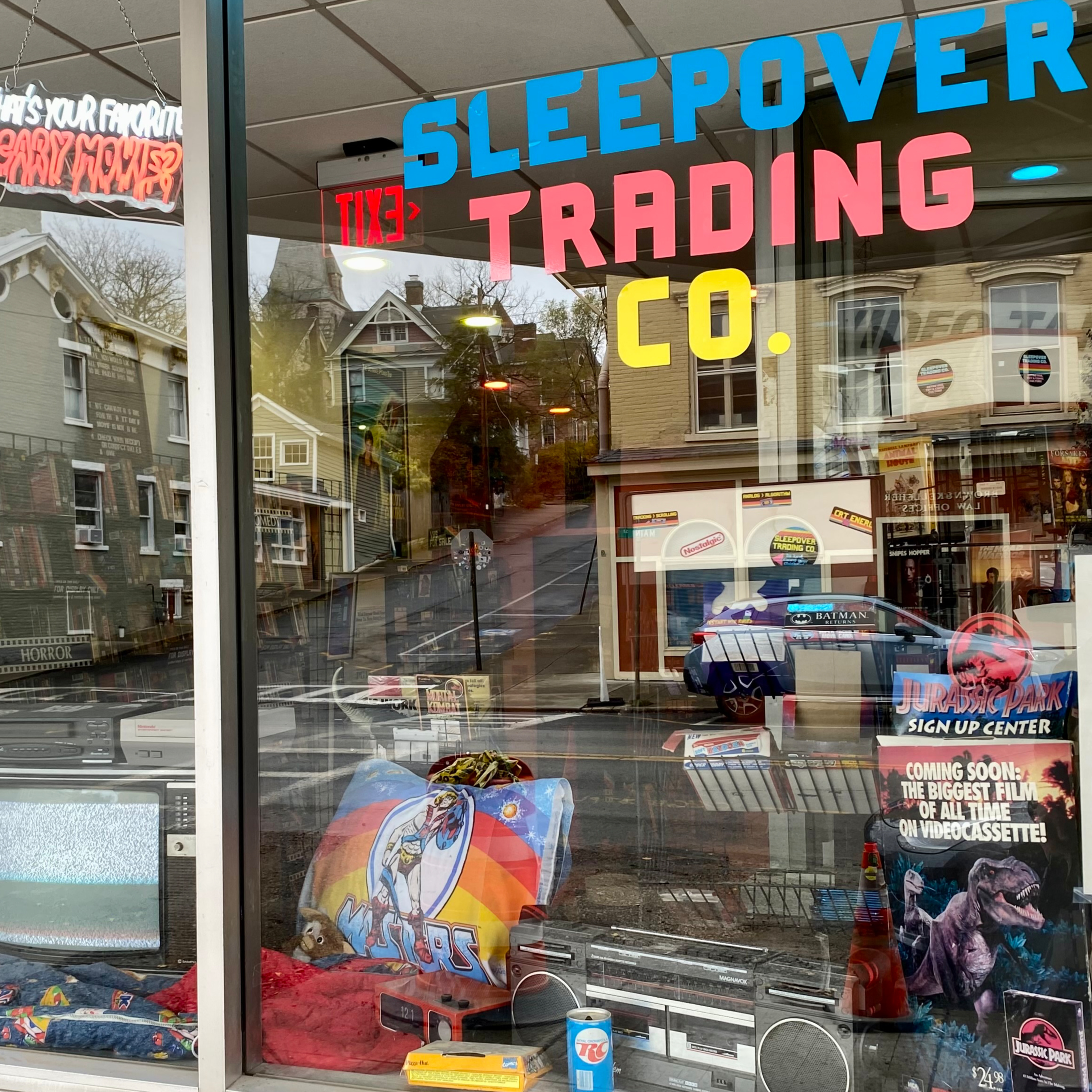


In this episode of Kaatscast, Brett visits Sleepover Trading Company in Catskill, New York—a new video rental shop rebuffing the algorithmic grip of streaming platforms by reviving the analog joy of VHS tapes, comic books, and sleepover culture. Owners Rob Ribar and Guido Sanchez share how their passion for collecting movies, comics, and memorabilia evolved into a retro storefront in the historic Catskill Community Theater.
Together, they explore the legacy of Video Visions, a beloved Chatham video store whose 20,000‑title collection now lives on at Sleepover Trading. Along the way, they reflect on the lost art of browsing shelves, the freedom of discovery beyond algorithms, and the nostalgia of sleepovers filled with horror flicks, trading cards, and late‑night laughter.
Highlights:
The VHS revival: Why physical tapes still matter in an era of disappearing streaming titles.
Video Visions legacy: Preserving Steve Campbell’s 20,000‑movie collection as a living library.
Sleepover culture: Comics, toys, trading cards, and the perfect mix of nostalgia.
Analog over algorithms: How human curation fosters true discovery.
Community connections: From flea markets to local artists, building Catskill’s movie hub.
Lost media preservation: Taped‑off‑TV VHS archives, commercials, and forgotten gems.
Membership perks: Rentals without late fees, access to rare titles, and even VCR equipment.
Links:
Sleepover Trading Company: https://linktr.ee/sleepovertradingco
Video Visions (documentary): https://youtu.be/6h3VvS5N8g0
Transcription by Jerome Kazlauskas
[00:00:00] Rob Ribar: A lot of movies aren't actually available on streaming. In fact, many of them didn't even make it to DVD, so some of the things we actually would rent when we were patrons of Video Visions would be movies that you actually couldn't find in any other way except on VHS tape.
[00:00:20] Brett Barry: At Catskill's new Sleepover Trading Company, owners Rob Ribar and Guido Sanchez are rebuffing the algorithmic vagaries of streaming services and rewinding our entertainment options to a simpler and arguably richer media ecosystem: videotape. Actually, let's change the tape here because this entire episode is just a bit retro. Renting movies in the eighties and nineties, you might recall, required a trip to the local video store, where you could browse a physical shelf of VHS tapes or DVDs, and those shelves didn't know who you were, so they weren't targeting you based on previous viewing habits. Today's streaming platforms, like so many other internet services, highlight a limited menu of media most algorithmically likely to spike our dopamine a bit so that we press a button, watch that movie or show, and then, of course, give it a quick rating so the machine can narrow its focus even more. At Sleepover Trading, a new video rental shop in Catskill, Rob and Guido are offering customers some old-school tools to circumvent today's corporate feedback loops and to bring some fun back into the process. I'm Brett Barry, and this is "Kaatscast: The Catskills Podcast" in Catskill, New York.
[00:01:51] Guido Sanchez: I'm Guido Sanchez.
[00:01:53] Rob Ribar: And I'm Rob Ribar.
[00:01:55] Brett Barry: And we are where?
[00:01:56] Rob Ribar: At Sleepover Trading Company inside the Community Theater in Catskill, New York.
[00:02:01] Brett Barry: So tell me a little bit about this business, how it got started, and, you know, where this interest came from.
[00:02:06] Rob Ribar: Well, we've both been huge collectors our entire lives. Guido, especially comic books, me, movies, records, and when we moved to Catskill—actually, the first thing that we first came to Catskill for was because of the Community Theater. We were looking to stay at an Airbnb up here and looking at all the different towns, and we saw that Catskill had this old 1920s movie palace, so we said, "Okay, we have to stay here," and then we wound up buying a home in Catskill. Cut to COVID, the pandemic. The Community Theater had closed, and we really wanted to bring movies back to Catskill, so we started hosting movie screenings at various places around the area, and that grew our audience, and then the next step was to also start the store.
[00:03:05] Brett Barry: So we're in your shop now, which takes up the front corner of the Community Theater. Was this theater before it closed down? Was it a movie theater or live performances, or what's the history of this building?
[00:03:18] Guido Sanchez: So it's been both in its longtime history. In fact, it was a bit of a vaudeville stage. It has a huge stage and proscenium and sound equipment for live theater, but in our time here, which is the last nine years, it's been a movie theater. Pre-COVID, in the 1970s, they did what most theaters did, and they split the balcony, and so they created two screens, and it closed during COVID and only reopened with us this summer.
[00:03:50] Brett Barry: So you're in a really nice little spot here because you deal in vintage entertainment: VHS tapes and comic books and laserdiscs and action figures. Give me a sense of the breadth of this collection, and I think that there's also a separation between things that are for sale and then also kind of getting back into some kind of a rental business.
[00:04:16] Rob Ribar: So the rental business all came from the Video Visions Collection in Chatham, New York. Video Visions was this pretty iconic local video store. They were open from 1984 to 2020. We just stumbled upon it, driving by it, and it was one of those kinds of things that was preserved in amber, and you thought, "This can't actually be open," but it was open. We got our video rental card, met the owner, Steve Campbell, had a long conversation with movies with him because every conversation with Steve was a long conversation about movies, became friendly with him, and rented from there, and then, much like this movie theater, they closed during COVID. I had stayed in touch with Steve trying to see whether you're going to reopen the store, and unfortunately, in 2024, he passed away, and we had been in touch with his family, and for us, it was really important to keep his legacy going. He really always talked about Video Visions being a library of movies, so we were fortunate enough to acquire the full collection from the store, which was about 20,000 movies, and what was really unique about Steve's store was, unlike most stores, when DVDs came in, he got rid of VHS tapes. He kept the tapes, so a movie he would have in multiple formats there. So of the 20,000 movies, about half roughly are still VHS tapes, and the others are DVDs, so we will be getting that back up for rentals so everyone can enjoy that collection, and then that's supplemented by the retail aspect of the store.
[00:06:06] Guido Sanchez: The rest of our collection, for a few years now, we've sold in antique stores up in this area from our own personal collection because we like to go to flea markets and estate sales, and we have our own eighties and nineties toys and memorabilia that we're sometimes willing to part with, and so the rest of the store was supplemented by our own collection, and now we're regularly acquiring stuff, and people are coming in to sell us stuff, and so we get to curate it, which is really fun.
[00:06:36] Brett Barry: Where did the name come from?
[00:06:38] Rob Ribar: Well, we were obsessed with all these different things: movies, especially VHS culture, comics [Guido has a personal collection of about 30,000 comics], music, and all those different things, and we were trying to think, "Well, how does that all come together?" And for us, it was about the perfect sleepover because when you would do—have a sleepover, especially if you grew up in the eighties, nineties, or early aughts, it would start by renting a movie. You would probably trade comics with each other, have trading cards, have toys, play some video games, maybe listen to some music, and that all kind of came together as a perfect sleepover, so we wanted our store to really encapsulate that.
[00:07:23] Guido Sanchez: And with the brand, we had started, as Rob mentioned, doing screenings, and prior to each screening, we do a custom clip show, and that is really to set the tone that he's describing, so we would use different commercials from the era of the movie, things that are thematically related, fun clips, and that all was part of just developing an experience that played on nostalgia and played on those feelings and connections we have to all of this pop culture. Before every single one of our screenings, we always have a clip show. It's from 10 to 20 minutes depending, and so, for example, at a recent Halloween screening of Frankenstein and Bride of Frankenstein, we got to put together a number of the commercials over the decades that incorporate Frankenstein and some funny clips of Elvira and related horror hosts talking about Frankenstein, just to give people the sense of the tone and the time when we want them to be having this experience, or sometimes we'll do—we did a special with the cat on the corner store here in Catskill. We did a screening of Stephen King's Sleepwalkers because it's about alien cats, so we did a whole clip show of all cat commercials, cat interviews, weird clips of things from Cat Fancy Magazine in the 1980s, and just, again, give people a full experience beyond just the movie itself.
[00:08:50] Rob Ribar: For some of the screenings, we've also actually inserted commercial breaks during the movie, so we'll actually locate commercials from the year that the movie came out, especially if that commercial feels like it is in tone or in conversation with the movie, and put those in, and that just enhances the experience because also it's great for the movie theaters because then people can go to the concessions and get another drink or get some more popcorn, and they don't have to watch the commercials, but if they do and they want that kind of extra added bonus, then they have that full experience, and we're trying to have it feel like, "Oh, I was watching this on channel 11 growing up on a Saturday afternoon."
[00:09:43] Guido Sanchez: We collect taped-off TV VHS, and we actually digitize them. That's something else we've done over the years, and we had a tape of Child's Play shown on Channel 11 in the New York metropolitan area from one of its original premiere dates, and so we showed that a few years ago at a theater, and that inspired us to do these kinds of commercial breaks in other films.
[00:10:08] Brett Barry: Many collections are niche, but taped-off television VHS—that's a new one.
[00:10:14] Rob Ribar: Yeah, well, right here is part of our collection that we're actually parting with after we've digitized them and we've sold them and really we are collecting them for the commercials, but we have some really amazing things from before it became Fox 5, when it was just Channel 5, and some amazing movies that have all the commercials, and the really thing that gets you super excited is when you go to YouTube and you don't see this clip anywhere, so there's been a few things that we have found where this doesn't exist, so in that part of our existence, we're really think of it as being archivists and preservationists of this lost media, and it even comes back to the Video Visions Collection because one of the things Steve Campbell, the owner of Video Visions, would tell you all the time is that a lot of movies aren't actually available on streaming. In fact, many of them didn't even make it to DVD, so some of the things we actually would rent when we were patrons of Video Visions would be movies that you actually couldn't find in any other way except on VHS tape, often because of things like music rights. They just never made it all the way over, so right now we think we have basically unlimited access to everything, but when you look at the amount of movies that have actually been released over time, it's actually just a small fraction of those movies that you actually can access.
[00:11:41] Brett Barry: Here's an interview clip with the late Steve Campbell, former owner of Video Visions, the very collection that Guido and Rob purchased for Sleepover Trading.
[00:11:51] Steve Campbell: "Our theory always was to keep this like a video library, and I think that was the secret because a lot of the chains or whatever went out because they would look for movies to pay them back every minute, so in other words, once that movie stopped renting a lot, they'd get rid of it and then, you know, get new ones. Well, we kept all of our movies, so people like to look at old movies. They, you know, they come in looking for older titles. They are not accessible as they used to be, so this is like one of the greatest ways to preserve them."
[00:12:25] Rob Ribar: It's our goal to get all 20,000 movies to be actually searchable, so here in the store, we only have very limited wall space, so we're going to be having select movies here that will change out on a regular basis, and then the plan is to have the rest of that database [to be searchable] so that people can request things in advance, but yes, certainly, a lot of people aren't looking to necessarily watch a Western from the 1940s on tape, but they definitely are looking to watch a horror movie from the 1980s on tape, so we are definitely prioritizing those movies that really fit within the Sleepover Trading Company ethos of comedies, horror, action, and out-of-the-box movies that are coming from the eighties/nineties, especially.
[00:13:20] [Friday the 13th Movie Clip]: Friday the 13th. You may only see it once, but that will be enough. Friday the 13th.
[00:13:41] Guido Sanchez: We will have two tiers. Keeping it basic, there will be a few other perks around. Some discounts, some exclusive merchandise, and members-only events, but the real goal is that when you're a member, you have access to rent, and there's not going to be a parental fee. People will be able to take movies out. There are no late fees. We know that some people only weekend in this area [vacation in this area], so people might want to take a movie, hold onto it for a month, enjoy it, and then bring it back when they're done. We're also going to be renting equipment. We know that some people want to have this experience but don't have access to a working VCR, so that will be coming later this winter.
[00:14:21] Brett Barry: Where do you source those?
[00:14:24] Rob Ribar: We have a lot of places. We scour flea markets. We have some friends on the lookout for us. We have one friend who is in the Columbia County area who works with some of the e-waste [town recycling days], so that's a big source for us—places like marketplaces on social media that we'll just track down local. The other thing that surprised us is as soon as we opened our doors, people have come in, people have sent us messages when they'd read articles looking to just give us stuff. They don't want to see it in a landfill. They're excited to see that someone is interested in it, so we've done a few different laps through the Capital Region and Hudson Valley area, picking stuff up where people will drop it off, and that's been really cool to see.
[00:15:09] Brett Barry: I love that. That's a great way to get your hands on these old machines and keep them from the landfill, as you say. Where are these other thousands of tapes?
[00:15:18] Guido Sanchez: So we have a storage unit here in Catskill.
[00:15:23] Rob Ribar: A 30-foot storage.
[00:15:24] Guido Sanchez: A 30-foot storage unit here in Catskill, and one of the things that we discovered when we closed out the Video Vision store is that Steve was running everything. I think it was basically on Windows 95, literally when we shut his computer down, so there was no way to just take his files and quickly modernize it, so what we've had to do is literally go movie by movie and put them into a new database one at a time, and that's scanning the barcode or, if there's not a barcode, literally typing it out and putting it into this new database that way [that can be searchable], so that has been a big project for us. We're up to about 2,000 movies, so it's going to take a while.
[00:16:12] Rob Ribar: We're 10th of the way there. It gives us the chance, though, to clean the tapes. We do that as we catalog them because they were covered in decades of dust, so yeah.
[00:16:23] Brett Barry: What was your experience looking back on your, you know, sleepover days of renting those movies? What were your go-tos, and what was that experience like for you?
[00:16:33] Rob Ribar: Well, the one movie I can always remember—oh, two movies I can always remember—is somehow we watched Howard Stern's Private Parts as a very young child. I don't know how my friend's mother rented that. Did we sneak it in? I'm not sure, and then you always had to pair it with a horror movie, so one of the things that really stands out to me was the IT mini-series with Tim Curry watching it, and then, later, a friend and I, who was a big movie buff, we would always try to do one movie that we should watch, so something from the AFI 100 list and the one movie that we really want to watch, so that would've been Nightmare on Elm Street, probably.
[00:17:20] Guido Sanchez: And I'm a little older than Rob, so I really grew up in the heyday of this in the eighties. My family would rent tapes probably at least three times a week, but for me, the sleepover with friends was also where you ended up pushing boundaries and feeling like a grownup. I remember Dirty Dancing being a big one that my mother wasn't too keen on me watching, probably based on the name alone, but I enjoyed sneaking that in with a friend was one that I remember a neighbor rented and let me watch because I wasn't allowed to see it when I was that age in the eighties, and so it was always a place where you just got to explore different types of ways of being, ways of telling stories, and always doing it with friends and laughing and being up all night and that whole experience. I think most of us have some connection to that experience.
[00:18:14] Brett Barry: I remember someone rented me one of the Monty Python movies when I was a little too young for it, and whoever else was watching me for the weekend was mortified.
[00:18:24] [Monty Python Movie Clip]: "Now as the sexual excitement mounts... what's funny, Biggs? Oh, nothing, sir. Oh, do you please share your little joke with the rest of us... I mean, obviously something frightfully funny's going on... No, honestly, sir. Well, as it's so funny, I think you better be selected to play for the boys' team in the rugby match against the masters this afternoon. Oh no, sir."
[00:18:47] Guido Sanchez: What's interesting, though, as we've done this work and as I've really tried to go back into those memories of mine, is seeing how much those things imprinted on us, and I would imagine for you, Monty Python might've imprinted on you in that, and I see that the things that were sort of edgy or forbidden or the things that made me start to feel like an adult, those are the things that I love now. They're my sense of humor, or they're the kind of storytelling I like. They're the kind of director or creator or tone that I like, and it's really interesting, you know, being 44 years old and recognizing that, "Wow, the things I consumed 35 years ago are shaped my entire way of seeing storytelling."
[00:19:33] Brett Barry: Yeah, and for me, we used to come up to the Catskills when I was a kid, so there was a video rental store in Phoenicia called Alice in Videoland, and I would go straight to the comedy section every time.
[00:19:44] Rob Ribar: So when we were doing our soft opening in conjunction with the movie theater doing their opening night gala, I had a bunch of people come in, and one of the folks that came in was the owner of Alice in Videoland, and he was just looking at this very contemplative older gentleman, and I just came over to introduce myself, and he explained who he was and that he had not been in a video store since probably his store closed, and he was not the only former video store owner that we've met in this process, and it's really cool to see this sense of community and everyone. I think I didn't have any siblings, so when you would go to the video store and you would have maybe that clerk or the employee selections and things like that, that was that kind of guiding light as to, like, "Oh, what should I watch now?" And we don't really have that today. We actually have [what's the sticker, Guido?] analog over algorithms that we have because everything is kind of being—you're being told what to watch, but not necessarily in an organic way, so we do hope that there's a sense of curation about the store that people can be guided into discovering things for themselves.
[00:21:08] Guido Sanchez: The other thing about the role these stores played in the community: it's been amazing to us to look through old newspapers in the eighties and nineties and discover there were 1.3 different video stores in Catskill. Right now, Catskill can barely sustain three different restaurants, and so it's incredible to think that there was enough of a demand, and I'd imagine, from the people we've talked to, each one had a slightly different tone or style. You had the ones who specialized in, like Rob said, the more, maybe, Oscar-worthy films, the family-friendly films, and then you had the seedier stores that were looking to push boundaries with horror or with adult movies even, and so each place was so different, and the fact that a small town like Catskill could have had three is remarkable.
[00:21:57] Brett Barry: Alice in Videoland did have an over-18 section where it was curtained off. I was always very curious.
[00:22:02] Rob Ribar: Yes.
[00:22:02] Guido Sanchez: There were saloon swinging doors on the one in Video Visions.
[00:22:06] Rob Ribar: Yes, and there were some very, let's say, unusual titles that have been discovered. Those will not be available for rent.
[00:22:16] Brett Barry: You kind of led into it a little bit in your last comment about curation, but what did we lose when everything went to a streaming world?
[00:22:27] Rob Ribar: Well, it's so much harder to actually discover something new, I find, and I'm pretty—both of us are pretty voracious consumers of content and seeing what's out there, and I'll constantly see, "Oh, I didn't know that movie came out," or "That went right past me because there are so many different avenues right now where stuff is being shown." Even promoting this store, we've found that some people are on social media. Other people aren't on social media. Back in the day, there would maybe be an alt weekly where you could put an ad in, and you would just have that audience come to you, so I do think there is that lack of that curation and just even discovering things. I think we all, if you grew up in that era, have that memory of just perusing the video store shelves or the comic bookstore shelves and just finding something and renting it just because the cover looks cool or you recognize an actor in it, and if you're going through a streaming service, you can't really tell that by the little thumbnail that's there.
[00:23:36] Guido Sanchez: I also think, and this is going to sound quite cynical, but I truly think we lost freedom because I think what, all of these platforms, the algorithm is invisible, and we don't realize our entire experience is being mediated, and so I think we lost a lot of freedom of choice, a lot of freedom to explore, freedom to discover things, and freedom to find something that maybe isn't exactly what we thought it would be. These algorithms are meant to cram into us either what the companies want us to consume or what they think we want to consume, and so we've lost a lot of that flexibility and freedom of choice that comes with just standing in front of a wall and looking at art and titles and being able to hear people's recommendations. We lost all of that.
[00:24:27] Brett Barry: And movies on streaming platforms tend to disappear after a while, and it's like, "Where'd that go?"
[00:24:35] Rob Ribar: Yeah, totally, and I'm just looking here at our own wall, and we've got Eraserhead, a VHS of Eraserhead next to a VHS of Pink Flamingos next to the original Terminator, and you can just see as if you're coming in and going like, "What is this? Who is this weird person divine in this pink dress on the cover of Pink Flamingos? And it's just something that you want to discover, but going back to what you were saying, it relates back to the fact that all these movies didn't even make it onto streaming because they have just disappeared in that way, and at least with physical media, and we're hearing it more and more from folks that are coming into the store that are really embracing it. One of the interesting things, because we don't have kids, is I've heard from a couple of parents say, "The great thing with physical media is that I can put a DVD on, and I know exactly what my child is watching, and when that 90 minutes is over, they can maybe put that back on again, but they're not going into another YouTube video where I don't know what it is and getting caught in this endless cycle," so that's not something I had really thought of—how physical media can even benefit a parent.
[00:25:52] Guido Sanchez: I work with middle schoolers during the week. This is not my only job. Neither of us is this our only job, and so I do always think about that aspect of this—the fact that kids do get stuck in these endless loops. They get stuck in this totally mediated world and don't realize that it's mediated. It feels so open, but it's in fact not their subject again to seeing what the platform wants them to see.
[00:26:19] Brett Barry: Here again is Steve Campbell from Eric Green's 2019 documentary Video Visions.
[00:26:27] Steve Campbell: "These things go in and out of print erratically, so in other words, I might order a movie today, and somebody will come in and say, "Hey, I'd like to buy that movie two months from now," and it won't be available, and that's what's scary to me because if we don't have a physical format to have that movie on and it's just relying on the internet or whatever and streaming, that's not good because they do disappear, and if a business does not feel that movie is generating them enough revenue, they drop it from their inventory."
[00:27:01] Rob Ribar: One of the great things that made this all possible is the store that we're standing in right now. Our store wasn't previously connected to the theater. It was always part of the same building, but it was actually a paint supply store when we first moved here. It was briefly a hair salon, and when they were renovating the theater, they had the genius idea to make this all one connected place, and that enables us, for the staff of the theater who's doing concessions, who's selling tickets there, to also check people out from our store, and all of this was really incredibly serendipitous because we had been purchasing the Video Visions Collection. We were keeping a complete secret from everyone.
[00:27:51] Guido Sanchez: And at the time we were purchasing it with no idea of what we were doing with it. This was all just—we knew we didn't want to see it broken up. We knew we didn't want to see it go in the trash. We knew we didn't want to see it on eBay, so we knew we needed to take it, and that all happened without us having a plan.
[00:28:09] Rob Ribar: Yes, and then I was starting conversations with the theater because we had been doing all these screenings in the area, and I said, "Well, we'd be really interested in doing screenings at the new Community Theater," and they were just telling me about plans for this space, and they said, "Well, you know, that space upfront, we'd really like to make it into a video store," and they didn't know what they were doing with the next steps either, and I said to them, "Well, that's always been our dream, and we got closer." We did a pop-up here, and then the conversations just kept going, and we told them, "You're the only people who know this, but we're about to acquire this 20,000 movie collection. We have all these other movies that we've basically been stockpiling, thinking maybe five years from now we're going to open up a store. That was kind of our—it was kind of a five-year plan, and then suddenly it happened in about three weeks.
[00:29:04] Guido Sanchez: Yeah.
[00:29:06] Brett Barry: Can you show me around a little bit and give me a sense of what you got?
[00:29:10] Guido Sanchez: Yeah, well, the window display we set up to look like a sleepover, so we have a few old CRT TVs, and on top of them, the VCR, the old NES Nintendo System, the sleeping bag down there, we've got our He-Man pillow, we've got the Pizza Hut X-Men box, the boombox, so we're really making it feel like an eighties/nineties heyday, and then in front of that is where the store is.
[00:29:43] Rob Ribar: So we've got some trading cards from classic movies like the original Supermanmovie, the Dick Tracy movie, and Bill and Ted's Excellent Adventure. We have lots of toys [so mostly old toys that we've pulled from our collection], tons of He-Man, Power Rangers, things like that, and then young adult books, especially things like R. L. Stine, Christopher Pike, horror pulp novels, and movie novelizations. We have our VHSs and DVDs for purchase and movie magazines as well, and then...
[00:30:26] Guido Sanchez: Right now, actually, we are doing our first art exhibit. We're hoping to use the space for local artists as small as we are, so we have four different artists who imagined sequels that they wish existed and constructed VHS box art for them, so we are really excited that we are able to use our space for local people to be involved and continue to celebrate all of the stuff that we're doing here.
[00:30:52] Rob Ribar: In fact, most of these racks actually came from Video Visions as well. We repainted them and refurbished them. They were down in the basement there, and one thing I'm super excited about is that we've been in the process of getting a lot of new merchandise, so actually all the movies that you can see here are newly released, so, of course, we're getting DVDs and Blu-rays from a lot of the cool boutique labels that specialize in horror and in exploitation movies, but believe it or not, there are still companies putting out new VHSs as well, so we have been certainly purchasing a lot of those, and some of these are for older movies, and some of them are for movies that have actually come out in the last decade.
[00:31:39] Brett Barry: Yeah, I would not have guessed that there would be new releases on VHS, but the one right here, that's just grabbing my eye. Rabid Grannies: they just love their grandchildren. Well done!
[00:31:52] [Rabid Grannies Movie Clip]: "And now, these grannies have gone berserk!"
[00:31:58] Guido Sanchez: And I think some of these smaller labels have been doing this because there are people like us who care so deeply about it, but earlier this year, what was amazing was Fox [Disney] decided to release the new Alien on VHS, and that was a huge deal. We saw that American Psycho is being rereleased by Lionsgate on VHS, so there is now a market for physical media, and we're happy to see things move in that direction.
[00:32:25] Rob Ribar: What I'm hoping for is something similar to what happened with records, where for a long time the only way to play a record was on a record player from the 1970s or 1980s, and then these companies started putting out those very inexpensive record players that you could get at a big box store, and now we've seen record sales explode, but the hardware had to be there to do that, and one of the things that is a hurdle for VHS collecting right now is that the hardware is all 20, 30, or 40 years old, and that needs to be maintained. It needs to be cleaned, which we do, but if it becomes a more electronic issue, then sometimes those are not salvageable, so what I'm really hoping, as we have these major big companies starting to put movies like Alien out on VHS again, is that a Sony or someone like that is starting to reissue VCRs that way. This can be more accessible for people. If that happens, I think the collecting market is really going to explode.
[00:33:42] Brett Barry: Okay, so I have one more really important question: must renters rewind?
[00:33:50] Rob Ribar: Well, our tagline is "Be kind, rewind your childhood," so yes, I would say rewinding. In fact, I was just rewinding a tape the other day, and Guido was like, "Why are you rewinding that tape? It's like you're supposed to rewind the tape."
[00:34:04] Guido Sanchez: I am the lazy person who, I guess, probably as a kid didn't do it, and so every time we finish watching a tape here in the store, I just take it out and put it back, and Rob is like, "Don't you think someone's going to want that rewound?"
[00:34:16] Rob Ribar: Yeah, and it's also for the wellness of the tape. You should not just leave it in one direction. In fact, if you are a collector, they say, and we don't do this as much as maybe we should, but you're supposed to run them fairly periodically just to keep it moving along.
[00:34:34] Guido Sanchez: Yeah, yeah.
[00:34:35] Brett Barry: Sleepover Trading Company's rental memberships are up and running, and you can find out more on Facebook, Instagram, or Blue Sky [@sleepovertrading]. Send them a text at (518) 987-7VHS, and, of course, you can visit the shop inside the Historic Community Theater at 373 Main Street in Catskill. Thanks to Eric Green for permission to use clips from his documentary Video Visions. More at ericgreenfilm.squarespace.com, and we'll pop a YouTube link into the show notes. "Kaatscast: The Catskills Podcast" is a production of Silver Hollow Audio, and if Catskills books are on your holiday list, we've teamed up with Purple Mountain Press on a special code for free shipping, plus $5 off any order for the whole month of December. Head over to nysbooks.com, fill up your cart, and use the promo code [KAATSCAST] for free shipping and $5 off. If you'd like to sponsor our show, we have a clean slate for 2026, so now would be a great time to get in touch. Just send us a message through the contact form at kaatscast.com, and we'll get right back to you. Every local sponsor really does help keep the audiotape rolling. "Kaatscast" is now broadcasting from WJFF Radio Catskill Saturdays at 11:00 AM. Tune in at 90.5 FM or on wjffradio.org for our hour-long broadcast featuring updated and expanded stories plus brand-new material, and, of course, you can visit us anytime at kaatscast.com and wherever you get your podcasts. Transcripts by Jerome Kazlauskas, announcements by Campbell Brown, and I'm Brett Barry, host and producer. Please subscribe, rate, and review to help other listeners discover the show, and you can follow us on Instagram [@kaatscast]. Thank you!
[00:36:41] Campbell Brown: "Kaatscast" is sponsored by The Mountain Eagle, covering Delaware, Greene, and Schoharie counties, including brands for local regions like The Windham Weekly, Schoharie News, and Catskills Chronicle. For more information, call (518) 763-6854 or email mountaineaglenews@gmail.com. This episode is brought to you by Briars & Brambles Books, the go-to independent book and gift store in the Catskills, located in Windham, New York, right next to the pharmacy, just steps away from the Windham Path. Open daily! For more information, visit briarsandbramblesbooks.com or call (518) 750-8599.


