Casting Stories: Nick Lyons on Fishing and Writing
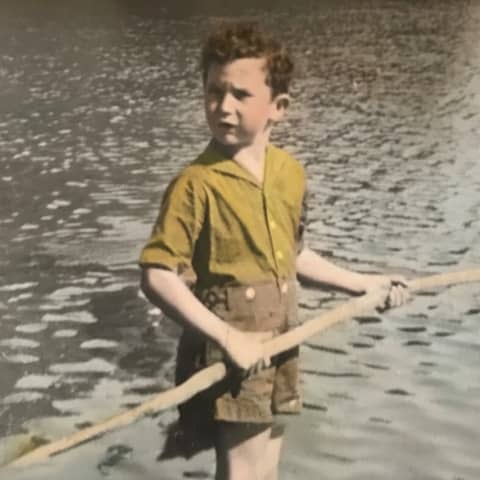


In this special long‑form conversation, Brett Barry sits down with legendary angler‑writer and publisher Nick Lyons, now 93, whose life has been shaped by water, words, and the Catskills. From a childhood spent catching frogs for pocket money to founding one of the most influential fishing imprints in America, Nick’s story is a rare blend of grit, curiosity, and literary devotion.
Recorded in Nick’s home in Woodstock, this episode traces his journey from the Bronx to the Beaverkill, from boarding school loneliness to the rhythms of trout streams, from early rejections to a flourishing writing and publishing career. Along the way, Nick reflects on family, loss, love, teaching, and the deep satisfactions of a life lived close to rivers.
In This Episode
Growing up in the Bronx with Yiddish‑speaking grandparents and bachelor uncles
Boarding school memories and discovering fishing at Ice Pond
Summers at the Laurel House in Haines Falls — frogs, creeks, and Catskills lore
Seeing the Hindenburg fly overhead as a child
A difficult stepfather and moves from Mount Vernon to Brooklyn
The Army years and the beginnings of serious reading
Falling in love with literature at the New School, Bard, and the University of Michigan
Meeting Mari — art, shyness, and a life partnership
Early writing struggles and a breakthrough with Field & Stream
Finding his voice: earthy, nimble, wry, and rooted in lived experience
Fishing the Catskills — rhythms, hatches, freestone rivers, and memory
Why salmon fishing never clicked
Teaching for decades while building a parallel career in publishing
Reviving classic fishing literature and launching The Lyons Press
The rise of Sportsman’s Classics and the explosion of modern fly‑fishing writing
Why he eventually stopped fishing and what he misses most
Nick Lyons is one of the most influential figures in American angling literature — but his story is far larger than fishing. It’s about reinvention, persistence, and the way a life can be shaped by curiosity and attention. This episode captures a voice that is warm, reflective, and still sharp with humor and insight.
Links & References
Nick Lyons’s memoir Fire in the Straw
Nick's presentation at the Jerry Bartlett Angling Collection
Transcription by Jerome Kazlauskas
[00:00:00] Brett Barry: In the waters of fishing and books and books about fishing, Nick Lyons is a big fish in a big pond. I met Nick in 2017 when, at age 85, he gave a talk at the Phoenicia Library's Jerry Bartlett Angling Collection, where I leaned into his engaging reminiscences on a life well-fished. Nick was an eloquent, humble, and gracious speaker, and I liked him immediately. Eight years later, now 93, Nick Lyons has certainly earned the right to say no thank you to an interview request like my own, but to my delight, he invited us to his home in Woodstock, New York, and we spoke for hours about his lifelong love of fishing, his many books and articles on the subject, and a publishing house bearing his name that brought many more writers and stories into the fold. That and much more on this special edition of "Kaatscast." I'm Brett Barry, and today we are in conversation with Nick Lyons, angler, writer, publisher, and mensch, to borrow from the Yiddish spoken by his family in the early 1930s, and that's exactly where we begin. Tell me a little bit about growing up with your extended family in the Bronx, and what was that apartment like?
[00:01:32] Nick Lyons: I don't remember the first five years or so when I lived with my grandparents, who didn't speak very much English, in the Bronx, but I was sent to a boarding school when I was five, and I remember that place very well. I didn't like it. I didn't like the loneliness of it, and there was a pond not far away called "Ice Pond" that had some fish in it, and I began to fish. Then my grandfather at the time owned a hotel, the Laurel House, in Haines Falls right up the mountain, and I would go there every summer. My mother was working. My father had died before I was born, and I had the run of the place. There was nobody who took care of me when I was six or seven, and I spent most of my time on the creek and on the lake nearby, which I began to fish and caught everything you can imagine: newts, frogs, salamanders, and little trout of one kind or another. There was a gentleman at the hotel who bought the frogs from me at 4 cents each, and he would put them under the cup, which was always held down on the dining table for the club, and always someone would have the frog underneath it. I had a lively business, and I think I bought my first string, hook, and bobber from him and fished the lake with it after fishing without it before then. When I was eight, my mother remarried. My stepfather was younger, and I think an opportunist. I think he had married her because she was running the small insurance brokerage that my father had founded, and I didn't like him from the beginning. He didn't [to me] have qualities, that today, having been a father for a long time, he didn't like the process very much. I think also he was a very bad racist, which, at a very early age, disturbed me terribly. We moved to Mount Vernon [from] when she got married, and then a few years later, when I was 12 or 13, we moved to Brooklyn, and that I remember, of course, very well.
[00:04:21] Brett Barry: Did you discover fishing at the Ice Pond or Laurel House, or was that all happening at the same time?
[00:04:27] Nick Lyons: I don't remember Brett. I think it was just too early. I can only remember being a fisherman for as long as I remember.
[00:04:36] Brett Barry: There was one little fragment of history in your book at this time that I was just really shocked by—that you saw the Hindenburg flyover.
[00:04:48] Nick Lyons: I did. I remember that. I was at the boarding school then, and we were all taken to see it. I don't remember the date. I remember the event, and it was extraordinary—this big thing up in the sky. I'd never seen anything like it.
[00:05:05] Brett Barry: It's amazing. I didn't know anything about the Hindenburg except for the disaster, so this led me down this rabbit hole of research on the Hindenburg, and it was this.
[00:05:14] Nick Lyons: Did you find out when it was in the United States?
[00:05:16] Brett Barry: It was in operation, I think, in 1936 and 1937. It made 62 trips.
[00:05:22] Nick Lyons: I was born in '32, and it would've been probably '37.
[00:05:27] Brett Barry: Yeah.
[00:05:27] Nick Lyons: I would think when I was five or so.
[00:05:30] Brett Barry: So growing up in that apartment with your grandparents, and you said they didn't speak English—they were from Eastern Europe?
[00:05:36] Nick Lyons: Yeah, spoke Yiddish.
[00:05:38] Brett Barry: Do you speak Yiddish?
[00:05:39] Nick Lyons: No, I can't. We have a few words, but I had two uncles who lived with us, the bachelor uncles. I can't remember anything from that time.
[00:05:52] Brett Barry: Do you remember any of the smells or tastes or anything like that?
[00:05:56] Nick Lyons: Yes, I do. My grandmother cooked a lot, and I can remember her gefilte fish, which smelled, and I can remember her cooking. She was always very good and very much to my liking. Somehow chickens were all involved in my childhood. My grandfather had been a chicken butcher originally, and his partner when he bought the Laurel House for $30,000 with about 700 acres, including the only access to South Lake. I was on it by myself many times.
[00:06:42] Brett Barry: And the Laurel House—that's one of the most famous hotels in the Catskills from the 1850s.
[00:06:47] Nick Lyons: That's right.
[00:06:48] Brett Barry: It's amazing that your grandfather was an owner later on.
[00:06:52] Nick Lyons: Well, he had a partner who handled all of the laundry, and he handled all of the meats and the like, but I think they bought it. I have a record of it someplace. They bought it probably in the late thirties when things were very cheap. No one had been in it. It was a hundred years old. I'd leave more than a hundred. When they got it, it didn't have any major repairs, but it did have all of the basic lighting and cooking and electricity. I don't think they ever made money. I think they eventually gave it to the state for back taxes or something like that, but he had paid. I once saw the figure [35,000]. I always dreamed of owning that property because I loved it so much. Now, I once got a little too close to one of the roads, and state troopers told me to get away, and that was part of the park and not available, and I meant to give them a long story, but he didn't look like he wanted a long story and just wanted me out.
[00:08:10] Brett Barry: So tell me a little bit about your introduction to fishing and why you got that bug.
[00:08:16] Nick Lyons: Sure, there's a picture of me at the boarding school with—it looks like a branch about two inches around, a very big one, and I can remember fishing with that huge—it was a pole. You couldn't really carry it with one hand, but I tied a string to the end of it. It was no reel with green string. It came with a few sinkers, a few hooks about size six, I would say, and a bobber, and I fished there with the bobber and only worms at that time, and it was haunting. It was so quiet and still, and the water seemed to be filled with such mysteries. We caught, or I caught, perch, sunfish, or bluegills, catfish now and then, and once or twice a rock bass. I just loved the place. I loved the hills, the wildness, and a few stories I heard about a Rip Van Winkle rock and such like and fell in love with the Catskills. It was a very homey place, and I thought that most of the people there were related to me in some way, so it really was an extension of my interest in not having a family of any sort. I loved it. I loved the Laurel House and everything about it.
[00:09:59] Brett Barry: Did it have a bustling atmosphere when you were there as a kid?
[00:10:02] Nick Lyons: Very much so, yes. Somehow I remember endless pinochle games on the back porch and a lot of, I think, mediocre Catskill entertainment that went on.
[00:10:21] Brett Barry: And then much later you would take a job at one of the Sullivan County hotels. Tell me about that.
[00:10:26] Nick Lyons: It was...
[00:10:27] Brett Barry: A short-lived job, I hear.
[00:10:29] Nick Lyons: Yeah, it was. When I got out of the Army, I had saved about $10,000 because there wasn't much way to spend it or much ability, and that had changed my whole life. I'd changed from being a terrible student at the Wharton School, taking only one English course because I thought it might be of interest, but it was terrible. It was 300 people, and somebody was just offering a lot of facts that were to be given back on tests. I remember the questions were not even answered. They were just asked, and if you asked one, you got a little check on somebody's Delaney card. I lived alone for a year in the village. I paid $6, $6 a week for rental, in a tiny little apartment maybe one quarter of this room, the bed lodged in a section of the back, and then you wouldn't fit out most of the rest of it, and I was desperate to write. I wrote all sorts of things, sent them out into the world, had a shoebox full of rejections, and also took four courses at the new school, three of which I stopped going to. They were on how to write one of them—poetry, another one, short stories, and another, the novel—and I just didn't think that wasn't the right kind of writing I thought I wanted to do, and I had one course very esoteric called "English Prose Style." It went back and looked not at what these people were saying, but at how they said it and how the language had changed from a very oratorical style in the 15th and 16th centuries, a spoken style used by the preachers and the upper classes, to something very different—to something that was called then a writing style pretty much in the Baroque period in the 17th century. I was just stunned by what could be done with English, and I think that's what got me to go on. A teacher that I had for that course is the one who told me at the end of the course. I had asked him, "Can I make the team? Can I change my life from this other insurance that I majored in?" And he said, "You're not dumb, Nick, but you're very illiterate," and I went from there out to Bard College for a year, and to anchor myself, I got my rod out and went fishing and caught a salmon in the Hudson Valley. It must have been about, oh, I'd say 22 inches—definitely a salmon. I couldn't figure out how it had gotten into the stream because it had a batch of plunge pools, and it was only a few years later that I learned that the owner of the Zabriskie Estate, who had given the property to the college just two years earlier, had stocked it with exotic fish, but it was definitely a salmon, and it was a great shock.
[00:14:10] Brett Barry: So you found a salmon, and you found Mary on the registration line. Can you tell me about that?
[00:14:16] Nick Lyons: That's true. I was scared out of my wits when I went to that school. I didn't know anything about literature. I didn't know what they were talking about half the time, and I was standing on a registration line, and there was right next to me a rather tall, very shy, quiet woman. I don't know how to talk about things like [beautiful] because I never thought of that. It was just Mary. Someone else asked me to pick up her books, which she had left, and it turned out to be a whole day of driving down to Westchester College and picking up, oh, maybe a hundred books and piling them into a little '46 Ford Convertible that I had, and on the way we began to talk and sort of nudged around with each other for a couple of months, both of us very shy, and then I got to see her arc, and we became closer, not intimate but closer. She asked if I'd pose naked for her. She did, which I did, and it was an odd experience, but I think the painting still exists someplace. By the end of the semester, by May, we had pretty much decided that we were going to get hitched, and she went back to California. I decided to work in the Catskills. My stepfather knew somebody who knew somebody who shoveled me against my will into the Nevele, and obviously it was a place where you could make some very good money in the Catskills, and I worked for about 10 days and then dropped a plate of ice water on one of the residents. The whole place sheared, as they sometimes do, and I walked back into the kitchen and kept going and drove to California, but it was a very odd interlude in my life [and then out in California that summer], having known Mary really for six or seven months. Then we got married and went to Michigan, where she had a scholarship. I had no commitments there at all. I just went east with her. She was going on for a master's, and I had just said that one semester at Bard to fold into four years at the Wharton School, which didn't, for me, didn't come to anything. I think I wrote about getting into the University of Michigan. It was 50 miles away. I don't know why I chose it, though. It sounded better than some of the schools in Adrian, Michigan, and Detroit, and the fellow was very antisemitic. He took a look at me and told me to go back to the garment district, and I said, "Look, it's too late for that. I really have to get an education. You've got to tell me how I can go on," and he said, "Take five courses as a special student, and if you get all A's, I'll be forced to let you in." He sent me through an aptitude test and a psychological test as well, and I'd never gotten more than a B minus at 10 on something or other, but I played basketball at Penn, and it doesn't look like I ever played it, but I was on the Penn team, and we were very good, and that's what kept me there, I think, but I got the five A's, and you shrugged, saying have to let me into the master's program, and at that time I was beginning to have changes in my brain. It was just, it was actually a change that took place, not more knowledge, but things like memory. I couldn't memorize any of the Wharton stuff on policies and the like, but I could memorize long passages and poetry and long passages of prose also, which I could for most of my career. It was almost this kind of sea change that took place, and I did very well and went on to get a PhD after that, and we were married. We had two children by the time we left Michigan, and Mary was pregnant with a third, so we came to New York at a $5,000-a-year salary with three children, so it began some very difficult years.
[00:19:43] Brett Barry: So at the University of Michigan, you got your PhD in literature.
[00:19:47] Nick Lyons: Yep.
[00:19:47] Brett Barry: So you were on the—you were firmly on the literature path now?
[00:19:51] Nick Lyons: Absolutely.
[00:19:51] Brett Barry: Did that appreciation for literature begin in the Army? Is that when you discovered reading?
[00:19:57] Nick Lyons: I had discovered it in the Army, where there was always time, but it was absolutely the most random reading you could imagine. I remember reading Mickey Spillane and mysteries and then popular books like Somerset Maugham and Irwin Shaw. I remember reading "The Razor's Edge," which got me, and also Jack London's "Martin Eden," which is a story of an illiterate seaman who becomes a really good writer. I did read a lot, and against that, I read junk. I also read a couple of stories by Kafka that year, which stunned me with what they were revealing, so I was hungry to learn after that but hopeless. None of it was disciplined reading. I read much too fast. In fact, when I was at the new school, I wanted to learn to read faster, and because I couldn't retain things when I read them fast, I thought a course in that... I took it beside the courses I had at the new school. I found that there was one. I took it, and I had three sessions of it, I remember, and said, "No, this is not what I want. I don't want to learn how to read faster. I want to learn to read, I want to understand, I want to bring it into myself," and I remember asking the woman there if she thought I had any hopes, and she said, "Nick, remember the words exactly and then these people telling me what I was at that age." She said, "Saints with powers of levitation couldn't get out of the pitch you've dug, so it's rather shocking."
[00:21:59] Brett Barry: Not a very...
[00:21:59] Nick Lyons: Challenging.
[00:22:00] Brett Barry: Not a very encouraging program...
[00:22:01] Nick Lyons: Not encouraging at all.
[00:22:03] Brett Barry: What would they make of today's college students' literacy?
[00:22:07] Nick Lyons: I know I eventually loved teaching for the years I spent out. I taught for about 27 years, and I think 17 of those years I also had a second full-time job in New York as a book publisher, and I think the combination of the two of them. I really framed whatever I am now, for better or worse.
[00:22:34] Brett Barry: And you started writing.
[00:22:36] Nick Lyons: And I started to write. I was writing at the new school—when I lived in that little place at the new school, and I swear I had a shoebox filled with these little things. I wrote a lot for The New Yorker because I heard they used a lot of short stories. Every one of them came back with just a little thing until suddenly I got sent more. It said, "I thought that was immense encouragement at the time, but I began to write." Then I wrote stories first and tried to write plays, but they were very flat, and I also began to write poetry. For some reason, I'd never read a poem before then, but I began to write it tentatively at first, and then because of my enthusiasm, because of the great energy that I was feeling, poetry seemed to just come out better than anything else, and I think by the time I finished my third year in New York, I had published about 40 poems here and there, and four of them in The New York Times, which published poetry at that time and then really took a look at them and thought they were all very mediocre and that they were not going to get better, and then a summer in Woodstock—we came to Woodstock about my fourth year in New York, and we stayed at Byrdcliffe, which is the shacks. They were—we stayed in one that was like a railroad station with four different studios, and the four children were there, and the whole place was heated with two cold stoves. We spent three long summers there, and it was there that I began to fish the Catskills and traveled as well as I could without leaving Mary with four children, and she always painted. Even when we were in the worst circumstances in New York, she painted in the bedroom first. Then we rented a very cheap place next door that she painted in, and only years later, after I'd done some ghostwriting and made a bit of money at it, did we rent a real studio for the first time, but she painted very well in Woodstock, and [still] a lot of Woodstock paintings that we have or have donated, and I fished the Esopus. I once wrote just a line or two about the Esopus, and a nostalgic... absolutely remembers it and thinks that I miss... I was talking down about the Esopus. I said something like it was hard to go over there or not knowing whether the portal was open or not. I didn't know you could call in or find those things, but he remembered it 35 years later. You can't say bad things about the Esopus, but I fish the Esopus. I fished the little Sawkill that runs through Woodstock, which was actually quite good in those days. It doesn't hold its water now, but that was really the beginning of some intensive thought. The first story I wrote was about Frank Mele, really a cult figure. They still have meetings every April [to celebrate him] or every March. An artist we know, Manuel Bromberg, told me that I had to fish with Frank Mele. I was trying to make a date to go with him. It lasted about three weeks trying to arrange it, and he finally did, and it took him, oh, about seven or eight hours to get from Woodstock to Roscoe, stopping at a lot of bars. He was in his cups then, and I can't drink more than one cup or less, and I was woozy and cast heavily and badly and didn't catch a fish, and he smoked his pipe and waited and finally went down to the creek and caught two fish right away...
[00:27:16] Brett Barry: On the Beaverkill.
[00:27:17] Nick Lyons: ...on the Beaverkill, you know, but I got that was the first look at the Beaverkill, and I fished it many times since then, but I got back to Byrdcliffe and started telling Mary about it, and then I said, "You know, there's something—maybe I can make a story of this," and I wrote the story. I sent it to Field & Stream, and less than a week later, they wrote me back a two-line acceptance. We liked the story and a check for a thousand dollars. We'll go out to you next week. I said, "Boy, this is the life," and I wrote one about a fish I caught up at the Laurel House, my first trout.
[00:28:02] Brett Barry: So that was a turning point.
[00:28:03] Nick Lyons: That was the turning point. I sent something to Don Zahner of Fly Fisherman, and he said, "I've been—I've watched you. I've just read your two stories in Field & Stream, and I love them. Why don't you write for us?" And I said, "Sure," and I started, and then after the second I said, "You know, I think I could write a column," and I did that at Fly Fisherman every issue for about 20 years, I guess. I loved writing those stories. Just a lot of fun.
[00:28:40] Brett Barry: And those two stories for Field & Stream led to your first book, right?
[00:28:45] Nick Lyons: Everything, yes, a seasonable angler.
[00:28:48] Brett Barry: Can I read something from your memoir?
[00:28:51] Nick Lyons: Of course.
[00:28:51] Brett Barry: You say in these stories, especially the second, writing about something I have loved for so long, I found a voice that was earthy, nimble, wry, and full of wit and worms and celebration, free from pretension and preaching or analyzing all that was Fancy Dan or trendy.
[00:29:09] Nick Lyons: That's a decent sentence.
[00:29:12] Brett Barry: Love it.
[00:29:12] Nick Lyons: I loved writing that, and I've thought of it a lot. I wouldn't change it, and I feel the same—that there is [in writing]. My kind of writing about fishing has some kind of lightness to it, and if it gets a little dark, it always changes and comes back to the light, but so many funny things happened and so many events that were simple good stories, and I just loved it. Some of them are in memory, but most of them are out of things that happened to me, and I've stopped really because I had to stop fishing not too long ago.
[00:29:52] Brett Barry: I was going to ask if you ever get out there anymore.
[00:29:54] Nick Lyons: I don't. The problem is partially balance—I've fallen more than a dozen times, and it's just dumb luck that I haven't knocked an eye out or killed myself. The worst of it was just shifting my teeth a little bit. It's just dumb luck, and finally I just—the last time was on the Plattekill Creek. I walked down there just for a look and tripped and went down, and I said, "I just—if I do this near water, I'm not going to get out of it," and I really have, I think, only been fishing once or twice since then, once hilariously on somebody's boat in Florida, where I don't know who they thought they were dealing with, but they would hook the fish, give me the rod, I'd bring the fish in, and they'd take the rod back and take the fish off, and it was a strange way to end my fishing life, but I did get to fish in France, in England, in Iceland, and a lot in Montana, and as I retired from teaching and flourished a bit in publishing, I was able to do those particularly in the last 15 years, I guess.
[00:31:26] Brett Barry: What characterizes the Catskills in this realm of fishing worldwide?
[00:31:36] Nick Lyons: I think it's intimate. You want to know the streams, the big ones. You want to be able to take something from them, but the Beaverkill is just filled with memory. It's filled with history. There was a place on the Willowemoc where my old friend Sparse Grey Hackle told me that that's the pool where the LaBranche cast the first dry fly on American waters, and there was something pleasant about that, but the rivers all had—you wanted to know them better. You wanted to live with them, and I think the fishing was of a different sort. You go to a place like Iceland, and what you want to do is catch some fish, and you don't know it. Somebody takes you to a better pool, and you move on. Here you get to know the water, but also the Catskills are very rhythmic, particularly with the fly patterns going from the Quill Gordon up to the Green Drake [five or six hatches in between], and they're fairly reliable. Art Flick was the first person I knew that had chronicled this, and I republished his book, but there is a sense that there is a rhythm, and you want to live in the rhythm of the river rather than simply knowing at some place that a caddis comes off and you should change to a caddis. You know that the Quill Gordon is restless during the Hendrickson restless during the morning, and then it hatches at a certain hour sometime in the midday, and then there's a spinner fall that takes place later, and this rhythm repeats itself with each of the flies, which is quite wonderful. It's also water that you can wade and fish a whole section of it with the fly across to the other side of the river. In the west, you've got these big brawling rivers, and you fish a little corner of it, perhaps, which is very different. Interestingly, I fished for salmon four or five times, and I didn't like it. You are fishing mostly with a wet fly, mostly downstream and across, and it has nothing to do with where I take my pleasure in fishing, which is perhaps seeing a fish and casting to a specific fish, the specific rise and being beaten or having the luck of getting one. I miss that. I miss that a lot. I did get to fish a remarkable creek in Montana and some spring creeks [what they called "chalk stream creeks" in England], and the one in Montana is the one I wrote a book about. It was well worth a book, and I miss that also, but there were no spring creeks that I know of in the Catskills. It's all freestone, and it was—it's very satisfying.
[00:35:06] Brett Barry: And so your writing about fish led to publishing books about fish and other things.
[00:35:13] Nick Lyons: That's exactly right, Brett. When I took a second job at Crown Publishers, I, at first, was a proofreader and read everything that came through as a proofreader and then graduated to being a copy editor, in which case I made the changes necessary for it to be published, and then gradually [this] after only a few years, I took to it very quickly. I'd had myself transferred to the night session in Hunter College, so I had this. I had the opening and permission from the then dean to have an afternoon job to take care of my family, but eventually it shifted, and I had worked on a few bestsellers, "The Green Berets" and a series of mysteries called "Friday the Rabbi Slept Late" that did very, very well. It just occurred to me that if I had any further contact with this and didn't get out of the business as soon as I could because it is a combination of business and literary matters, I think what I decided was that I'd try to do fishing books because I liked those and because I was just finding them for the first time. I had found "The Flick" book. It had helped me. It had been out of print for 30 years, I think, and I remember that was the first book I did. I remember saying that it's something you should bring to a river. Maybe we should put a protective cover on it, and the editor-in-chief said, "No, we'll give it a lead binding so it sinks, and they have to buy another one," but Frank Mele was very—we had become pen pals by then, and he suggested three or four others. He suggested Marinaro, Vince Marinaro's "Modern Dry-Fly Code," which I got under the same circumstances. He was thrilled, and Art was thrilled to have them resurrected after 30 years. Jim Leisenring was dead, but there was somebody named Pete Hidy who handled all of everything connected to Leisenring and had the rights, so I got a book from him, which is really zen ring on the wet fly, fishing the wet fly, and then decided to put together an anthology of the fishing that I'd liked of all kinds and put together a book called "Fisherman's Bounty," which put me in touch with not only the writing tradition back through a couple of centuries with some wonderful writing that I found, but also half a dozen of the modern writers that I had not read. I did not know about Haig-Brown, for instance. I published him for the first time in the anthology, and the anthology is still a pretty good one and still hangs around, and then Brown was sort of just throwing me a bone to stay with them by doing these few fishing books since, my goodness, "The Flick" has sold 30,000 copies in a month. Maybe we ought to think about this fishing business, and at that time I really exploded and went out and started to look in the magazines for people. I think the next book I did after those was a book called "Selective Trout," which Flick recommended to me. They said these two young men really caught fish that busted open the whole world. No one was publishing fishing books at that time, and this one got a review in The Daily [New York Times] by Christopher Lehmann-Haupt, which ended with the phrase, "If you are a trout fisherman, this book will change your life," or something like that, and it just went crazy. The Times in those days was syndicated across the country, and we just had this flood of orders coming in. It was given as gifts and bought by people, and that's sold within a relatively short time—about a hundred thousand—when fishing books were selling three or four. Then I became interested in developing it and got Tom Rosenbauer to write "The Orvis Fly-Fishing Guide," which is still in print [and which has sold about 300,000 copies]. I got Lefty Kreh and Mark Sosin to write a little book on knots, which I thought up, and got all the rights to pay Haig-Brown. He picked up a lot of rights from other publishers who didn't want them at all and had a real program. I called it "Sportsman's Classics." Eventually, when I started my own place, Crown was absolutely bored with fishing books, and I comfortably managed to shoehorn all the books out, so it was something that's not often done.
[00:41:00] Brett Barry: And that began The Lyons Press?
[00:41:02] Nick Lyons: Yes, a man came from England named Timothy Benn, who was the chairman of the board of a publishing house there, a very good old house, and he said, "Would you start a subsidiary for us in the States, and you can call it Nick Lyons Books?" We'd like mostly the fishing books, but if you can go further, we'll do that, so I went to England. I fished one of the great trout streams over there and decided I liked the place, so I signed up in my own person, the wholly owned subsidiary of a British firm. They had me doing something called packaging books, which is producing a book and then selling the whole edition to another publisher, which gets their name on the book, and it's an ugly sort of thing. I didn't like it from the outset, but I did about 30 books of one conjured another.
[00:42:06] Brett Barry: In 1984, Nick bought himself out of that umbrella company and incorporated as Nick Lyons Books, Inc.
[00:42:13] Nick Lyons: And I'm scared out of my wits. I had a little business with my name on it, and I didn't really know what to do with it, but I built it slowly, and we had a chance to buy the Crown Books, which I got, and gradually did something that nobody has ever done in publishing: buy back all of the books that I had sold to these companies, every bit of them, every last one they had. There was a Winchester Press at that time that had about 10 of the books, 12 of them, and I bought all of those. I bought them from Doubleday that had three or four shocking books [had some], and Norton had some, and I got every one of them back so I had about 30 of those books plus about 35 or so from Crown, and a lot of people coming to me now with new books, and that was the beginning of the press, and I immediately started hiring sales reps to sell the books. They were very loyal. They liked the list.
[00:43:26] Brett Barry: And how long did The Lyons Press go on, and what was the scope of the list by the time we got to the end of it?
[00:43:33] Nick Lyons: That's an interesting question.
[00:43:35] Brett Barry: And a bit of a convoluted history: in 1989, a partnership turned Nick Lyons Books, Inc. into Lyons & Burford Publishers, and in the mid-nineties, the name changed again to The Lyons Press. In 1999, Nick's son Tony took over as president and publisher.
[00:43:55] Nick Lyons: And the business got to be worth about $12 million in something like four years at the most, and he said, "Dad, I think it's time to sell it." I was in my mid-sixties or late sixties.
[00:44:10] Brett Barry: Selling the press gave you more time for writing, and I would assume fishing.
[00:44:15] Nick Lyons: Yes, I had retired from Hunter a couple of years before I was a full professor at Hunter. I had been executive editor at Crown, so I really had some responsible activities along the way, but that freed me up entirely. I had no involvement other than the writing of the column for Fly Fisherman, which I wrote for a couple of years after that, and then gave that up also. I was able to buy the house in Woodstock. It was Fletcher Martin's old house, the painter's, and it was the painter's house that had a little studio on it, and I was able to put in another batch of money to buy a huge studio, which I connected to the old studio, so Mary really had about 2,800 square feet and had a place where she did the best work of her life. Wonderful work, spirited, and lively. I had a great room filled with books and paintings, and just like I couldn't have imagined when I was living in the village that I would end up there, I wrote a lot. I just wrote and wrote. When I wasn't doing books, I was putting together books of some kind, but it's been a busy life, and I still write regularly. Now, it's very different from what I used to write. I write 800-word essays now because I can get my arms around them. The short-term memory is not a problem. I can remember what the whole thing is, and I can fuss over the words a lot so that I think they're very tight. Every word seems to matter to me when I do them, and I'm just now putting together a group of them about 25 of the 50 that I wrote. None of them are on fishing except the one about catching the fish at Bard called "My First Salmon," but I've had a very good 20 years since I officially retired. I've been busy the whole time.
[00:46:36] Brett Barry: And Mary never picked up that love of fishing that you have, but you traveled together, and you both had a passion to explore on these trips. How did you accommodate each other's interests in that way?
[00:46:48] Nick Lyons: Yeah, I think in our trips to France and our trips to England, we made five or six trips over. When I was a subsidiary, she would go, and what she did was go right to the museums, and she really loved them, and when we traveled elsewhere to Venice and Madrid, she'd go to every museum she could. She was as devoted an artist of some sort of art as anyone I've ever known. She painted from the day we were married [almost every day was sketched]. It was a remarkable marriage of 58 years, and I loved her very deeply. Very shy, very different from me, and very uninterested in sports or fishing. I remember being at the river that Spring Creek has written about, and she would go down and do her watercolors down there, at the river. Then she really got to see what I was doing out there and also became a plein air painter of really some stature. I think what I did with some of my books was to go through her notebooks, her sketchbooks. She left about a hundred of them to find little things that were connected to the book, so she didn't illustrate the book. I got drawings of hers and put them in the book. One of the books I did since my retirement was called "A Painter's Life." I found writing of hers of a variety of cons, some very private journaling and also some articles she wrote in college and some that she wrote for each of her shows, and I made a book out of that, which is quite handsome. I think it has about 80 or 90 photographs.
[00:49:00] Brett Barry: And now, here we are in Woodstock still, so you've had quite a life here in the Catskills.
[00:49:08] Nick Lyons: I felt very close to it. I had gone up summers, as I mentioned, and then after the sale, which would've been around 2000, I think we looked for about a year and a half and then finally found this house on the hill. It's a wonderful place with a gigantic living room and then this huge studio, and she loved it also and did an immense amount of good work.
[00:49:41] Brett Barry: Is there something in your career that stands out as a work that you're most proud of?
[00:49:48] Nick Lyons: I think it's mostly the work that I've done as a publisher and as an influencer of getting people to write, of getting the book out of them once they did write, and of doing the minor editing when I could. What sticks out for me is the fact that I never thought I would be interested in this. I did have writing as a goal from a certain period, and I think, you know, the paragraph that you read is one of a half a dozen decent paragraphs I've probably written, but I'm helping people write, you know, just a guide out in Montana whom I got to write a book and someone else who had one that I knew was there, and I got him to write a book on other subjects. I tend to do that too much. Now, I don't like to get the manuscript. A lot of people send me manuscripts still and say, "Have a look, Nick, just I would." We'd like your opinion on it as if it's nothing, but it's very serious work. These little essays, of which I'll going to write some more, are very appealing to me, almost like a watchmaker. It's almost not writing at all, but I get it, and they have to be whole. It's very hard to do that kind of writing where every word counts, and yet it can't seem studied at all. It's got—it's seeing what Yeats says, "A line will take us hours, but if it does not seem a moment's thought, our stitching and unstitching has been naught."
[00:51:42] Brett Barry: "Kaatscast" is a production of Silver Hollow Audio. You can hear more from Nick Lyons and many other Catskill characters at kaatscast.com, where every story is archived, transcribed, and searchable. I'm Brett Barry. Thanks for listening, and we'll see you next time.


