Little Spaghetti Noodles: The Secret Life of the American Eel
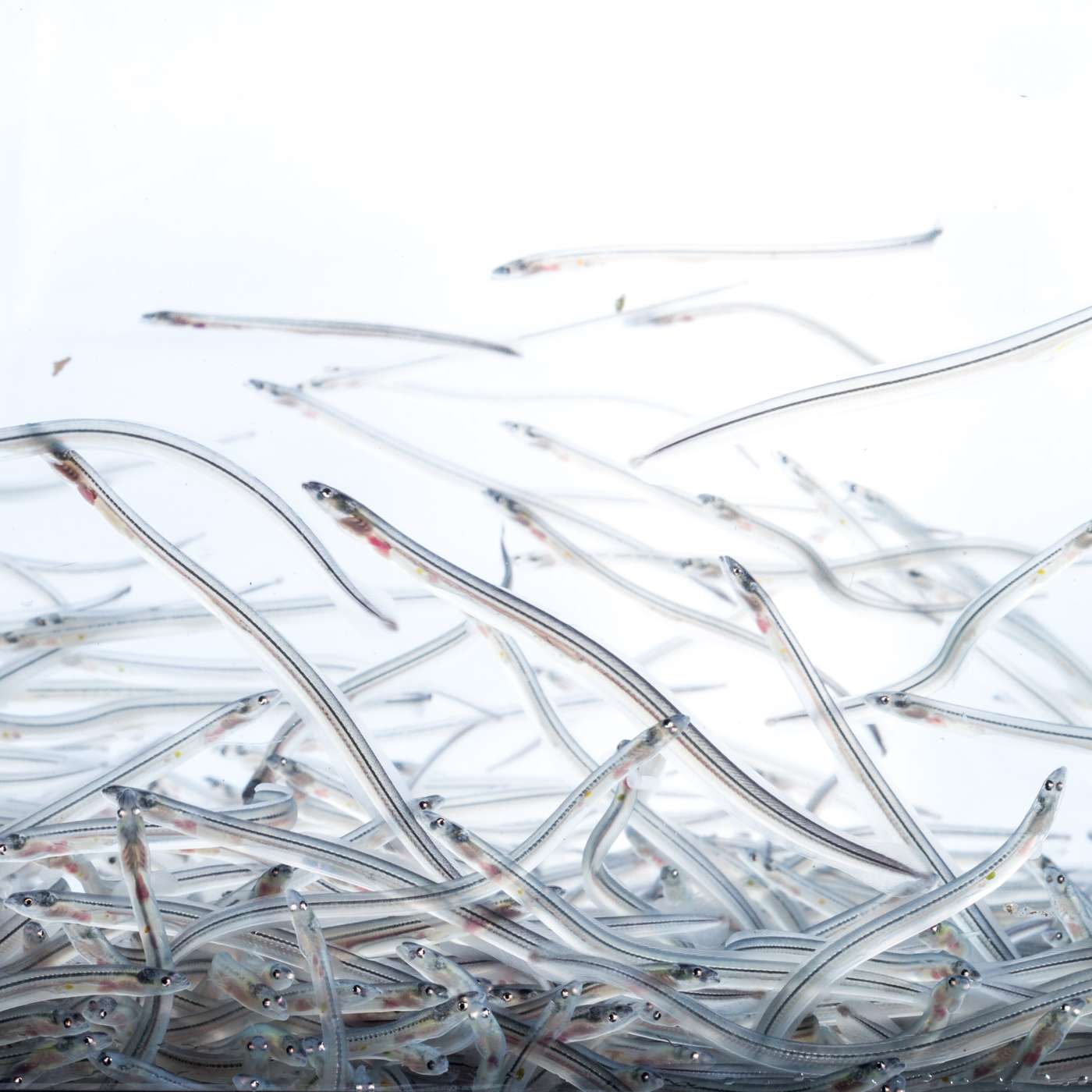
Every spring, something remarkable happens in the tidal waters of Black Creek in Esopus, New York: tiny, translucent eels — just an inch and a half long and barely the weight of a postage stamp — swim in from the Atlantic Ocean, following a journey that began in the Sargasso Sea nearly a year before.
In this episode, guest host Sierra DeVito joins the Hudson River Eel Project at Black Creek Preserve, where Professor Susan Hereth of SUNY New Paltz leads a team of college and high school students in weekly data collection on the American eel — one of nature's most elusive and mysterious creatures. No one has ever witnessed eels spawning. No one knows exactly what draws them to the Hudson, or to Black Creek specifically. And yet, year after year, they return.
We wade in with the crew as they haul the fyke net, count and weigh glass eels, record field data, and release the eels upstream. We also hear from students about what it means to do real science in the real world — and why it matters.
In this episode:
- The remarkable (and still poorly understood) life cycle of the American eel, from the Sargasso Sea to the Catskill tributaries
- How community scientists collect data that feeds into long-term fisheries research
- The black market for glass eels — and why a single eel can be worth serious money
- Why getting students into the muck may be the best environmental education of all
For more information or to inquire about volunteering with the Hudson River Eel Project, visit the NYS DEC website — https://dec.ny.gov/nature/waterbodies/oceans-estuaries/hudson-river-estuary-program/community-science-volunteer-opportunities
Transcribed by Jerome Kazlauskas
[00:00:00] Susan Hereth: Alright, let's gather round! Alright, so we're here at the net. The water level's a little different than we had last time. We might have a good amount of eels to count today because the numbers have been ticking up all week, so is there anybody who really wants to go in the creek today? One, two, three, four, five, six, seven, eight, and then the rest of you will do the data on land. Okay, you all know what to do.
[00:00:32] Sierra DeVito: At Black Creek Preserve in Esopus, New York, community meets science for the Hudson River Eel Project, where students and volunteers join weekly to collect data on the American eel, the life of which is a mystery of sorts. We join Professor Susan Hereth, who is leading today's young scientists. Stay tuned to hear about what we do know and are learning about this keystone species. I'm Sierra DeVito, and this is "Kaatscast: The Catskills Podcast."
[00:01:00] Susan Hereth: My name is Susan Hereth. I wear two hats on this day today. I am a professor at SUNY New Paltz, and this is a field studies class for the education program, having future teachers interact with high school students in the field, and then I also work with the high school students in my other role as education director of the Kingston YMCA Farm Project, so this is our fyke net, which collects the glass eels. They swim up out of the Hudson into Black Creek, into this fyke net. Obviously, it doesn't cover the whole width of the creek, so we're just capturing a small portion of the population coming into here. This part of the creek is tidal, so its depth changes. Just about every six hours, we'll have a high tide, a low tide, a high tide, and a low tide. The same is connected to the Hudson, which is connected to the Atlantic Ocean, so the students will put on waders and come in here. They know all the steps they have to do to untie the knot, open up the net, and check and see what's inside, and every day is a mystery. We have no idea what we'll find.
[00:02:14] Brett Barry: So they're swimming upstream.
[00:02:15] Susan Hereth: They're swimming upstream, so they've spent the last year floating on the Gulf Stream from the Sargasso Sea up the East Coast of the United States. Some eels head to the north of South America. That's a little confusing. Some head to Greenland, some head to Europe, and we're just counting this population that comes into the Hudson every year.
[00:02:37] Sierra DeVito: During that trip, a little bit is like a mystery to us, right?
[00:02:41] Susan Hereth: We do not know where they spawn. No one has ever seen that happen. That's one of the great and beautiful mysteries of this whole project. The smallest stage of their life cycle—the leptocephali—they have found in the Sargasso Sea, which you could also think about as like the Bermuda Triangle, so the scientists have found them there, but no one has ever seen eels spawn or lay eggs, so that is a beautiful mystery, and then, like, what drives them to follow the Gulf Stream or use the Gulf Stream, you know, for momentum? What makes them choose the Hudson River? What makes them choose Black Creek? No one has any idea. We have seen that the temperature of the creek is associated on some level with the eels coming in it. There's usually a big wave mid-April. Sometimes it's associated with moon cycles, but every year is literally different, and the temperature of every year is different, and the rain, the precipitation we receive every year, is different, and the storms are, so it's really still hard to find a pattern to anything. You know, some of them are coming into the Hudson River. Some of them are going into every single tributary along the Hudson River, and they're moving, like, upstream. They're always sort of moving up in the watershed, and they are very territorial, so they'll kind of find a spot and, you know, make that their home, so we're here at Black Creek down by the Hudson. Eels might go, you know, all the way up to Chodikee Lake, you know, under 199—like, they might follow the creek all the way, or they might find little pockets where they live along it, so the eastern side of the Catskill Mountains flows into the Hudson River. It's part of their estuary, so I don't have the data or the knowledge in particular about how far up the eels go into the Catskill Mountains, but I imagine any tributary off the Hudson that leads into the mountains—you could very likely find eels up into that system because they'll just keep sort of moving and following, going upstream in whatever systems, looking for their spot to ride out into adulthood, so when they're coming here into the river, we're calling them "glass eels." They're about an inch and a half. They're translucent, and they're about a year old, and so they'll pretty rapidly start to change once they hit these more turbid tributaries, even the Hudson River, so they're translucent in the ocean so that it acts like a camouflage so it protects them. You can't see them out in, like, the more clear, translucent ocean waters with that sun shining through, but here in these much more turbid systems, the Hudson River watershed, they quickly change their pigment so that they're more camouflaged for this environment. As glass eels, they're like remarkably visible in this environment because the bottom of the stream is really brown and mucky, kind of green algae, so they kind of need to change their color pretty fast, their pigment, to stay camouflaged to have that defense in this freshwater system, so from their glass eel stage, about a year old, they sort of quickly start becoming elvers, a year and a half to three years old. I think we have some in our bucket, so you'll see the real visual difference in them. From the elver life cycle, they go to a yellow eel life cycle, and that's where they, you know, are just maturing and having their little home turf and their chosen spot to live in the creek. They're kind of like a scavenger. They'll kind of eat anything. They're not really picky, and when they're ready to head back to the Sargasso Sea, that's their silver eel stage, and their eyes become bigger, and their color changes because they're going back to the ocean, so again, they want to be camouflaged. If you look, if you're a predator looking down at them, you don't see them. If you're a predator underneath them, you won't see them in that sort of silver color, and when they're going back, they stop feeding. They sort of digest their internal organs and use that energy to get back to the Sargasso Sea, and they basically spawn and die, we think.
[00:07:17] Sierra DeVito: So here we're counting them today, so what's the process once, well, step one, get waders on? But what's the process after that?
[00:07:24] Susan Hereth: Sure, so whoever's coming into the creek gets their waders on. This is a teaching moment for everyone, so all of these students/community scientists know what their job is to do. So they get their waders, they get a bucket, and they know how to unclip the net and the ropes they need to untie and the process to getting in there, so they untie the knot and they open it up.
[00:07:52] Sierra DeVito: Yeah, Adrian will come around and do it.
[00:07:53] Susan Hereth: We always kind of look inside.
[00:07:56] Students: You think what?
[00:07:56] Sierra DeVito: Eight students in waders peek into the mesh pipe net. It's a long cylindrical trap at the end of a one-way V-shaped rig that channels glass eels into the net.
[00:08:06] Susan Hereth: Do you see them? Remember, if you drop any, we're going to count those too, so keep track of everything. Did anybody give it, like, the long look to see what's in the bottom?
[00:08:18] Sierra DeVito: No, there were just some really close.
[00:08:20] Susan Hereth: Okay.
[00:08:21] Sierra DeVito: So we haven't gone down there yet.
[00:08:22] Susan Hereth: That's a good indication, so the students are in their waders, and they've untied the net. They're peeking in with excitement and joy. One student is holding the bucket. Another student is searching around in the very beginning of the net because they found some in there. We haven't even like looked down to the real pocket that collects them, and so we... you see a lot? Woo, let me go take a peek and see what we got going on, so, oh yeah, we got some eels in here, and maybe if you all think we have at least 20, we can pull those 20 out and let the team on land count.
[00:09:06] Sierra DeVito: We have to turn it around.
[00:09:07] Susan Hereth: We could switch buckets. What do you see? What do you see?
[00:09:10] Sierra DeVito: A whole bunch.
[00:09:11] Susan Hereth: Whoa, there's like a...
[00:09:13] Sierra DeVito: I think we'll need some more. This is a lot.
[00:09:15] Susan Hereth: Alright, so you guys, if you think there's a lot, you can bring this together...
[00:09:20] Sierra DeVito: Yeah.
[00:09:21] Susan Hereth: ...and then it'll be a little easier to reach in. Get a few more in here, and then we'll get another bucket.
[00:09:26] Students: Whoa, they feel like spaghetti, little spaghetti noodles.
[00:09:30] Susan Hereth: Do you see any other creatures in there, scuds or caddisflies?
[00:09:35] Students: Not in the bucket, not right now.
[00:09:37] Susan Hereth: How many elvers do you think you have?
[00:09:39] Students: Feel like we have a lot. There's one that was kind of halfway between in the bucket.
[00:09:42] Susan Hereth: We had a really tiny one the other day, which was cool, and so yeah, this is, like, maybe our third or fourth time in the net. I can't quite remember, and we rotate every week, so it's like some people are having their first experience. Some people have been in each week. We kind of leave it to, you know, people who can volunteer when they want to come in, and then we have a team of students on the shore collecting water temperature, air temperature, doing the weather data, looking at the tide, that sort of thing. Alright, I'm going to go get those guys started counting. You all know what to do. Alright, where is my land team? Hi, Juan!
[00:10:25] Juan: Hi!
[00:10:26] Susan Hereth: Alright, guys, you got 20 eels to count and weigh. Do you remember how to do that?
[00:10:33] Students: Yeah.
[00:10:33] Susan Hereth: What do you remember?
[00:10:35] Juan: They have to be completely dry, and you weigh 20 of them at a time...
[00:10:39] Susan Hereth: Yes.
[00:10:39] Juan: ...using the scale that's in this box.
[00:10:41] Susan Hereth: Yes, so you're going to get out your equipment, the scale, the cup, and our favorite ShamWow. Somebody needs to get a small net and count out 20 glass eels. I see at least one over in there, so we're not going to count that one, so you can count 20 out of here into there, and then we'll scoop them out of that one, really get those eels, and scoop them up, so weighing only 20 each week gives us a baseline understanding of how their weight changes over time. I have noticed that, like, the longer the season progresses, the less they weigh, so they're coming in with a lot more energy or reserves. Maybe they're, you know, losing that weight, which is, like, microscopic. You know, the longer they're fighting currents or not eating or not settled, I don't know...
[00:11:37] Sierra DeVito: So they're about an inch right now. How big will they get when they're fully grown?
[00:11:41] Susan Hereth: Sure, so the males when they're fully grown are, like, 18 inches. And then the females can get up to three feet. Like, I've held really big adult eels out of the Hudson. Fishermen have caught them when I've been working alongside on the main stem of the Hudson, and I've held really big ones.
[00:12:04] Students: Awesome!
[00:12:05] Susan Hereth: Alright, we've got 20. Juan, what do you do? What do you do?
[00:12:08] Juan: Oh, you have to put them on this towel to dry them, and then you put them in the cup.
[00:12:13] Susan Hereth: Okay, so, Jeremiah, your next step can be to just scoop eels with that small net and drop them on that towel that Juan has, so just the 20 that you counted out. You're going to kind of, like, tap as much water out as possible, and you're going to dump them in Juan's hand, so get all 20, and you can really see how cool they are. You can see their eyes. You can see their hearts. You can see their spines. You can see their lungs. They're really amazing, so you also see they're getting squiggly, okay? You got the rest of the eels. Put them on the ShamWow. Juan will give them a pat.
[00:12:56] Sierra DeVito: A student dries the tiny eels with an absorbent cloth. A single eel is the weight of a postage stamp, so even a few drops of water would skew the results.
[00:13:04] Susan Hereth: It looks like we've got 3.5 grams.
[00:13:10] Students: Almost a whole gram less than when I was here on Monday.
[00:13:15] Susan Hereth: So these eels are smaller. Maybe they've been in here. We noticed that their pigment's a little darker, so maybe they've been in the river longer, and they've lost some weight, and they've started to adapt to this habitat that they're in, this ecosystem. Maybe they don't quite know where to find their food yet or something. I don't know. These are all just questions we can wonder and not have answers for. Alright, so, Juan, we're going to take those 20 eels that we've weighed. Let's put them in here. We'll put all of our counted eels into this bucket. Set up two columns. Set up a glass eel column and an elver column, and you will do a tally mark for every five glass eels that we get so you guys can all count that, and let's go back and check on our aquatic team. Do you all get a zip tie? Do you remember what color you took off?
[00:14:09] Students: I think there was one.
[00:14:10] Susan Hereth: There was one? Okay, interesting. Alright, Kaden, will you say "no zip tie"? So we put on a zip tie to help us determine if there's been any suspicious behavior with the net between checks.
[00:14:26] Sierra DeVito: There's some issues with these little guys, right? People really like them.
[00:14:30] Susan Hereth: Yeah, so there's, like, kind of a black market for glass eels, I would say. You know, if anybody's ever eaten unagi, those eels come from glass eels. It's the American eel. No one has ever been able to figure out how to breed American eels in captivity, so the only fishery here in the United States for glass eels is actually in Maine, and it's like a lottery system as to who gets the permits to fish for glass eels in the spring run, and then those eels are shipped over to China and grown out in aquaculture and in aqua farms to a larger size, and then they're shipped back to Japan and the United States for processing and enjoying in your sushi, so it's like a huge economic potential, this fishery, so eels are fish, and because we're studying their numbers, their populations have declined. There were more legal fisheries on the East Coast of the United States, but now it's only been decreased to only in Maine and only, like, certain numbers, so because of that limited supply, they're sort of like a hot commodity for illegal activities.
[00:15:52] Sierra DeVito: So, at this point, the eels have been pulled out of the net. We've counted them. We've taken data. Where do they go now? What do we do with them?
[00:15:59] Susan Hereth: Yeah, so now we make sure we have all the data in our books. We have journals. We sit down as a group. We make sure everybody has the data each week so that we can compare, contrast, and make predictions over time. We record that in our little field notebooks, then we bag up the eels in Ziplocs and take them up the creek and let them go. Yeah, and so we carry them upstream so that we're not recounting the same eels, and, you know, we're kind of giving them like a little head start on their journey upstream.
[00:16:34] Sierra DeVito: A little thank you for letting us grab their stuff.
[00:16:37] Susan Hereth: Thanks for letting us handle you, and off you go, little guys.
[00:16:42] Sierra DeVito: While the community scientists continued their data collection, we pulled some of the students aside to ask about the project.
[00:16:50] Kaylee Hamilton: Hi, my name is Kaylee Hamilton. I'm an early childhood education major, and I'm a junior at SUNY New Paltz, participating in my fieldwork in the Glass Eel Creek study.
[00:17:00] Sierra DeVito: What drew you to this as your fieldwork?
[00:17:03] Kaylee Hamilton: I wanted to do something different for my fieldwork. Most people are put in the classroom, which is something I've already experienced before, so I thought it would be fun also to do a different age range because this is high school, and we're all here for early childhood, so it's something fun to try something new, and maybe I might like it more than early childhood.
[00:17:22] Sierra DeVito: Is there anything you've learned within this program, either with the high schoolers or with the eels, that you're going to take moving forward into your future and career?
[00:17:32] Kaylee Hamilton: Yes, I think stepping out of my comfort zone was a big one. I'm really scared of snakes, so I was a little nervous to, like, be with the eels and everything, but today I did touch an eel, and it was a lot easier than I had thought it was going to be, so definitely putting myself out there is a nice thing, and I think it'll be a great lesson to teach future students about.
[00:17:52] Juan: Okay, yeah, my name is Juan. I am a current senior at Kingston High School, and my first year at the YMCA Farm Project was my sophomore year, so 2023 and 2024.
[00:18:05] Sierra DeVito: What drew you to this program specifically?
[00:18:07] Juan: Both of my older sisters worked here, and they told me about it, and it just sounded really interesting, and I just wanted to be part of it because environmental science and conservation have always been something I've been interested in.
[00:18:19] Sierra DeVito: So moving forward into college, what do you hope to take from this experience?
[00:18:24] Juan: I really just hope to just spread more knowledge about environmental, like, conservation and protection and stuff because, you know, we're really seeing the effects now with, like, climate change and, you know, sea levels rising, and also with the development of some, like, technologies that are impacting our environment, so I think just being able to spread that knowledge to, like, even more people outside of Kingston, I really hope I get to do that.
[00:18:53] Sierra DeVito: After speaking with some of the students, we rejoined Susan, so we're here with a pretty big group, lots of young people, high school students, and college students. Can you speak to the value of this group of people getting out here every week and doing all this data and collecting?
[00:19:08] Susan Hereth: Sure, I have been an environmental educator for, well, probably my entire life, but professionally, like, the last 25 years, and I deeply believe that the best way to learn is outdoors, hands-on, in the environment. I also feel like people need to have the experience with these creatures to love them and want to protect them or to love the environment and want to protect the environment, so I think that this is just like a really cool and easy way to get people engaged in the natural world, and also, you know, we're not just outside. We're actually scientists. You know, they're all actually scientists collecting real data that is used. There's a long acronym for the fisheries unit that collects this data. You know, this data from the Hudson River was used in a big report last year. It's used by scientists monitoring the population so they might just kind of be out here counting eels, but the bigger picture is they're gaining real hands-on experience with their world. They're understanding how their environment works a little bit differently, and they're providing real scientific data for important studies. They've been studying this for I think about 16 years. There are roughly 12 different creeks in the Hudson River estuary that do these fyke nets seasonally, so they're collecting data from, like, 12 different sites each year for about six to eight weeks consistently year after year, gathering this long-term data because nobody really knows the reason they're doing that is to understand what's happening with the population of this keystone species. The data we see now shows, like, an uptick in the population, but that's just for the last, like, 15 years, but if you zoom out, there was a real crash in, like, the 1980s and 1990s, so nobody really knows what's happening and why they choose Black Creek or the Hudson River or any of the other creeks in this program. No one really knows other than this is, like, their life cycle. They've been doing it for hundreds of thousands of years, maybe longer, and yeah, it's just this really beautiful mix of community science and interested people. You know, students, all sorts of volunteers of all ages come here, and I think it's the mystery that brings everybody and, like, the real hands-on, accessible way to connect with our environment. Look at them all, like wandering in the muck. I love it, like I love that—that, to me, is just as important an experience as anything, just like getting to understand your environment, be comfortable in it, and be engaged with it. There's nothing more exciting for me as an adult and for me as an educator than to see that.
[00:22:10] Sierra DeVito: At the end of the day, the team collected 161 glass eels, coming in at about 28 grams, just 0.175 grams per eel. Safe travels, little ones! For more information on this study or inquiries about volunteering, you can visit the New York State DEC's website. We'll put a link in the show notes. This episode was recorded by "Kaatscast" producer Brett Barry, transcriptionist Jerome Kazlauskas, and I'm your guest host for this week, Sierra DeVito. Please don't forget to subscribe wherever you get your podcasts. Thank you for being a listener, and we hope to see you upstream.


