Deborah Glick Reflects on 36 Years in the New York State Assembly
Key Takeaways
- Deborah Glick served in the New York State Assembly for 36 years, becoming the first openly LGBTQ member of the New York State Legislature upon her election in 1990.
- Glick's career spanned six governors and involved key leadership roles, including chairing the Higher Education and Environmental Conservation committees.
- State legislatures serve as critical policy incubators that directly impact daily life through decisions regarding healthcare, transportation, and environmental standards.
- Glick sponsored landmark legislation including the Sexual Orientation Non-Discrimination Act (SONDA), the Gender Expression Non-Discrimination Act (GENDA), and the New York state codification of Roe v. Wade.
- While political polarization and special interest lobbying have increased, Glick emphasizes that ordinary citizens still hold significant power to influence local and state public policy.
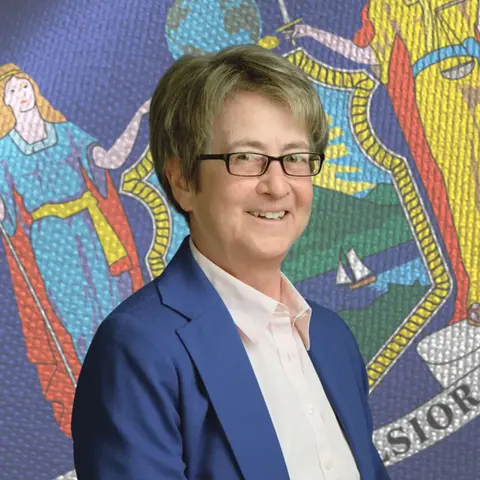
After 36 years in the New York State Assembly, Deborah Glick is stepping away from public office. First elected in 1990, Glick became the first openly LGBTQ member of the New York State Legislature and went on to play a key role in some of New York's most consequential fights over civil rights, reproductive freedom, environmental protection, tenant rights, and public health.
In this episode of Kaatscast, recorded at her Catskills home, Glick reflects on a career that spanned six governors, dramatic shifts in Albany, and decades of social and political change. She discusses everything from coming out publicly in 1973, to helping secure statewide protections for LGBTQ New Yorkers, to the compromises and negotiations behind landmark legislation.
We also talk about the importance of state government, the growing influence of money and lobbying in politics, efforts to protect horseshoe crabs and pollinators, and why she believes ordinary citizens still have more power than they realize to influence public policy.
In this episode:
- Becoming the first openly LGBTQ member of the New York State Legislature
- The fight for SONDA, GENDA, hospital visitation rights, and a ban on conversion therapy
- Codifying Roe v. Wade protections in New York before the Supreme Court reversal
- How compromise shapes legislation
- Protecting horseshoe crabs, pollinators, and New York's ecosystems
- The stalled Packaging Reduction and Recycling Infrastructure Act
- Why state government may affect your daily life more than Washington does
- What comes next after a lifetime in public service
Links & Resources
- Learn more about the New York State Assembly: https://nyassembly.gov
- Deborah Glick's legislative record: https://nyassembly.gov/mem/Deborah-J-Glick
- Deb's public "coming out," 1973, in: New York Illustrated
- Kaatscast: https://kaatscast.com
Frequently Asked Questions
Who is Deborah Glick?
Deborah Glick is a retired New York State Assembly member who represented Lower Manhattan's 66th District for 36 years and made history as the first openly LGBTQ member of the state legislature.
What is the 66th Assembly District in New York?
The 66th Assembly District covers a large part of Lower Manhattan, including the Village East and West, NoHo, SoHo, Tribeca, and the area surrounding City Hall.
What major legislation did Deborah Glick sponsor?
Deborah Glick sponsored several landmark bills, including the Sexual Orientation Non-Discrimination Act (SONDA), the Gender Expression Non-Discrimination Act (GENDA), the Loft Law, a statewide ban on conversion therapy, and the Hospital Visitation Act for domestic partners.
How did New York protect abortion rights before the Supreme Court overturned Roe v. Wade?
In 2019, New York passed the Reproductive Health Act, championed by lawmakers like Glick, to codify Roe v. Wade protections and safeguard abortion access at the state level.
[00:00:00] Deborah Glick: There's no question that I was seen as a radical for some people very concerned about whether or not I would be a team player, whether the issues that I was clearly focused on and had run on, reproductive rights, lesbian and gay rights, environmental, tenants' rights, and whether those things were going to, you know, upend the apple cart.
[00:00:32] Brett Barry: After 36 years in the New York State Legislature, Assembly Member Deborah Glick will not appear on this year's ballot. For the first time since 1990, voters in her Manhattan district will have to choose someone else to represent them in Albany. I visited Deb at her Catskills home to reflect on a career that spanned six governors, helped transform LGBTQ rights in New York, and shaped environmental policy across the state. Along the way, she offers a candid look at how Albany really works from the negotiations and compromises behind major legislation to the surprisingly effective ways constituents can influence the process. I'm Brett Barry, and this is "Kaatscast."
[00:01:23] Deborah Glick: I'm Deborah Glick, currently but soon to be retired state assembly member for the 66th Assembly District, which covers a large part of Lower Manhattan, and we are in the Catskills.
[00:01:37] Brett Barry: And this is where you come to get away, the very western edge of the Catskills.
[00:01:41] Deborah Glick: Yes, we got the house over 20 years ago as a mental health recharge because it was clear to me that I needed... I either needed to go to therapy three times a week and have the therapist buy a house, or we could buy a house and I wouldn't need a therapist.
[00:02:04] Brett Barry: You are hanging up your hat, so to speak, after 36 years as a New York State assembly member for District 66. Congratulations!
[00:02:14] Deborah Glick: Thank you!
[00:02:15] Brett Barry: Your tenure in the assembly has coincided with six governors: Mario Cuomo, George Pataki, Eliot Spitzer, David Paterson, Andrew Cuomo, and Kathy Hochul. How would you describe some of those relationships? Are there any fun anecdotes that you can share?
[00:02:32] Deborah Glick: Well, certainly, I was new when Mario Cuomo was the governor and was very much in awe of his ability to frame a message and his oratory, which was not that exceptional at the time, but now in retrospect, as public discourse has degraded, he was quite magnificent to listen to.
[00:02:59] Mario Cuomo: President Reagan admitted that although some people in this country seem to be doing well nowadays, others were unhappy, even worried, about themselves, their families, and their futures. The president said that he didn't understand that fear. He said, "Why, this country is a shining city on a hill." And the president is right. In many ways we are a shining city on a hill. But the hard truth is that not everyone is sharing in this city's splendor and glory.
[00:03:40] Deborah Glick: And it was a very different time. When we got a budget presentation to the legislature, we were in a relatively small room. The budget presentation was made primarily by the governor, and he took questions. Now, you know, years later, it's a show. The State of the State was done in the Assembly chamber, which is larger than the Senate chamber, and the senators would join and visitors, and that changed with Andrew. He moved that into the convention center, lots of showmanship, and has continued since.
[00:04:20] Brett Barry: Is there more showmanship in the body as a whole? Are assembly people and senators doing things for clicks or for kind of shock value like what I imagine happens more on a federal level?
[00:04:36] Deborah Glick: There's no question that social media has an impact. The legislature is a reflection of society, and therefore, all of the positives or ills of society are on display. People always did something, but now it's exponential, and the legislature has changed in that people's tenure is very short-lived in the way that people come and go. The notion that we need, quote, "term limits," I've always said, "Well, those are called elections." It is the money in politics that's pernicious, but yes, there is definitely—people are there for shorter periods of time. They're trying to make more of a social impact. Some of it's legislative, but a lot of it is for display online.
[00:05:26] Brett Barry: So what do you attribute your staying power to?
[00:05:30] Deborah Glick: Well, I started when people did stay a longer period of time, but I've always said that 90% of your re-election is doing your job all the time well, and so I gave 100% of my energies and decided not to run because I couldn't do it anymore.
[00:05:53] Brett Barry: Let's talk about your district. We're here in your Catskills home, but the district you represent encompasses your other New York home. Can you describe District 66?
[00:06:04] Deborah Glick: Yes, it's the Village East and West [runs from the west side of First Avenue to the Hudson River, a little bit above 14th Street, but mostly 14th Street is the main departure point, and it embraces NoHo, SoHo, Tribeca, and the area around City Hall].
[00:06:26] Brett Barry: It's geographically not huge but dense, which is probably very different from what this district is that you have your second home in, which is very large geographically but, you know, very sparsely populated. There's some big differences there, and also probably some very big differences in the politics.
[00:06:45] Deborah Glick: Yes, and I think that it's been helpful to have the perspectives in both areas. It's made it easier for me to relate to and communicate with colleagues who represent areas outside of the city, whether they're Democrats or Republicans. I've chaired the Environmental Conservation Committee for the last several years and before that higher education, and a lot of that impacts districts that are vast upstate areas, so it was helpful for me to really understand where people were coming from.
[00:07:25] Brett Barry: Is there more commonality than we would expect across districts [across different groups of people]? What do you think that residents in each of the places that you live in would understand the least about each other, or are there common threads?
[00:07:40] Deborah Glick: I think people are people, and people sort of want the same thing in terms of—they want to have a safe community. They want to have good education and healthcare for themselves and their kids. How that is filtered through their own perceptions of national politics and state politics is different, but I do think that the best part of the time in the legislature is the time when you have sort of downtime. You're waiting for a committee to start, and so you're chit-chatting across the table and finding out things about people that are more personal, and they are not that different, and their personal experiences can change. One of our colleagues had a terrible tragedy, and his young son was killed by a car, and it changed his perspective on concerns that we have in the city around vehicular safety. A terrible way to learn that, but people's personal experiences or what informs them changes perhaps their ability to relate to each other. I think the biggest difference is in large parts of upstate there is less racial and ethnic diversity, and that makes it easier for people to see people stereotypically.
[00:09:20] Brett Barry: You were born in the Bronx and grew up in Queens, but you spent plenty of time in Greenwich Village, which is where you now live and represent. Tell me about your father's printing business and your early career in that field.
[00:09:33] Deborah Glick: Well, my father and uncle had a printing shop and stationary store in the West Village, and it was a very small operation. My father was the printer, as his father before him. My uncle was more of the purchasing agent, salesman, and billing department. I would sometimes on Saturdays go with him and learn to set type. I learned how to glue pads and other things, but I wasn't allowed to go near the cutter, even though it had safety measures. You couldn't have two—you had to use two hands to activate it, so it was safe, but he wouldn't let me do that till I was much older.
[00:10:20] Brett Barry: And so that gave you a taste of the area that you would eventually settle in and then later represent?
[00:10:28] Deborah Glick: Well, I do know the neighborhood from a very long time ago, and when it was, in fact, a maritime and warehouse operation, where West Street didn't have condos but rather had marine motor repair and warehousing, and the Christopher Street Post Office existed where now there's a theater and some other sort of fancy thing, and fancy, it was a federal building, so, and post office, and now there are condos and stuff, so I do recall the area when it was much more sort of industrial, and the meatpacking district was a meatpacking operation.
[00:11:19] Brett Barry: Now it's a hip thing to say that you lived there.
[00:11:21] Deborah Glick: Oh, now it's, you know, the people who live there now are hanging on, who are working middle class, are hanging on by a thread through the, you know, whether they've bought their apartment as I did, that had been rent-stabilized, or people who are still in rent-stabilized apartments. It's harder because, as wealthy people come in, the nature of the shops is different, and the real estate is more expensive, so the supermarket prices are higher there than they are in other places.
[00:11:55] Brett Barry: You moved there in the early '70s on the tail of the Stonewall Uprising, and in 1973, you came out in a very public way. Can you recount that experience and give a sense of the fabric of the city at that time or the nation and what it meant to come out?
[00:12:15] Deborah Glick: Well, the Gay Alliance—the Gay Activist Alliance—had a firehouse on Worcester Street in SoHo when SoHo was still a lot of light manufacturing and artists—real artists—struggling artists living in walk-ups that had, you know, limited services, and there was a Lesbian Liberation Committee. We sort of thought of ourselves as, you know, the women's auxiliary, and we met Monday nights on the third floor. Lots of people didn't even know there was another floor in the firehouse, and the firehouse was primarily a social gathering place, with dances on the weekends, but we met and discussed politics and outreach and so forth. Half of the people in the room, which was a very small group of us. They were in shadow, and I was willing to be filmed.
[00:13:14] [Documentary Clip: New York Illustrated]: The Gay Liberation Movement involves homosexual women as well as men: lesbians. The Lesbian Liberation Committee is part of the Gay Activist Alliance. It is one of several active lesbian groups. This evening, the group heard reports on a feminist lesbian conference, which attempted to reconcile the two liberation movements. Those with their backs to the camera did not wish to be filmed.
[00:13:40] Brett Barry: That's a clip from a 1973 edition of "New York Illustrated" titled, "Homosexuals: Out of the Closet." Deborah Glick, in her early 20s at the time, was filmed in that meeting facing the camera.
[00:13:56] Deborah Glick: I was young, and I figured if I lost my... because we had no legal protections, not for housing, not for job security, or public accommodation. You could be thrown out of some place holding somebody of the same sex's hand, so I was willing to be filmed, and then I had to find out when it would be aired so that I could tell my family before it came out on TV, and I did find, you know, that I was harassed at work, though I didn't lose my job.
[00:14:29] Brett Barry: What was your family's response?
[00:14:32] Deborah Glick: My kid sister knew. My mother, who was very sweet and very, you know, caring. She said, "Well, I kind of had an idea," and she said, "Do you want me to tell your father?" And I said, "Yes, you tell him." I wanted no part of that, but my parents, you know, they were concerned about appearances outside of the home and with other family members. My mother was like, "You don't have to tell your grandmother or aunts and uncles," so that was their, you know, reflection of the society being, you know, very... it was taboo, and so, you know, fine, but don't tell anyone other than us. My sisters were pretty good and came to my swearing-in, which they saw. My father did not. He had gone.
[00:15:33] Brett Barry: So that was in 1991, the swearing-in. You were elected in 1990 as the first openly gay representative in New York state government?
[00:15:43] Deborah Glick: In the legislature, yes.
[00:15:45] Brett Barry: That's incredible, 1990s, that that hadn't happened yet.
[00:15:50] Deborah Glick: Yes, well, we hadn't in New York City gotten basic civil rights till 1986. You could be fired. I had a little hand in working on that effort. I've always been political. You know, I had work that paid the rent, but I was always active in local, not necessarily electoral, politics, but issue-oriented politics before that, most notably reproductive rights, because when I went to college, women had no right to choose, and we're back to that in many states, not all states, fortunately, and I had a hand in making sure New York adopted Roe v. Wade protections in 2019.
[00:16:44] Brett Barry: And that was about three years before it was struck down at the Supreme Court on the federal level, so did you have some inkling that it was going to be important to lock those protections in on a state level?
[00:16:57] Deborah Glick: No question about it, other people thought, "We have these federal protections. Why are we doing this?" Because the debates were long and torturous," and I said, "You never know when things can change," and there were clear signs that there were inroads being made by anti-choice activists, and the movement to restrict women in many ways was very apparent.
[00:17:30] Brett Barry: How important are state politics? People are so focused on federal, national news and politics and showmanship, and it kind of dominates the headlines, but there's so much important work happening on the state level. Should we be more invested in what's happening at the state level—at our community level—more cognizant of who our assembly people are and who our state senators are being more active on that level? Just be interested to hear you talk a little bit about state politics and how, in light of all the crazy stuff that happens nationally, it's still really important in this United States of America.
[00:18:14] Deborah Glick: You know, there is the sort of standard the state legislatures are the incubators of, you know, policies and what they are, and they do affect your life more directly every day than national politics, and you can influence them more. Sending contributions to congressional representatives who are up for re-election that you like or for their challengers if you don't like is important, but the ability to impact a race that is close on the ground in a state legislative race is much more immediate, and I would say that some of the progressive organizing that we've seen that has seemingly made inroads is really about working on the local level and communicating directly with people locally, and I've always said for my assembly races, I can reach people. Now, it's different in other parts, as you've pointed out. Other parts of the state are where they're geographically spread out, but I can meet people directly at supermarkets and on subways. That was a very immediate way to meet people in their neighborhoods and meet them repeatedly. I mean, what affects people every day? You know, healthcare and transportation. Who's dealing with that? You know, you can have things screwed up by the feds, but it can be ameliorated or improved directly by your state legislation and state budget and the like.
[00:20:08] Brett Barry: How progressive were your politics in the legislature when you started? How has that changed, if at all? Were you more of an outlier than in the greater kind of legislative body? How has that makeup evolved?
[00:20:24] Deborah Glick: There's no question that I was seen as a radical, for some people, very concerned about whether or not I would be a team player, whether the issues that I was clearly focused on and had run on, reproductive rights, lesbian and gay rights, environmental, tenants' rights, and whether those things were going to, you know, upend the apple cart. The reality is that over time, I moved from "I have to have 100% today" to "I will take 75%, and I will come back for the rest, so you become maybe understanding that politics is the art of compromise. I didn't make that up. That's a well-known phrase, and it's accurate. You have to get other people to share your point of view. What has changed, I believe, is that corporations and the money that they are willing to put into races has had an impact, and if anything, the dial moved from where I was totally radical to where I was very progressive but willing to make a deal in order to move the dial to where I'm back to being an outlier because the fossil fuel industry and the petrochemical industry, which are really sort of the same thing, have poured more and more money into states because they realize that's where the action is, and that, yes, they get benefits from supporting right-wing politics federally, but that the states really control a lot of air quality and water quality and set standards for emissions that they can't possibly meet, and so they are working federally, but they are doing a great deal more on a state level, and it is making it impossible because we, as I said, we've had a lot of turnover, and new people have not quite learned that lobbyists aren't their buddies. You can take people's contributions, maybe some people's you shouldn't, but you definitely are there on behalf of the people, and the people are suffering, and kids are suffering from chemicals and plastic, and the Chemistry Association is not your friend.
[00:23:23] Brett Barry: Let's talk about some of the legislation. So from LGBTQ civil rights, reproductive rights, environmental conservation, tenant protections, animal welfare, the arts, and higher education, some of your most recent accomplishments include the passage of the Reproductive Health Act. Can you elaborate on what that is?
[00:23:43] Deborah Glick: That basically codified Roe v. Wade. New York State decriminalized abortion in 1970 before the 1973 Roe v. Wade decision. There was a gap in our law because we would protect the life of the mother but not her health. Roe v. Wade included protecting a woman's health in terms of the right to an abortion, and so it was important to codify that in New York State, which we did, and then follow it up with enshrining it in, the state constitution, which the public did, which was good, but that was at a time when people weren't 100% sure that we would lose Roe v. Wade at the Supreme Court, but it was clear to me that the public... they did not see the Supreme Court as important, and therefore, that didn't motivate progressive and Democratic voters in the way it energized Republican voters.
[00:24:51] Brett Barry: Tell me about the Loft Law.
[00:24:53] Deborah Glick: New York City had a lot of industrial communities [SoHo being one of them] that were light manufacturing slowly becoming residential. The Loft Law was specific—targeted to commercial buildings that were being converted to residential occupation—and there are different requirements for health and safety, and so it was legalizing commercial buildings for residential habitation, but those early days were really protecting tenants who were artists, and it existed prior to my entering the legislature, but we had to reauthorize it periodically, and then we made it permanent at one point, which was very important because, you know, the winds of real estate control in the city are pretty extreme, and as artists were pushed out of their original locations and were being forced into other areas that were still semi-industrial, we needed to make a change, and I'm very proud of that because artists are vital to our economy.
[00:26:16] Brett Barry: You were the primary sponsor of a ban on the harmful practice of conversion therapy. Can you tell me a little background on that?
[00:26:24] Deborah Glick: Well, you know, lots of families don't accept the fact that their children are LGBTQ, especially sons. It was far more focused on men, and fathers could not accept the fact that their sons were gay, and a lot of that is about religious upbringings, and so it was an attempt to use very extreme measures of, quote, "therapy" to try to change someone's sexual orientation, which really isn't possible. People's sexuality is generally a little more fluid than we like to admit in society. You know, when you're gay and you know you're gay and your family is religious or very old school, you know, you hide, and the hiding is very negative in one's emotional health, and so being forced to try to through electroshock or other really bizarre attempts to desensitize you or to change who you are makes for more depression and more self-harm. This conversion therapy was focused on minors—protecting minors from these pernicious practices—and we allowed for religious organizations to do counseling of adults. We allow people to discriminate. You know, religions are allowed to discriminate, so, you know, on that basis, this isn't interfering with their First Amendment rights. Sadly, the Supreme Court has struck it down in a couple of other states, which will have an impact, I believe, on our state. They struck down conversion therapy bills as unconstitutional. We may survive because we were very careful about allowing religious persecution of their own congregants.
[00:28:43] Brett Barry: And so this legislation pushes and pulls and compromises, and working with people in a way helps insulate these bills because they're not as progressive as maybe you'd hope, but if they were, they'd be more easily struck down.
[00:28:59] Deborah Glick: Well, I actually think they were very progressive. We just insulated them from legal challenges by allowing very limited and specific religiously affiliated organizations to continue to be discriminatory.
[00:29:20] Brett Barry: Tell me about the Hospital Visitation Act.
[00:29:24] Deborah Glick: Well, a lot of that goes back to before—understand that while New York City, Rochester, Tompkins County, and maybe Albany had protection for the basic civil rights of gay New Yorkers, there were instances outside of the city after and actually before, but the AIDS crisis became very clear, and there was—it wasn't just about AIDS. Somebody could have a heart attack and be taken to an emergency room in some, you know, part of Putnam, and their partner wouldn't be recognized because there was no statewide bill till 2002. My basic civil rights in New York State, even as a sitting member of the legislature, were not protected in every part of this state till 2002, so in 1998, somebody in Putnam could be denied access to seeing their partner in a hospital because they're not immediate family, so we did a hospital visitation bill for domestic partners and having to define who domestic partners were within healthcare law.
[00:30:48] Brett Barry: And it wasn't, as you said, an issue in your district, but it was an issue in other parts of the state, so you were able to use your background and your passion to codify something to protect citizens statewide as you, you know, in your capacity as an assemblyperson.
[00:31:05] Deborah Glick: Early on, we would get lots of communications from gay people who were in places where they felt they could not go to their own legislator, and in fact, at one point, I said, "You know, some of you really owe me part of your salary because there are people in your district that do not believe they can reach out to you, and they come to me and I have to help them in your district because they don't feel safe calling you." That happened a lot.
[00:31:37] Brett Barry: And you still find that you have the time and capacity to address constituents of other districts?
[00:31:44] Deborah Glick: Well, we weren't happy about it. Over time it became easier because consciousness raising is a process, and more people came out over time. More people were active in other places. You know, there have been people who don't support gay rights but then on the weekend go to the wedding of their son to his husband, so, you know, hypocrisy is the hallmark of politics.
[00:32:15] Brett Barry: A few more acts here that you were key in bringing up and passing or sponsoring the Sexual Orientation Non-Discrimination Act [SONDA].
[00:32:24] Deborah Glick: That was the statewide basic civil rights bill, which...
[00:32:29] Brett Barry: That's 2002?
[00:32:31] Deborah Glick: Well, that's when it passed in and was signed into law. It was first passed by the assembly in 1993...
[00:32:39] Brett Barry: Wow!
[00:32:40] Deborah Glick: ...and we had to bring it up every year, and, you know, some colleagues would say, "Why do we have to keep doing this in voting?" And, you know, fortunately, the speakers in the assembly have been very strong progressive voices, and when we had a Republican Senate for most of the early years, I think my first 20 years, they would say, "You know, we have to bring these things up because we have to keep the pressure on, and we have to keep the issue before the public." That was true for various reproductive rights bills and also true for the sexual orientation non-discrimination bill, so it got passed in 2002 by the Senate and was signed by the governor.
[00:33:29] Brett Barry: And then the Gender Expression Non-Discrimination Act [GENDA].
[00:33:34] Deborah Glick: There was, even within the gay community, an argument that sexual identity and expression were covered by SONDA, but there was a sense, and perhaps in the courts, not enough clarity, and so the original bill passed without referencing transgender individuals, and so we had to come back and do that, but it was within the gay community an issue of whether that would delay the main bill from passing, so we had to come back and pass as a separate bill, and, of course, the arguments are always the same. Whether it was the Equal Rights Amendment, which was about women having the same rights, the arguments always come down to bathrooms. Who's going to be allowed to go into that bathroom? And it's like everybody has unisex toilets at home. Everybody who flies or takes a train, they use unisex toilets. It is the stupidest and most infuriating argument, but it's—we're going to let people use the same bathroom? Stalls, I mean, it's, you know, stalls.
[00:35:00] Brett Barry: And so GENDA locks in what protections?
[00:35:04] Deborah Glick: It protects individuals from discrimination in housing and employment and public accommodations related to their sexual identity or expression.
[00:35:17] Brett Barry: Deb, you chair the Environmental Conservation Committee. Tell me about that position and why environmental policy has been so central to your work.
[00:35:26] Deborah Glick: Well, I was in college during the first Earth Day, and we are an interrelated web of existence, so even if we don't necessarily understand the food chain and how bugs are important for birds or important for butterflies or other creatures, there is a food web. We're at the top of it for the most part, unless you're, you know, fall off a boat in the, you know, Atlantic, where there are whales, or in the Pacific, where there are orcas. Basically, we're at the top of the food chain, and so it's important for the environment and ecosystems to be protected because as we tear the web of nature, it impacts us, so air quality, water quality, extreme weather—all of these things have been something I've observed, and so preserving open space, ensuring biodiversity, and ensuring that all of the different creatures that we may not be aware of their habitat and that their existence is supported because it supports all of us. We are a dangerous species because we are very focused on our own needs and don't really think about it, and there's more degradation of the environment because of, you know, greed, and I think a lack of empathy and a lack of understanding. I think if people understood more, maybe they'd be more empathetic, but they're not, and so we have to pass laws that protect the environment from us.
[00:37:33] Brett Barry: One of your recent wins involved horseshoe crabs.
[00:37:37] Deborah Glick: Horseshoe crabs—if you live along the coasts, you're familiar with them. If you went to the beach, which I did as a kid. I spent my summers at Long Beach in Nassau County, and I was, you know, fascinated by all sorts of sea creatures, which is why I have never eaten any seafood. Horseshoe crabs lived and preexisted dinosaurs. They have survived for four hundred and fifty million years. They are part of a food chain that supports migratory seabirds and also a lot of foraging fish, so they are crucial, and they have been on the decline, and they have been used, stupidly, for bait. They are chopped up and used as bait, and these incredible creatures, which are on the decline, are then on the decline for various other species that are threatened. The red knot is one of the most threatened birds, but there are other impacts, and the other thing is that they have a unique blood, and they were used by pharmaceutical companies for testing for certain toxins in the manufacturing of various pharmaceuticals. There is a substitute. There is now, and has been, approved by the American Pharmacopeia, so they don't need a waiver. They could always get a waiver. Eli Lilly had a waiver for years and was using a synthetic for most of their testing, but, you know, you pay a thirty-five dollar permit, and you can catch up to a certain, you know, significant limit, and so why would you change the way you're operating as a fishing person? I'm not against commercial fishermen, but I do think that they have to be responsible, and using this declining, incredibly important keystone species for bait isn't responsible. We are phasing it out over a few years to give them a chance to develop a different bait recipe, but I have to say that I found it disappointing that we faced a veto the first time around because of the fishing community, and we came back, and we made a deal that was a compromise. Okay, we're not going to stop it tomorrow, but we are going to phase it out over a three-year period, and I'm pleased that it will end.
[00:40:22] Brett Barry: Another bill on the environmental front, which seems to be stagnating, is the Packaging Reduction and Recycling Infrastructure Act. What's that about, and what's holding it back?
[00:40:35] Deborah Glick: We have too much solid waste. Our landfills are filling up. We're carting our garbage from one part of the state to the other, and reducing packaging can only be done by the manufacturers, so there is really no alternative but to, at some point, say no to the chemical association, the manufacturers association, the packaging association, and all the rest of them, and tell them to keep their money and use those dollars to retool their operation, and plastic is terrible. It doesn't go away, and most people know that, and very little of it is actually recycled, despite what they say about the little chasing arrows. Some things can be turned into other products, but it is not nearly keeping pace with the amount of plastic that is produced, and plastic is a byproduct of fossil fuel manufacturing, and so as we use less fossil fuel, those companies are now seeing their real product as plastic, and so they are producing more and more of it. You have to reduce your packaging. The bill originally was fifty percent in ten years. Now it's thirty percent in twelve years, and frankly, many, many companies are already at that point. There is no reason, no reason why this bill should be stalled, but we have a lot of new people who are sold a bill of goods and somehow believe that the lobbyist is less likely to lie to them than I am, and I don't, you know, I'm leaving, so I can say that I found many of their specious arguments insulting and somewhat disrespectful to me as a colleague and foolish because the impact is on their children. I don't have kids. I worry about their kids and grandkids, and they are not caring and worrying enough. A lot of the chemicals that are in the plastics that our food comes in are endocrine disruptors. There's a lot of science around this now in terms of developmental problems and attention problems, and if we're going to deal with healthcare, which many of these communities already have trouble with, we're not going to be able to address this if we keep poisoning ourselves, so we have to say to the manufacturers to go back to what you used to do. When I was growing up, I got stuff in bottles. Glass is imminently safe in terms of being able to be sterilized and the like. Yes, it's heavier. Yes, it can break, but I have to say that I don't remember us ever breaking a milk bottle. They're a little thicker, a little heavier. I don't think we ever dropped a bottle and broke it. There was this argument: "What are we going to do—go into a store and stick our hands into barrels of frozen broccoli?" And the argument was being made by somebody who was of similar age, and I said, "Come on, I think you know that when we grew up, we got frozen foods. They existed. The Green Giant existed when we were young, and it came in a little wax cardboard box in a wax paper wrapper that had design advertising. The Jolly Green Giant was on there, and you now have all of these companies and startups that are demonstrating that they can provide to the public products that are coming in things other than plastic, and we have to demand it," and at some point, if your legislator is not supporting this bill, and you forget about them, "Oh, I'm a sponsor." No, not that you're a sponsor. Are you a yes vote, and have you told the leadership you will vote yes? Because what happens is people go on bills, and your listeners should understand this. They say, "I'm a sponsor." Yes, are you a sponsor that's actually saying that you will vote yes? Because sponsors then go, they go to the leadership and say, "I'm on the bill, but please don't bring it to the floor," so you have to be a smart constituent and say, "I don't want to know that you're a sponsor. Have you told the leader and the leadership team that you will vote yes when it comes to the floor?" Because they count votes, and that's what's important, and then you can say, "Fine, I'm going to write to the speaker and tell the speaker that I've had this meeting with you, and you have assured me that you're not just a sponsor, but that you are a yes vote, and if you are a constituent, you have to be respectful and say, "Look, I know that you may have a lot of pulls and tugs on this, but this is about the health of my kids, and if you have kids, don't you care?" By the way, most of the chemicals that they are using are banned in Europe. They are international companies that are already accommodating this elsewhere. This is really not rocket science. They have the capacity, and they're given lead time to make changes in manufacturing processes. None of it is out of the realm of their capacity and will do nothing to hurt their bottom line. It will perhaps, over a generation or two, help people's health.
[00:46:53] Brett Barry: What determines when it will come up again for a vote?
[00:46:56] Deborah Glick: Well, it's a new legislature, so somebody new has to carry it. Presumably, there will be the same leadership in both houses. It's passed the Senate twice, even before it was changed. They decided this year that they weren't going to with the limited time that we had for legislation. They weren't going to put it up unless the assembly was going to pass it, which it turned out we weren't, so that is about making certain that the assembly members, who are—whoever are the new assembly members that they all are, communicated with that they say, "Yes, I'll sponsor it, and I will commit to being a yes vote, and I will tell the leadership that I am a yes," so if you call, you visit, you send an actual handwritten note, not a canned email that took a pressing of a button, it has an impact, and that's, I think, what really does change votes.
[00:48:04] Brett Barry: Looking back at all of your work over these three and a half decades, Deb, what are the accomplishments that you're most proud of?
[00:48:14] Deborah Glick: Well, doing a lot of things to protect the LGBTQ community and women's health, the Reproductive Health Act, and the Women's Health and Wellness Bill, which didn't require employer-provided drug plans to be created, but if they had them, they had to provide for contraception. They were all, by the way, providing for Viagra, but that's a separate issue. Their argument was that ED was a medical condition and avoiding pregnancy was not medical. It's crazy stuff that you hear. So that bill took five years to get that done. The Reproductive Health Act; the first regulation of neonicotinoid pesticides. Those are coated seeds so that there's pesticide on the seed already, which then impacts pollinators, kills them, and leaves a residue that washes into the waterways and creates a problem for cleaning out drinking water and impacts mammals because they go to the streams to get their water, so I'm very proud of that. That was a very hard-fought bill. We had no success during the Cuomo administration. It was the beginning of the Hochul administration, and we heard some concerns from the Farm Bureau. We made some changes, but ultimately, I believe that it was a major, major win with the Hochul administration, and I'm very happy we got that done.
[00:50:03] Brett Barry: It's a major win that crosses state lines. You know, pollinators don't stop at the border.
[00:50:10] Deborah Glick: Right.
[00:50:13] Brett Barry: So David Siffert is running unopposed for your seat. Can we assume he's going to win?
[00:50:22] Deborah Glick: Well, he'll win. He had a primary. I was supporting someone else who lost by 15 votes. David isn't a bad guy. We probably have some policy differences, and I, you know, wish him well. He'll be my assembly member, and I will be communicating with him on any number of issues.
[00:50:46] Brett Barry: Will someone be interviewing him in 36 years, or is this a rare thing that you've been in this seat for that long?
[00:50:54] Deborah Glick: When I first joined the legislature, it was not uncommon for people to be there for 20-25 years. It is different now. There are lots of reasons for that. One of my colleagues left after 50 years, and people were saying, "Why are you retiring?" He started, however, when he was in law school, so he was in his 20s. For me, this was a midlife career change. I had done many other things. I haven't spent my life in the legislature, although I have the last 36 years of my life, but I think it's different, and I think you gain something by having new people in. You lose a lot, I think, by having people artificially like New York City. You have term limits every eight years. People go somewhere else, so in their sixth year, they're already thinking about something else, and I think that degrades the way in which people are committed to their constituency, so I'm not a fan of term limits, but I do think we need to do things that make it a more level playing field for challengers when it comes to money. When I ran, I just assumed I would lose and that I'd have to do well so I could come back another time and try again. As it happens, the person I was challenging, who was in for 36 years, decided not to run, and then I had a more complicated five-way primary, but I do think that having people who have a bit of seasoning and an understanding of not just the way the legislature works but of laws in general is better for the constituency, but I don't think people have an attention span anymore, so I don't think people will stay for that many years, and we see it already. People are, you know, there for 12 or 16 years. They're gone.
[00:52:59] Brett Barry: And what are you going to do with all your free time?
[00:53:01] Deborah Glick: From everyone that I've talked to who has retired, you don't have a lot of free time. You think you will, but then you get involved in other things. I am now spending time emptying out two offices and going through materials, and I have a lot of that stuff at home, so I expect to spend months decluttering, and from a colleague who left the legislature and went into working at an agency and then retired, her recommendation was that... don't agree to anything for six months. Give yourself some time to think things through, so that's kind of what I'm doing, and I'm, you know, thinking about writing something.
[00:53:44] Brett Barry: Well, congratulations, and thank you very much.
[00:53:46] Deborah Glick: Thank you. I very much appreciate all of the work you do raising awareness of the Catskills and this great part of the state.
[00:53:57] Brett Barry: "Kaatscast" is a production of Silver Hollow Audio. I'm Brett Barry. Production Intern: Elana Healy. Transcriptionist: Jerome Kazlauskas. Please subscribe wherever you get your podcasts and connect with us anytime at kaatscast.com.
[00:54:14] Mario Cuomo: The Republicans believe that the wagon train will not make it to the frontier unless some of the old, some of the young, some of the weak are left behind by the side of the trail. "The strong—the strong," they tell us, "will inherit the land." We Democrats believe in something else. We Democrats believe that we can make it all the way with the whole family intact, and we have more than once.


