The Nuance of Knotweed and Invasive Species with Hudsonia's Erik Kiviat
Key Takeaways
- The classification of 'invasive species' has evolved into a widespread cultural and scientific hysteria that often obscures ecological nuance.
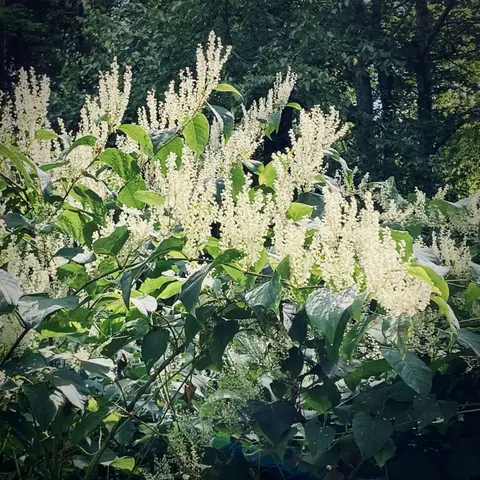
- Plants commonly labeled as invasive—such as Japanese knotweed, purple loosestrife, and common reed—frequently offer substantial ecological benefits, including pollinator resources, water-quality enhancement, and essential wildlife habitat.
- Human disturbances like road construction, soil disruption, and development create ideal conditions that favor fast-growing 'thug plants' adapted to take advantage of altered landscapes.
- Japanese knotweed is a rich source of resveratrol and other vital compounds that hold immense promise in herbal and pharmacological medicine.
- Management strategies for introduced plants must be site-specific and grounded in rigorous science rather than driven purely by fear or generalized labels.
“Invasive species” has become one of the most charged phrases in environmental discourse — but what if the term itself obscures more than it reveals? In this episode, Brett Barry sits down with Dr. Erik Kiviat, co‑founder of Hudsonia and a field biologist with decades of research on introduced plants, to explore the nuance behind weeds like knotweed, purple loosestrife, and common reed. As Kiviat notes, “There is a fear and hysteria of things that come from somewhere else….” His perspective reframes the conversation, showing how many “invasives” also provide habitat, pollinator resources, water‑quality benefits, and even medicinal compounds like resveratrol.
From the herbarium at Hudsonia's field station on the Bard College campus, Kiviat explains how human disturbance creates ideal conditions for these plants, why management must be site‑specific rather than fear‑driven, and how wildlife — from songbirds to pollinators — routinely use knotweed in ways that complicate the usual narrative. The episode offers a grounded, science‑based look at a topic often clouded by alarmism, reminding us that ecology is complex, adaptive, and rarely served by simple labels like “invasive.”
Frequently Asked Questions
What is Japanese knotweed and why is it controversial?
Japanese knotweed is an introduced plant species that spreads rapidly through underground rhizomes and vigorous clonal growth. It is controversial because while many view it as a destructive weed that crowds out native vegetation and threatens infrastructure, it also provides valuable nectar for pollinators and medicinal compounds like resveratrol.
Who is Erik Kiviat?
Dr. Erik Kiviat is a field biologist, author, and the co-founder and executive director emeritus of Hudsonia, an independent nonprofit organization based on the Bard College campus that researches wetland ecology, rare species conservation, and introduced plants.
Are all non-native plants harmful to the ecosystem?
No, many introduced plants do not cause significant ecological harm and can even play beneficial roles in local ecosystems, such as improving water quality, providing nesting habitat for songbirds, and supporting native wildlife.
Why do invasive plants thrive along roadsides and disturbed areas?
Road shoulders, trails, and other human-disturbed areas provide increased moisture, runoff nutrients, and specific conditions like de-icing salts that favor hardy, opportunistic plants over less-tolerant native species.
Transcription by Jerome Kazlauskas
[00:00:00] Erik Kiviat: There is a fear and hysteria of things that come from somewhere else, whether they're plants or humans who come here from elsewhere sometimes, or space aliens, whatever those are. Since the early '80s, the issue of invasive species, plants, animals, and fungi—it really turned into a fad and a hysteria in my view.
[00:00:31] Brett Barry: Welcome to "Kaatscast." I'm Brett Barry. Here in the Catskills with so-called Japanese knotweed in full and foreboding bloom, we turned to a scientist who's spent decades researching the ecology of this place, Hudsonia's co-founder and executive director emeritus, Dr. Erik Kiviat. He's authored hundreds of publications and technical assistance reports on wetland ecology, rare species conservation, habitat ecology, introduced plants, and Hudson River biota. Erik's decades-deep field research on invasive plants, or as he likes to call them "weeds," casts some unexpected light and plenty of nuance on a topic that's widely misunderstood and controversial. Welcome to our conversation.
[00:01:24] Erik Kiviat: Yeah, I'm Erik Kiviat. I'm the executive director emeritus now of Hudsonia. Hudsonia is an independent nonprofit organization that shares this facility, the Bard College Field Station, with the college's traditional campus in Annandale, New York, on the Hudson River, and we're sitting in the herbarium, the field station herbarium, which is a collection, a regional collection of pressed plant specimens, which are intended to be permanent records of the flora in the region.
[00:02:03] Brett Barry: You co-founded this organization 45 years ago...
[00:02:07] Erik Kiviat: 1981.
[00:02:08] Brett Barry: ...and here we are.
[00:02:08] Erik Kiviat: Yeah.
[00:02:10] Brett Barry: What were some of the pressing issues at that time, and how has that changed?
[00:02:13] Erik Kiviat: Well, so there were really two things. There were pressing professional issues for the three of us co-founders, and there were certainly pressing environmental issues. The personal issues were, you know, as field biologists, we wanted to have a home, a professional home that had a minimum of bureaucracy and politics. We didn't want to be part of a university, we didn't want to be part of a government agency, and we certainly didn't want to be part of a consulting firm. All of those have their own sets of, you know, somewhat different kinds of problems, but problems that tend to interfere with objective scientific work and the, you know, neutral discussion of land use issues and other environmental issues and natural history concerns, so two of the things that we worked on, I'm going to say three actually early on, one was finding uses for apple pomace, which is the waste from pressing cider, and there's a lot of it. One large cider mill in southeastern Ulster County at that time was generating, I think, nine tons of wet apple pomace each day. Pomace doesn't decompose readily. It ferments and pickles itself essentially, so we examined, oh, I think seven alternate uses for apple pomace. Two other more biologically oriented issues that were prominent then. One was the creation of what's now the Hudson River National Estuarine Research Reserve. It had a different name then, and that's a federal, state, and private cooperation that is intended to facilitate research and public education on the Hudson River Estuary, and then the other interesting land use issue that came up a year or two later was a combination of two large project proposals in the Northern Shawangunk Mountains in Ulster County. One was a utility-scale wind farm project for Ice Caves Mountain, which is a good example of a really bad place for a large energy project. There are good places and bad places for wind farms and solar parks. The other contemporaneous proposal was for a new large resort for Lake Minnewaska, essentially what's now Minnewaska State Park, part of the state park, so that was, you know, that was the genesis of Hudsonia, which was originally intended to be a cooperative. We discovered that the appropriate legal and otherwise type of organization was a 501(c)(3) nonprofit organization, and as I mentioned, we're sharing space here with the college, which is a very productive relationship, but we're not part of Bard.
[00:05:37] Brett Barry: Yeah, and tucked back here behind the campus, right near the Hudson River down a gravel path that probably a lot of people even on campus don't know about.
[00:05:48] Erik Kiviat: Yeah, a pizza delivery man once referred to it as a goat path.
[00:05:52] Brett Barry: Yeah, and so a lot of the work here is, I think, balancing human ideas and projects with appropriate places to implement those and making adjustments or trying to find a healthy balance?
[00:06:08] Erik Kiviat: Well, appropriate siting is certainly an issue, the appropriate size of a land use project is an issue, and appropriate design—I hate the word "harmonize with nature" because it's sort of an oxymoron, but to reduce the impacts, to reduce the negative impacts on biological diversity. That's a very important theme that runs through Hudsonia's mission and our work. We, you know, we do other things. We do some projects that are pure research, which is, you know, what's out there, what's happening in nature, and what are some of the interactions that are potentially important for wildlife and plants as well as for people.
[00:06:56] Brett Barry: How prevalent was thinking on invasive species when you founded this organization, and has that changed?
[00:07:04] Erik Kiviat: Yes, it was an important issue to field biologists and ecologists because it had been, you know, described essentially and made prominent a couple of decades earlier by Charles Elton, who was a British ecologist who published a seminal book on the subject, but since the early '80s, the issue of invasive species, plants, animals, and fungi—it really turned into a fad and a hysteria in my view. It's way overblown. It's very one-sided. When we get into the subject of knotweed, I'll explain some of what I mean by that. I think that while there certainly are scientific and conservation reasons to be concerned about invasive species, which are species that come from somewhere else in the country or in the world and spread rapidly, become very abundant, and, in some cases, interfere with the welfare or livelihood of some of our native wild organisms. It's a much more nuanced issue than the average person and I think even the average ecologist understands.
[00:08:30] Brett Barry: Have we always had invasives as long as there's been trade and movement of humans from one part of the globe to the next?
[00:08:37] Erik Kiviat: Right, whether it makes sense to call those invasives in the, you know, the ancient world or the pre-Columbian North American world, for example. You know, I will say the American Indians moved plants back and forth all around the country, and we can see some of the legacies of that today, and people have done that all over the world, and it's a perfectly natural process to either accidentally because a plant has small seeds that get carried around unintentionally or because a plant has economic value to someone, to a group of people for food or fiber or shelter construction or some other use or medicine, particularly, and many of those useful plants have been moved around very widely and are still being moved. That's one of—probably not the major way, but that's one of the ways that new non-native plants come into the United States even now.
[00:09:44] Brett Barry: Which plants that would be considered invasive would you say are of most concern or are the biggest threat right now to this region?
[00:09:56] Erik Kiviat: I'm not sure I can answer that question, and it's also a—that kind of ranking question is something that I try not to do. I was at a meeting once about invasive plants, and one of the biologists who was presenting was firing up the audience by asking to boo as loudly as they wanted to after he named each plant that he was concerned about, so he was trying to get naturalists and biologists to essentially vote on how bad something was, and I don't think that really works in terms of protecting native nature or anything else because it's a blunt instrument and blunt instruments are not helpful in managing nature or really almost anything.
[00:10:53] Brett Barry: So then why does a plant like Japanese knotweed or mugwort or any of the other ones that I hear about that people want to get rid of? Why do they get so much attention? Why is the focus on them?
[00:11:05] Erik Kiviat: Well, alright, look, I'm a biologist, not a psychologist or sociologist, but I'm going to speculate a little bit and do a lot of publications on this subject, by the way. It's not just me talking. There is a fear and hysteria of things that come from somewhere else, whether they're plants or humans who come here from elsewhere sometimes, or space aliens, whatever those are, you know, which are probably figments of our imagination in that case, but there is some similarity in this—I'm going to call it xenophobia, although that's, you know, maybe more of a generalization than I should be making the way I look at wild organisms in nature, whether they evolved here in New York State or came from evolving somewhere else, like knotweed, purple loosestrife, and common reed. Those are the three species that I've studied the most. Also, water chestnut is another one that Hudsonia has done a lot of research on. These plants have beneficial uses that have values to humanity as well as detriments. The detriments are that they compete or otherwise cause harm to some of the other organisms, either that we grow––crops, for example––we don't usually think of agricultural weeds as invasive species, but there is an analogy there that's useful sometimes, or wildlife that we consider important as game, as food, as enjoyment, and as many other uses that we put wild organisms to, so there are some instances where purple loosestrife or common reed, for example, have densely colonized certain kinds of wetlands and changed the habitat to the detriment of certain ducks or marsh birds. It happens to be a situation that, you know, I'm very familiar with because I do a lot of wetland research and technical assistance at the same time. Common reed, Phragmites, as it's known botanically, is a very useful plant. It was very widely used by Native Americans, virtually across the continent, especially in the Southwest, but even here in the Northeast, it is still being used directly for decoration, for example, in craft materials, but also it's very good at ameliorating water quality, as water moves through wetlands. Common reed and other marsh plants remove nutrients and metals and other things from the water and help break down some organic pollutants. Common reed happens to be the best plant we have for that purpose in North America.
[00:14:26] Brett Barry: And it's not from here.
[00:14:28] Erik Kiviat: Well, that turns out to be complicated, and this has only been known for about 25 years. There are native genetic versions of common reed and non-native versions, and I call them "American reed" and "Old World reed," or "Old World common reed," trying to avoid some of the anthropomorphic and militaristic and other sorts of cultural and linguistic biases that often get injected a lot of it unintentionally, I'll say, into what we call invasion science or invasion biology. I don't use that term very much, but...
[00:15:16] Brett Barry: What's a better term?
[00:15:17] Erik Kiviat: I just call them "weeds." Okay, a weed is a plant that someone considers to be in the wrong place at the wrong time, basically. Emerson said, "It's a—I'm paraphrasing—it's a plant that no one's discovered a use for yet." He was actually saying that metaphorically, not botanically, but it's very true botanically as well, so I'll give you some examples besides common reed. Knotweed makes some natural compounds. They're not pollutants. They're made by the plant under wild conditions that are very important medicinally. They're very important in herbal medicine, and there's a lot of pharmacological research being done on three or four of these compounds, and one of them, resveratrol, looks like it's going to turn out to be a wonder drug.
[00:16:18] Brett Barry: Wow!
[00:16:18] Erik Kiviat: Now, I'm—again, I'm talking out of my field here, but I've looked at a lot of the research literature on resveratrol, and I think it's a very interesting, potentially very important natural substance that has a lot of pharmaceutical potential. It is more abundant in knotweed than in any of the various other plants that make this compound, so it's usually extracted from knotweed roots and rhizomes.
[00:16:55] Brett Barry: And, of course, in Asia, it's not called "knotweed."
[00:16:59] Erik Kiviat: It's called "itadori" in Japan, and some of us, including me, who are trying to get away from calling invasive species Japanese. There are about 40 plants that you can look up in the USDA PLANTS Database that have common names that start with Japanese. They're all non-native species. Many of them are considered troublesome weeds for one reason or another. Some of them are important ornamentals, like Japanese spirea, which is in the process of becoming invasive as we speak. I think it's actually going to be a very serious pest in 20 or 30 years, so there's itadori knotweed, there's a larger species also native to Eastern Asia called "giant knotweed," and there are hybrids, which apparently are very common here, and I don't know how much hybridization there is in Asia. None of these plants that we call Japanese are found only in Japan, so that's a problem for me and some other biologists who are concerned with how we name things because the way we name things influences how we think about them, and vice versa. There's an interesting linguistic theory about that, so I just call it "knotweed" or "itadori knotweed." Knotweed, for me, encompasses both parent species and the hybrids, which is a—they're not that different ecologically.
[00:18:39] Brett Barry: So it could be medicinally important, and it is medicinally important in some parts of the world...
[00:18:44] Erik Kiviat: Absolutely.
[00:18:45] Brett Barry: ...and also wildlife are using it in ways that are positive, right?
[00:18:50] Erik Kiviat: Yeah, so let me talk about that because I'm just in the process of publishing some papers about how animals use knotweed here in the Northeast, where it's considered invasive. Birds nest in it. In the Northeast, there are probably 14 or so species of mostly songbirds that nest in or occasionally under knotweed patches, and this is a worldwide phenomenon. It happens in Japan, where the plant is native. It happens in Europe, where the plant is non-native. It's been well documented in Europe, and now here through Hudsonia's work, is knotweed a better or worse place for a robin or a catbird or a cardinal or a song sparrow or a woodcock to nest? We don't know, and that's a very difficult question to answer because each patch of knotweed in each geographic area and each species interacting with it is different, and next year it might be different than it is this year because it's wetter or drier, or there are more beetles eating it, or something else is different, so when I talk about nuance, that's what I'm referring to, and nuance is often lost unfortunately in the discussion about whether a plant is harmful and what to do about it, how to manage it, or leave it alone.
[00:20:26] Brett Barry: What are the reasons for the perception that it's a harmful plant, that it's something to be dealt with, and that it's a threat? And I think a lot of that ties into how it propagates or whatever term you'd use for that.
[00:20:42] Erik Kiviat: So let me first just finish the thought about wildlife-knotweed interactions. It flowers abundantly for a long time, from early or mid-August here in the Hudson Valley to late September, roughly speaking, so it's at peak flower right now. The flowers are an absolute pollinator magnet. Pollinators, predators like hornets and spiders, and other animals that are attracted to nectar and pollen or are attracted to other animals that are attracted to nectar and pollen. It's a great honey plant, and many beekeepers recognize that, so in terms of the other side of knotweed, you know, and these are value judgments, you talk to a beekeeper about knotweed, and you're probably going to get a different opinion than if you talk to someone who studies rare plants or is concerned about impacts on building foundations, both of which are controversial, by the way. Knotweed is bad for mosses. Okay, this is a study that a student and I did a few years ago. It seems to be toxic to mosses, probably many species, although we only studied two of them. Mosses don't grow very much on living knotweed root crowns, but as soon as the root crown dies, it's colonized by mosses commonly if it's not too dry. Knotweed may very well be harmful to the habitat of some species of birds. I don't doubt that, even though there are a number of kinds of birds that nest in it.
[00:22:30] Brett Barry: Is that because it's edging out other species?
[00:22:32] Erik Kiviat: Maybe because it's edging out species that are better nesting substrate or better food. You know, at the same time, birds are eating the insects that come to the knotweed flowers or that are, you know, feeding or basking on the knotweed leaves, so these are complicated relationships, and the kind of scientific work, a lot of the scientific work that's going on in this area that's often referred to as invasion science, is really not well-equipped to address the complexity of these relationships. The relationships involve a lot of other plants that are competing with or maybe facilitating or being facilitated by knotweed. You know, it's not bad for every plant probably. It involves a lot of different kinds of invertebrates that live in or eat or use knotweed for some other purpose, like basking in the sun or a display platform, and it involves how people manage the landscape. We don't want knotweed in our gardens usually, or, you know, within a couple of meters of a building foundation, or I think that hazard has been overrated. It's a very serious issue in real estate and property insurance in England. English policymakers are terrified of knotweed underground parts growing into and damaging foundations and road pavement and so on.
[00:24:09] Brett Barry: Can you talk about that, how it grows underground?
[00:24:11] Erik Kiviat: Well, it has very large underground parts, and some of these are true roots, which are anchoring and feeding organs. Part of the knotweed underground parts are what we call rhizomes, which are underground stems that give rise to both roots and above-ground shoots, so rhizomes are a way that a plant colony, and knotweed, forms a colony or a clone, as geneticists like to call it. Rhizomes are a way that the colony makes itself larger. Sometimes it dies back in the middle, but, you know, like a fairy ring of mushrooms, rhizomes spread. Knotweed seems to reproduce mostly by vegetative means, by fragments of stems and rhizomes and by rhizome growth itself. It does reproduce by seed, but that doesn't seem to be very common in my experience. I've only found knotweed seedlings a handful of times, and usually after something like a hurricane created an odd habitat of soil that got moved around and raised up out of the water or something like that.
[00:25:32] Brett Barry: So this time of year when they're in full bloom and magnificent organisms, this is not the time to worry about them taking over more of the environment, right, because it's not seed-based. The way they grow is not based on flowering and seeds.
[00:25:50] Erik Kiviat: Yes, that does contribute to reproduction, and it contributes to genetic diversity in knotweed. It might—that might be a bad thing from our point of view, but it's good from the plant's point of view to have genetic diversity.
[00:26:07] Brett Barry: And that's done through seeds?
[00:26:08] Erik Kiviat: Principally, I think there's—I'm not going to say much about this because I don't understand it, but there are also epigenetic processes in knotweed that result in a variety in the physical plant organism that may be adaptive and that may help it cope with the environment.
[00:26:33] Brett Barry: But in terms of clonal growth, is it true that there is perhaps a single genetic individual that is all knotweed or no?
[00:26:43] Erik Kiviat: No.
[00:26:43] Brett Barry: Okay.
[00:26:44] Erik Kiviat: That was said for many years, and some people are still making that claim about knotweed in England that it's a single female genetic individual. It's actually more complicated than that. That does seem to be the dominant genetic version of knotweed in England, but there are others, and there probably are others that are constantly coming in because, you know, knotweed and most non-native organisms that arrive don't come once and then that's the end of it. There are often multiple colonization events, let's call them, and that contributes to the genetic diversity and adaptability of a non-native organism, and there may be situations: common reed, for example, pollen and seeds, which are plumed and very small in common reed, blow great distances potentially, and are actually thought to have moved across the Atlantic from Africa to the Southern United States to participate in a hybridization event in places like Louisiana that have created a different version of common reed, and it's possible that it also goes back the other way, although I don't think anyone's demonstrated that yet.
[00:28:13] Brett Barry: Humans are responsible in large part for transporting weeds in the first place...
[00:28:20] Erik Kiviat: Right.
[00:28:20] Brett Barry: ...but then I think that relationship continues, right? A lot of the things we do create environments that are very welcoming to weeds.
[00:28:29] Erik Kiviat: Yeah.
[00:28:30] Brett Barry: Can you talk about that?
[00:28:30] Erik Kiviat: Yeah, that's a very important point. There are underlying factors, or I'm not sure what term to use, you know, when we build roads and trails, for example, weeds follow those because road shoulders are good environments for weeds. There's a lot of water coming off the road. They have moisture. They may have some nutrients that come from road use. They may be full of de-icing salt, which inhibits plants that aren't adapted to tolerate salt in the soil, so that favors plants like common reed and probably knotweed, which often develops along roadsides. It helps these weeds compete with other plant species. There are lots of things that we do that alter soils and water bodies and water quality and air quality and other kinds of changes to habitats that favor what one botanist called "thug plants." You know, plants that have evolved around people that are peridomestic, you might call them, for probably thousands of years in the case of knotweed and common reed and purple loosestrife, and so these species are, in a sense, endowed with the ability to take advantage of human disturbance to the landscape.
[00:30:18] Brett Barry: If a native plant from here winds up in another place, it becomes an invasive there, right? Does it also become more of an opportunistic plant? It seems like when it travels to a place where it's not native, it's taking advantage of things that maybe it isn't in its home turf.
[00:30:38] Erik Kiviat: Probably, you know, our North American plants have traveled and become troublesome in Europe and in other places. Canada goldenrod is a weed in Europe. Black locust is a weed in Europe that there's a lot of concern about and research on.
[00:30:55] Brett Barry: And black locust is a tree...
[00:30:58] Erik Kiviat: Black locust is a tree.
[00:31:00] Brett Barry: ...which you still refer to as a weed because it's not from that place.
[00:31:03] Erik Kiviat: Well, well, it's a weed where it isn't wanted, and, you know, and as I said before, one person might want it, another person might not, depending on what they're interested in. Black locust lumber is very useful because it's rot resistant. It makes the best fence posts of any northeastern woody plant, for example, but it has become a weed in Europe. I think it was originally planted as a street tree, so that's another way that we acquire weeds from other parts of the world, but, you know, horticulture is an important pathway for weeds to come here: accident, tiny seeds, people bringing in medicinal plants, and spice plants. You know, and I don't have a problem with people raising and growing and selling plants for horticultural purposes, gardening, and landscaping, but it isn't regulated well enough, and it's very hard to keep up with all of the excitement and money that's involved in new, wonderful, interesting plants that are imported for ornament. It's also really an almost impossible task to look inside every shipping container that comes into the Port of Elizabeth, New Jersey, for example, to see if there are insects or seeds or something else potentially harmful, and the USDA does try to do that, but they're—they can't look at everything, and so most of our serious forest tree pathogens and insect pests, notably emerald ash borer, which is getting a lot of attention deservedly right now, actually come in by accident in that case with solid wood packing material, but there are other ways that forest pathogens and pests can get here, usually by accident.
[00:33:15] Brett Barry: So an ornamental like barberry becomes a problem because a bird will carry that berry into the forest, and then it starts populating in native areas. Is that something that is a concern, or you don't think so?
[00:33:31] Erik Kiviat: Barberry in general?
[00:33:31] Brett Barry: Well, as an example of an ornamental, something that people plant around their house that...
[00:33:35] Erik Kiviat: Yeah, well, you can't plant it in New York State now. It's illegal.
[00:33:39] Brett Barry: Is that how it started, though?
[00:33:40] Erik Kiviat: Yes, yeah, most of these woody shrubs, particularly, and small trees were planted either for ornament or for erosion control. Multiflora rose was planted for both purposes, and even in the 1940s, it was still being used in highway medians for erosion control, and there was this interesting paper that asserts that if the highway median is a thicket of multiflora rose, and someone has an accident and veers off the road, that will stop them from going into the oncoming traffic. It may be true.
[00:34:23] Brett Barry: A natural barrier.
[00:34:25] Erik Kiviat: Yeah, well, it's an unnatural natural barrier.
[00:34:29] Brett Barry: Right, yeah, a living barrier.
[00:34:30] Erik Kiviat: Right, good, good term.
[00:34:33] Brett Barry: And I have a multiflora rose on my property, and I think it's beautiful.
[00:34:36] Erik Kiviat: Yeah.
[00:34:37] Brett Barry: Do I have a responsibility? Do you think landowners and homeowners have a responsibility to address weeds because it won't stop at their property?
[00:34:46] Erik Kiviat: Yeah, so one thing, there are a couple of hundred, maybe more, species of plants that are considered highly invasive that are either regulated or banned in New York State. You can't transport them, you can't plant them, and you can't buy or sell them without a permit and a multiflora rose, and I call it "Thunberg barberry" because the scientific name is "Berberis thunbergii." You're trying to avoid the Japanese barberry name. They are both on the prohibited list in New York State, but watch the rose because there is a virus, rose rosette disease, that's maybe catching up with multiflora. It unfortunately does also attack some ornamental roses and some native roses, but it mostly attacks multiflora, and it does kill it after a few years. It can kill a clump of multiflora, and the way it manifests is the new shoots are red and deformed. If you are not seeing it now on the rose on your property, you probably will see it in a few years. How much it's going to do to the population, an immense population of multiflora, nobody knows yet.
[00:36:05] Brett Barry: Do you think that weeds have a way of extinguishing themselves after a period of time if they're not in a native place without the kind of help of humans to keep moving them along with their own development and road work and stream bank work and all of that?
[00:36:24] Erik Kiviat: I don't know how often they extinguish themselves. You know, that sort of implies that there is, for example, a harmful mutation that occurs or something else that is endemic to the plant that kills it off. It's more often what many biologists like to call "natural enemies," so it could be a fungus or a nematode or an insect or a herbivore like white-tailed deer that attack and harm the plant either by eating it or in some other way, and it's a very interesting research topic that I think is understudied. How do recently imported, rapidly spreading invasive organisms [plant or insect or something else] acquire natural enemies or acquire a biota? If you want to use a neutral term and with plants it can happen in 30 years, it can take 100 years or much longer, so we're seeing this now potentially with spotted lanternfly, which is, they're right out on the deck here, and they just, you know, they've only been in the Mid-Hudson for, you know, four or five years. They're not really abundant yet until you go down to Putnam County, Westchester, for example, so Christie and I were looking yesterday at a lanternfly out on the deck that had gotten caught in a large spider web, an orb web, and the insect managed to escape because they're, you know, big, strong insects, but spiders do have a controlling or regulating effect on some of the things that they catch and eat, and that could, probably not in my guess, but it could be part of a whole system of natural enemies that start to infect or eat or otherwise harm lanternflies in this part of the world, and it may be happening with Multiflora now.
[00:38:43] Brett Barry: So we're told now as the population to, if you see a lanternfly, crush it. If you see...
[00:38:50] Erik Kiviat: Yeah, you're not going to have any effect by—I mean it—pardon the expression, it's like pissing in the wind.
[00:38:56] Brett Barry: Yeah, that's what I was getting at.
[00:38:57] Erik Kiviat: Yeah, yeah, and even the egg masses. First of all, you're only going to see a small fraction of them because they may be under the fender of your car or, you know, in a crack in the bark of a tree where you can't find them, and it just—insects, many insects, not all insects, reproduce so rapidly that it isn't going to have an effect on them. There are other, many, some very useful techniques for managing insect populations, like the sterile male technique that's used for screwworm fly in the southern states and some genetic techniques that are analogous to that that are being tried on disease-carrying mosquitoes now.
[00:39:48] Brett Barry: Your metaphor about the wind—does that apply to weeds as well? I mean, is anything we're doing on a personal or, you know, an individual property level really helping? You know, it seems hopeless in a way.
[00:40:02] Erik Kiviat: Yeah.
[00:40:02] Brett Barry: Do we let it go?
[00:40:04] Erik Kiviat: Well, I think it's a little different because plants don't move around as fast as insects do in general. There are exceptions, so, alright, let's step back here for a moment. There's a progression of management approaches that most people who study plant invasions usually agree on. The first and best thing to do is to keep an organism out of a new area, you know, by inspecting materials that come in to the extent that that's possible, for example, and discouraging people from bringing things home from vacation. You know, I made several trips to Europe partly for research purposes, and before I go there and before I come back, I take my rubber knee boots, and I wash them and clean them, scrape all the mud off them, and try to get rid of the seeds, so there now is a practice that's becoming fairly widespread of encouraging people to clean their boots before they go on a hiking trail, a wildland hiking trail particularly, or a nature preserve, and when they come off it, so that they're less likely to spread stiltgrass, or another plant that has small—abundant small seeds like purple loosestrife. You know, as far as the question about the impact of what you do on your acre or 10 acres or 50 acres, whatever it is, I, you know, I live on a ten-acre or seven-acre property in the town of Milan, just east of here. There are some non-native ornamental plants, some of them potentially invasive, that were planted not due to me, but, you know, I've generally left them alone because I watch them and study them. That isn't going to be a typical landowner situation. I would say if you have, say, 10 landowners on 50 acres and everyone participates in trying to manage barberry, for example, it may be very difficult to kill enough of it, so the second step in that continuum is called "Early Detection and Rapid Response" [EDRR], and that's when you see a new species that's potentially invasive, and we know that because it was somewhere else, or we know for some other reason. It's a prediction. It's hard to make that prediction, but kill it before it becomes abundant because it's cheaper and easier, and it has less ecological side effects. Any way of controlling or managing weeds is going to have side effects on species that we want to have.
[00:43:18] Brett Barry: Herbicides, etc.
[00:43:19] Erik Kiviat: Herbicides are the worst. Absolutely, they are toxic to almost everything, including fungi, some bacteria, lichens, which are essentially fungi, many animals, including insects, and certainly plants.
[00:43:40] Brett Barry: Even with a targeted approach, they're right into the stem of a plant?
[00:43:44] Erik Kiviat: That's safer...
[00:43:45] Brett Barry: Yeah.
[00:43:45] Erik Kiviat: ...but it can escape through the roots and perhaps in other ways.
[00:43:49] Brett Barry: So not recommended.
[00:43:51] Erik Kiviat: I think of herbicides as a last resort, and there may be situations where their use is justified. You would certainly want to think about what else you might be harming. If you have a rare plant that's being overtaken by a weed, by an invasive plant, you don't want to use herbicides because you might kill the rare plant or inhibit it. There are instances where herbicide has been applied to common reed, and then subsequently it was discovered that it was native common reed that was being treated, and that's not normally considered undesirable, so that's, you know, also, you have to know what species you're dealing with but keep the things out of the region. Treat them when they're still rare or they're just trying to get established, and then it gets much more challenging because by the time something becomes abundant and widespread, it's hard to do anything about it, and you may be able to resort to local management to protect a garden or a rare plant or something else. There is classical biological control, which has its own risks despite what its practitioners say, even after careful screening and screening really is quite careful now of potential biological control organisms that may be permitted for import. A biocontrol organism can end up attacking a desirable native plant, even a rare species, either because the control organism has undergone a genetic mutation or simply because it has had enough time to undergo a demographic process where it's, I mean, anthropomorphizing, where it's looking for something else to feed on.
[00:45:47] Brett Barry: Is there an organism or an animal in Asia, for example, that keeps knotweed, or what they call knotweed, in check that we don't have here? Is that where the problem comes from?
[00:45:59] Erik Kiviat: Probably, I don't, you know. Yes, there is now a lot of research being done on classical biocontrol of Itadori knotweed and its hybrids, and the organism that is mostly being tried and permitted in both the Pacific Northwest and here in the Northeast is a psyllid insect. They're related to aphids, so it's a small sap-sucking insect that is thought to have some regulating effect on knotweed in Japan. I don't know how strong that is. I haven't, you know, been able to go look or really see the, you know, really delve into the research that's being done.
[00:46:50] Brett Barry: And how about climate change? How's that affecting weeds, invasives, and things that are taking advantage of other places?
[00:47:01] Erik Kiviat: Let's talk about the Northeastern U.S. because that's where I do most of my work. The warming of our climate, the warming of the winters particularly, the reduction in snowfall in not last winter but many winters, and the increasing annual precipitation, or annual precip here in New York, has increased at least 10% over the last 40 years, which is the difference between 40 inches and 44 inches, for example, right? Roughly speaking right here. That's a lot, you know, and it is true that a lot of our invasive plants are moving up from areas that are farther south. There are exceptions to that, and the environments that we create, for example, in an abandoned gravel pit, which is a solar collector in a warm spot in the landscape. Those are very favorable to a lot of weeds and probably invasive animal pests as well. There are also cool spots in the landscape, north-facing slopes, and the shade of a large tree or a structure or a stone wall or a deep ravine. Those are very important for the persistence of species that are not adapted to a warmer climate, you know, or a climate that has less snow in the winter. The snow seems to protect certain ferns, for example, possibly from deer grazing, but I think from other non-grazing problems.
[00:48:48] Brett Barry: So, Erik, throughout the conversation, I've gotten the sense that there's a bit of hysteria that may not be warranted, so I just want to get back to the question of, "What is the concern?" Why do people panic when they see a big stand of knotweed? Is that warranted? Is there something that should be done or not?
[00:49:09] Erik Kiviat: It depends on the situation. I'll come back to that specific question in a moment, but I very generally recommend a three-step approach to managing nature, whether you're managing a weed or, you know, a forest for edible fungi or something entirely different. One is you need to understand the local situation. You know, as I mentioned, there are a lot of organisms interacting and human activities interacting as well, so that varies a lot from one place to another, even on a rather small scale, and from one year to another. We often don't understand the habitats or the species that we're managing very well. When I started studying knotweed, about, you know, 20 years ago in Greene County, there had been only one quasi-published report of a bird nesting in knotweed in North America, and when I started seeing nests and looking for them, they're all over the place. They're not in every knotweed stand, but I found if I went out and looked at half a dozen stands, I could probably find one nest in the winter when they're easier to see, so I know the environment and the species that you're dealing with, even the ones that might be affected collaterally. The second principle is to clarify the goals of management. Management may be good for one goal and bad for another. Killing knotweed is bad for the honey industry at least in some places. Same for purple loosestrife, but it may be good for some of the plants and animals that knotweed is harmful for, like mosses, like some birds, and probably many plants. Although, we don't—we don't have a lot of information about how knotweed competes with other plants. It's really an assumption, usually, so know the local situation, clarify the goals of management, and then the third principle, use current and most recently available research results as much as possible, and, of course, many people who are managing one's own property or a nature reserve or a park are not able or interested in studying the scientific literature and a lot of this stuff, you know, doesn't get into the literature ever or quickly, so it's important for scientists and science journalists and people like yourselves, for example, to help bridge that knowing-doing gap, as it's sometimes called.
[00:52:15] Brett Barry: So there's a lot of nuance and case-by-case...
[00:52:17] Erik Kiviat: Yeah.
[00:52:17] Brett Barry: ...which just seems to be the case with a lot of the work that you're involved with over the years.
[00:52:21] Erik Kiviat: That's basically what I say out of those principles that I mentioned: management should be site specific, and it should be goal-directed. Otherwise, it's going to be a big waste of time and money.
[00:52:38] Brett Barry: Do you recommend that people consult with their local expert, a cooperative extension, or something like that if they have a concern about a weed that's taking over their property or their road?
[00:52:50] Erik Kiviat: Well, it's probably a good idea. You're not always going to get well-founded advice from anyone that you consult, you know, and I'm not saying this to denigrate Cooperative Extension, which is a wonderful agency, but some of the advice that they give, I don't agree with based on my research and my reading of the literature that work that other people have done, but I, you know, I think certainly start with the Cooperative Extension, start with the local PRISM [Partnership for Regional Invasive Species Management]. There are eight of them in New York. Your one in the Catskills is called CRISP. Here we're in the Lower Hudson PRISM. There's a lot of knowledgeable people involved with the PRISMs. I also disagree with some of what they're doing. They tend to maybe unwittingly encourage people to sort of go out and whack at anything that's considered invasive. Sometimes those plants are not harmful. Sometimes there are collateral damage issues. Someone, a military guy, I think it was General Petraeus in the Afghan War, Afghanistan War, said, "We can't kill our way to victory." I don't usually quote military officers, but I think that's very useful. I'm going to quote another ancient Chinese military officer, "Know thy enemy." You've probably heard that advice, so I'm a big fan of both of those sayings because managing nature, again, you know, whether it's weeds or something else, has to be strategic because we can't—we don't have the money and time and know-how to do everything and accomplish everything that we want to, and there are lots of weeds that might come into your yard or garden or nature preserve or something else, so you have to pick the ones that you are most concerned about because of the damage that they seem to be doing. Hopefully, it's not just, "Oh, this came from somewhere else. Let's kill it." You know, we need to be more thoughtful about that and better informed, so you need to pick a species that you're going to manage, hopefully for good reasons, and it might be your reasons, it might not be somebody else's reasons, and you need to pick a species that you have a good chance of being successful with. If you're going to manage Thunberg barberry, you better get set for a lifetime of managing barberry, and there are successful examples, but it's challenging, and there are other plants like stiltgrass. I have told a lot of people, "Don't even worry about managing stiltgrass. You're not going to be able to keep up with it, except in a very local situation like it, if it's getting into a garden and competing with something, you know, your flowers or herbs or vegetables, so think it out. Don't act out of emotion primarily. Think about what you're doing. Consult experts as best as you can. If you have the stomach and the mind for it, look at the literature. There's a lot of actually semi-technical literature, like News from Hudsonia, that most people should be able to understand and think about how much time you want to spend. Do you want to use herbicides or not?" I mean, they're toxic to the people who are applying them. That's an issue that I don't even study, but there's a lot of literature about endocrine disruption and carcinogenicity and allergies and other medical issues, you know, and then think about, "Is this going to hurt something else that I don't want to harm?"
[00:57:15] Brett Barry: From an ecological point of view, is there anything that keeps you up at night?
[00:57:19] Erik Kiviat: You know a lot of things. You know, 20 or 25 years ago, I went through an unfortunate phase where every time I heard rain falling on my roof, I thought about soil erosion, and that's stupid, okay? You know, it's counterproductive. It's a nicer way of saying it, so I got over that, so these things that I'm concerned about generally don't keep me up for more than a night or two, but they are things that I think about and am very concerned about. I am very concerned about soil erosion and siltation in waterways. Unfortunately, a lot of that comes from agriculture as well as roads and construction sites and mining. I'm very concerned about contamination with substances that people create that aren't found in nature otherwise or are found only in minute amounts in nature, and you're probably aware that while we've worked hard and made some success in not using or controlling the use of some contaminants, certainly DDT is one of them. It's banned in the United States and Canada. It isn't banned in some countries. Very useful for malaria control in some parts of the world. There are probably better ways of managing those mosquitoes. We solved the DDT problem. I think we did it before it caused the extinction of any bird species. I don't know about insects that could have extinguished that we might not even know about. The PCB problem is much more widespread and pernicious. There's been some good progress made with industry fighting it every inch of the way, unfortunately not really in their interest in the long run to fight cleaning up contamination. There are newer problems like PFAS chemicals and personal care products, which are now being discovered to be very widespread and probably fairly serious pollutants in surface waters and microplastic particles. Those are three, you know, three issues that are getting into the media and the public consciousness, and I'm very concerned about all of those. There are lots of other things that, you know, I don't want to turn this into a litany of things that I'm worried about.
[01:00:11] Brett Barry: Can you leave us with something positive that's happening either on a local or a regional level?
[01:00:17] Erik Kiviat: A lot of people are becoming better informed. You know, 45 years ago when we started Hudsonia, it was hard to find a municipal planning board that had a member who was really knowledgeable about nature and about land use impacts on nature, and now, I mean, there's still a lot of planning boards that don't have such an expert, but it's much more common that there's a soil scientist or a bird watcher at least or a biologist on a planning board or at least someone who has been actively involved in some kind of conservation work, so I think that's a very positive sign, and it's a—these things don't happen fast enough, but it is a gradual process of problem-solving.
[01:01:10] Brett Barry: Well, Erik Kiviat, you've been very generous with your time. I appreciate it, and thank you so much for...
[01:01:14] Erik Kiviat: You're welcome.
[01:01:15] Brett Barry: ...talking with us.
[01:01:16] Erik Kiviat: Yeah, you're very welcome, and I appreciate what you're doing. I think this kind of educational work is very important, and it's good for people to have a large palette of recordings or books or something else that they can find when they're interested in something very important. Thank you.
[01:01:46] Brett Barry: “And what is a weed? A plant whose virtues have not yet been discovered." Ralph Waldo Emerson, from his 1878 lecture: "Fortune of the Republic." For more, visit hudsonia.org, and if "Kaatscast" is important to you, please give us a five-star rating wherever you listen. It helps more listeners find these stories. You can also become a listener member with a small monthly contribution that truly supports our work. Join fellow listeners like Alan, Bill, Maisie, and Robin at kaatscast.com/support. We also want to thank Ulster Savings Bank for joining us as a community supporter. We're very proud to partner with our favorite bank, and a warm welcome to our new production intern, Elena Healy, a production major at SUNY New Paltz. She's with us for her final fall semester and has already proven her mettle, navigating the gravel goat path to join me and Dr. Kiviat at Hudsonia. Leaving that interview, as if on cue, a spotted lanternfly grazed us and landed at our feet. We saw no point in squashing it. Transcription, as always, by Jerome Kazlauskas, and I'm Brett Barry. Thanks for listening, and we'll see you next time.


