The Last Mile: Saving Pine Hill's Wellington Hotel
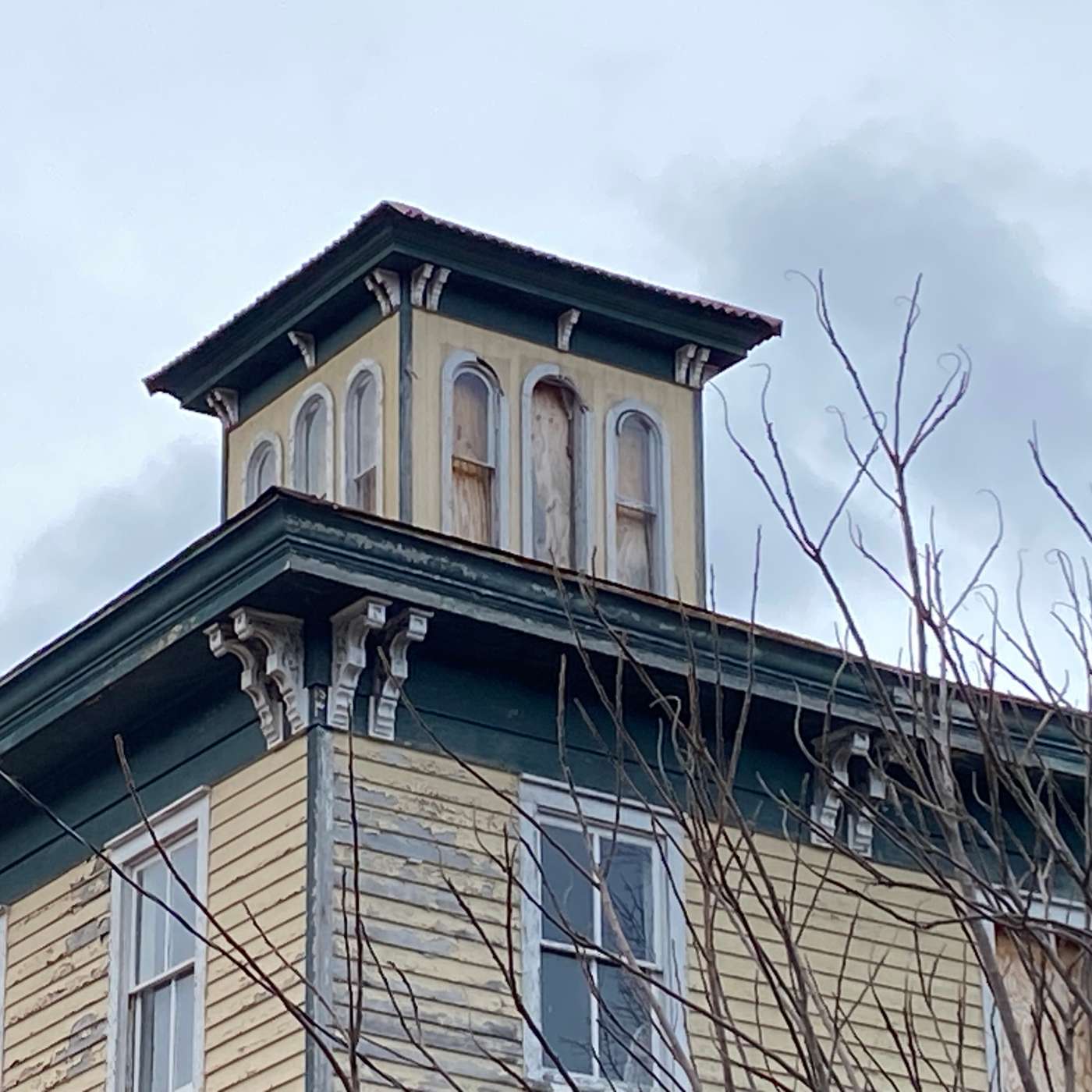
In this episode, host Brett Barry joins Jan Jaffe, board president of Wellington Blueberry LLC, outside the shuttered Wellington Hotel on Main Street in Pine Hill, New York — a 12,000-square-foot, 19th-century landmark and one of the few remaining intact Catskill hotels that survived the era's notorious fires.
Jan shares the origin story of this ambitious community-driven project: how roughly 20 neighbors pooled resources in the fall of 2022 to purchase the long-vacant building. Their goal: rehabilitate the historic structure into 10 units of workforce housing (studios and one-bedrooms targeted at residents earning 60–80% of area median income) and a much-needed community grocery store.
Four years in, Wellington Blueberry has made remarkable pre-construction progress — clearing 60 dumpsters of debris, completing environmental review, obtaining all necessary permits, securing a letter of intent from Bank of America for historic tax credits, and earning a 2025 designation from the National Trust for Historic Preservation as one of America's 11 Most Endangered Historic Places. Their developer and construction manager is RUPCO, the region's leading nonprofit housing developer, and their architects are Albany preservation firm Thaler Riley Wilson.
But they're still at "the last mile" — approximately $1 million short of the full funding needed to break ground.
Topics covered:
- What workforce housing means and who it's designed to help
- How historic tax credits work and why they matter for this project
- The "Dagwood sandwich" of layered funding sources (grants from Restore NY, Ulster County, anonymous donors, and more)
- What the community has already accomplished — including two volunteer clean-up events with 40 people each
- Plans for a local grocery store serving both residents and visitors
- How prospective tenants will eventually apply via lottery
To learn more or donate, visit pinehillwellington.com. Donations can currently be made through RUPCO's website: https://rupco.org/property/wellington/#donate
Transcription by Jerome Kazlauskas
[00:00:00] Jan Jaffe: I think what's unique about this is that the community came together and said, "Okay, we're going to take a chance. We'll be first in money. We'll take the big risk and get control of the property," and then I think the other thing that is really unusual is that the town and the county and the state and our federal representatives have all embraced this once they've seen what we started, and it feels really good.
[00:00:29] Brett Barry: Pine Hill is a small but growing hamlet of Shandaken [population between three and four hundred]. A ski and tourism economy, post-pandemic transplants, vacation homes, and short-term rentals are some of the factors impacting shortages in so-called workforce housing for working residents squeezed between subsidized housing [they make too much money] and market rate housing. The prices are just too high, and like many Catskills communities, Pine Hill has another problem. Old abandoned structures that no one seems to have the money, resources, or vision to rehabilitate. That's where Wellington Blueberry comes in. This community-based LLC aims to solve a few significant problems with one ambitious project, the rehabilitation of a 19th-century abandoned hotel and the creation of 10 apartments and a grocery store. Four years in, they've almost, but not quite, met the financial bar necessary to begin restoration, but pre-construction progress and community buy-in have been significant. To learn more, I met with Board President Jan Jaffe outside the historic shuttered Wellington Hotel on Main Street in Pine Hill. I'm Brett Barry, and this is "Kaatscast: The Catskills Podcast."
[00:02:02] Jan Jaffe: I'm Jan Jaffe, and we're at 310 Main Street in Pine Hill at The Wellington, which is an abandoned historic hotel.
[00:02:14] Brett Barry: First of all, how did you find your way to Pine Hill and start to get involved in the community?
[00:02:20] Jan Jaffe: Well, I've been here for over 25 years, and a woman I worked with had a house here, and I would come up, and then my partner and I, Roe, and I would come and stay here when she had children and they no longer wanted to come here on the weekends, and we would come on the weekends, and then I came here for the mountains and hiking, and then I ended up being here for the people. I just loved it, and I got involved with the community center, and this became sort of our social center, and my friend's neighbors moved, and we bought their house, so I've been here since 2000.
[00:02:58] Brett Barry: And you're a real community doer. You're involved in a lot of things, including this venture we're about to talk about.
[00:03:03] Jan Jaffe: Yeah, this—I'm involved with this project. I'm the president of the group that owns the building right now, and I'm also involved with this wonderful group of community activists in Shandaken called PH2, which is showing a little love to the town in particularly to Phoenicia and Pine Hill.
[00:03:22] Brett Barry: Can you tell me a little bit about the history of this building?
[00:03:25] Jan Jaffe: As much as I know, it was built in the 1880s. It's not a grand hotel in the Catskill Grand Hotel's history, but it is a pretty fabulous hotel. It had a bowling alley in it. It's on Alton Creek, and it has a bridge with a cafe over it and horse stables, and it was quite popular, and it had many, many, many rooms, and then it fell into disarray. Like many hotels, it's one of the few remaining intact Catskill hotels, and about 25, well, almost now 27 years ago, somebody, a local person, bought it to try to fix it up, and it was just too much for him, but he lived here with his family, and he turned it into a trading post, so the entire place was filled with stuff, and also the whole front lawn was filled with stuff, and he was here with his kids and a ferret and two Great Danes for about 20 years, and then he put it up for sale. He wanted to retire.
[00:04:28] Brett Barry: Did you say a ferret?
[00:04:29] Jan Jaffe: Yes, I did.
[00:04:31] Brett Barry: That's a lot of space for a ferret to run around in.
[00:04:33] Jan Jaffe: Yes.
[00:04:35] Brett Barry: Do you know what the square footage of this building is?
[00:04:36] Jan Jaffe: 12,000. 12,000 square feet.
[00:04:40] Brett Barry: And it's one of the few large-scale wood-frame resorts that did not succumb to fire?
[00:04:45] Jan Jaffe: Yeah, remarkably, and it's in remarkable shape. I mean, it's got one small, big problem, which is that the entire foundation has to be replaced, and so one of the first things we had to do was some structural work just to keep it up, but what's surprising is that the rest of the building is actually in very good shape.
[00:05:07] Brett Barry: How did you come together with this group of people and come to the determination that you'd be able to perhaps save it?
[00:05:14] Jan Jaffe: Well, in the fall of 2022, this property was up for sale, and a group of us started talking about how if we didn't get control of the property, we would not have any say in what happens to it. We knew it was really deteriorated, and so we pulled together an invitation to everybody in the community to talk about what we could do, and at the end of that first conversation, which was up at the Belleayre Lodge, we were sitting around a fire. 20 people said that they would band together to purchase it because in real estate, if you don't own the property, you can talk all you want, but nothing's going to change, and so we had 20 people, newcomers who had come here during the pandemic. People who were born here and grew up here, an incredible variety of people, and some people put in a thousand bucks. Other people put in a hundred thousand, and we said, "Let's make it happen," and so in December of 2022, we bought it, so that was like four years ago, and, you know, one of the funny things about real estate is, you know, dog years.
[00:06:20] Brett Barry: Yeah, seven per one, I guess.
[00:06:22] Jan Jaffe: Yes, well, in real estate it's the opposite and even bigger, so owning a place for four years without it going into construction is like 20 minutes, so we have been moving very, very fast.
[00:06:36] Brett Barry: One of the impressive things here is that it's on the National Register of Historic Places, and also just last year, in 2025, it was named by the National Trust for Historic Preservation one of America's—not just the Catskills or New York, but one of America's 11 most endangered historic places. What did that do to help propel this process, if anything?
[00:07:01] Jan Jaffe: Yeah, one of the most endangered historic places and worth saving. That's what they do: they really apply, and they evaluate whether they think it could be saved, so with that in mind, we were able to attract, private equity to buy the historic tax credits that come with this building, so we have a letter of intent from Bank of America to buy the tax credits, and that is a large chunk of money that will help us with the renovation.
[00:07:30] Brett Barry: Can you explain what that means?
[00:07:31] Jan Jaffe: Historic tax credits. It's a federal and state program for properties that are on the National Register, and if you fix them up, you can get credits against your tax payments, so ordinary individuals can't really use these tax credits very much, but corporations can, and unfortunately, mostly people want to buy $40 million worth of tax credits, and we had about 4 million, but we found the Bank of America in Kingston agreed to buy them.
[00:08:04] Brett Barry: Okay, so this group came together. You're called The Wellington Blueberry, LLC, so I have to ask what Blueberry has to do with all of this.
[00:08:11] Jan Jaffe: Well, when we got into the building, we saw a sign for The Blueberry, and the owner, I think, at one point was thinking if all else failed, he'd have a bar called The Blueberry, so we thought we'd have the elegant name Wellington and then the backup. Plan B: The Blueberry. So that's how it came together, and it's—so the 20 people are part of this LLC, and then there's five of us, five women in Pine Hill, who are the officers, and we're managing the project.
[00:08:42] Brett Barry: So there may not be a Blueberry Bar, but what will there be in the grand plan and what are you working toward?
[00:08:48] Jan Jaffe: There will be 10 units of affordable housing, workforce housing, five studios, five one-bedrooms, and a grocery store.
[00:08:56] Brett Barry: Explain workforce housing.
[00:08:59] Jan Jaffe: People who work up here find it very difficult to find housing that they can afford to live in, and so we live in a recreational economy, or people are teachers, or they're working for the local government, and they travel very long distances to find a place to live, so we're—these units will be targeted to people who make between 60% and 80% of the average median income of the area.
[00:09:27] Brett Barry: Who are all the stakeholders involved in this project, and where are you in terms of getting the funds to complete it?
[00:09:35] Jan Jaffe: Yeah, well, we have many stakeholders. We have partnered with RUPCO as our developer. In the beginning stages, we thought we weren't sure what we were going to do with this place, and so we thought we'd go. We went everywhere from tearing it down and making it into a park, which was horrifying to everybody [or artist studios], or we—for a while—were going to have it as, like, a hotel for hikers, and those were all things we could do ourselves, and then as we started to understand what it was going to cost to fix this place up, which is a lot, we realized that we couldn't do it ourselves, and we were fortunate enough to entice the region's premier nonprofit housing developer to join with us, and so they are our developer and our construction manager, so those are two stakeholders. We did a scope of work for what we wanted to do and put it out to bid to architects, and we got eight bids and selected an Albany preservation firm called Thaler Reilly Wilson Preservation Architects, really passionate people with lots of pragmatism. They've just finished our construction drawings and gotten approval from the National Park Service so we can sell the historic tax credits.
[00:10:56] Brett Barry: This being the third time Jan referenced the sale of historic tax credits and an equal number of times it had failed to sink in, I wasn't about to let on, so I leaned on our old friend the internet to break it down for me, and if you've already grasped the concept, just bear with me. A historic building needs saving, and the government wants you to save it, rewarding you with a tax credit, a percentage of your rehab costs. Without a big tax liability, you may not be able to fully use that credit yourself, so a partner bank or investor can buy your tax credit at a discount and pay you in cash. The bank reduces its own tax burden. The restoration team gets a cash infusion, and a historic Catskill hotel is saved from collapse. It's a win-win-win. Now that that's settled, back to Jan.
[00:11:54] Jan Jaffe: The National Park Service and the State Historic Preservation Organization also are stakeholders in this. They have to approve everything we do, and then, of course, there's the town. We've gone through all of our permitting just to get started. We've had an environmental review. We did a SEQR Type 1, which is the more complex environmental review. We had two public hearings. We went in front of the Zoning Board of Appeals because it's an old building. As you can see, we didn't. There weren't any cars here, so we had to create some parking spaces. We had about 30 meetings in front of the Planning Board and the Zoning Board of Appeals [very supportive]. That's all done. We're really ready to go as soon as we get the money.
[00:12:41] Brett Barry: And you can't go until you have all the money, right? How does that work?
[00:12:45] Jan Jaffe: These are called reimbursable grants, and so you have to have all the money in order to start, and we've been incredibly lucky. Our county executive and the economic development department collaborated with the town of Shandaken, and we were able to apply for a Restore New York grant, which we got very early on. Then, in Ulster County, we applied with RUPCO for housing—this new housing affordability fund—and we got that. We had, in a very serendipitous way that I can't divulge, an anonymous donor who doesn't even live around here who gave us a very large grant. We have one more big grant in, and then as I mentioned, we have this money from it that we hope will come in from the Bank of America...
[00:13:32] Brett Barry: Historic tax credits—yeah, of course, I know what those are.
[00:13:36] Jan Jaffe: ...and then we have a grant into housing and community renewal for the grocery store and for part of the rehabilitation of the units, so I think about this. Long ago, there was a cartoon called "Dagwood," and it was about this sort of louche guy who didn't have a job, didn't have anything to do, and all he would do is he would make these very elaborate hoagies, you know, layers and layers of different meats, and he was always experimenting with it, and sometimes that's what I feel like fundraising for this is. We must have 11 different sources of funding, and then we layer them together, and then try to fit them into our mouths. It's a challenge, and we're at the last 10% that we need to raise, which is about a million bucks.
[00:14:22] Brett Barry: How do you hope to get that? Are people able to donate to you? Are you a nonprofit, or how does that work?
[00:14:29] Jan Jaffe: The Wellington Blueberry is not, but we are going to transfer this property to a nonprofit we've created called Friends of Pine Hill Historic District, but right now you can donate to RUPCO for The Wellington, and they have a place on their website where you can do that. We've also applied to Congress for support, and last year both Representative Riley and Senator Gillibrand put us on their list, which would've finished the deal, and then the appropriations committee cut their budgets, but they did manage to get us a quarter of a million dollars, which is going to the town of Shandaken for this project.
[00:15:07] Brett Barry: So all these layers equate to how many millions of dollars, and will that lead to a full restoration?
[00:15:14] Jan Jaffe: It is a full restoration. The exterior is going to look exactly like it looked in 1880, only even better, and then the interior—everything will be done. The building's going to be lifted up [a whole new foundation poured]. It's going to be waterproofed. All the environmental, you know, things that you have to do now are going to be done. We don't have a final number yet because we're getting bids, but I would say it's probably going to be a $10 million project at least.
[00:15:41] Brett Barry: Does its status on the National Register of Historic Places limit what you can do, or is it an opportunity to keep it as a historic structure in a way that you want to anyway?
[00:15:50] Jan Jaffe: It's an opportunity and a limitation. There's certain things we can't do and there's certain things we have to do, but we have a great architect. He has a great relationship with the National Park Service, which makes the final decisions, and everything—pretty much everything—they want us to do, we would do anyway. There's some things we probably wouldn't do if it wasn't historic, but it's—it will make it very special.
[00:16:15] Brett Barry: Going back to that list that the National Trust for Historic Preservation put out, they said the 2025 list exemplified how preservation is about creating something new, spotlighting efforts to repurpose historic buildings and activate them to serve their communities in new ways, so that's really—what a prime example.
[00:16:33] Jan Jaffe: Yeah, that's us. I think what's unique about this is that the community came together and said, "Okay, we're going to take a chance. We'll be first in money. We'll take the big risk and get control of the property," and then I think the other thing that is really unusual is that the town and the county and the state and our federal representatives have all embraced this once they've seen what we started, and it feels really good.
[00:17:02] Brett Barry: So you can't do any of the major building work until all of the money is in hand, but what have you been able to do leading up to now with those limitations?
[00:17:10] Jan Jaffe: Well, we—the entire property was filled with stuff. We've taken probably 60 dumpsters' worth of things out of the building, so it's empty. For a while, I was, like, kind of discouraged and thought, "Why are we doing this? This place is like impossible, and now that everything's out, it's truly beautiful," and the other thing that happened at the very early stage was that everything around us here was covered with stuff, with hot tubs, with steel, with everything you can imagine—trash—and twice 40 people in the community showed up and just helped us clean it up, and so what we have is an empty space, which is really delightful.
[00:17:58] Brett Barry: You've gone through a lot to get to this point now. What's the best- and worst-case scenarios in your mind?
[00:18:06] Jan Jaffe: The best case is that we nail this last million dollars. You know, when you order something from, like, overseas or from far away and it gets here really fast to some headquarters, regional headquarters, and then they have to find a small truck to bring it in, and it takes forever, and they call it the "last mile," and that's where we are. We're at the last mile. We need one person or one group of people to pony up this last money, and we'll start construction this spring. We've already started looking for contractors. We've had a local contractor's meeting. We have all our construction drawings. We have all our permits so we could go, so that's the good news: the bad outcome [the sad outcome]. It's not bad. It would be—we'd have to wait another year because we'd have to start the cycle of applying for money from the state or the county or the feds, and they're very slow-moving, you know, and they have their own cycles, and so we would be not doing this for another year. We'd be hoping that the building didn't fall down, and we would be hoping that prices don't go up too much because every year it was a lot cheaper to do this two years ago than it is now.
[00:19:25] Brett Barry: Do you envision a process for tenants applying or matching tenants with the building?
[00:19:29] Jan Jaffe: There will be a process. The money that we're getting has a lot of requirements about how one applies. We want to find people who are working in the area and who want to be here and, most importantly, want to be volunteers in the community. You know, we have a fire department, a library, a community group, and a historic museum. We need people who are interested in all these things. The way this works is that you apply. It's a lottery. People's names get pulled and then they have to qualify in terms of their income. You can't have too much income, and you can't have too little income.
[00:20:08] Brett Barry: So you've been involved in this project now for four years?
[00:20:10] Jan Jaffe: Yeah, that's right.
[00:20:13] Brett Barry: And would you do it again?
[00:20:14] Jan Jaffe: Oh, absolutely, especially if I were 20 years younger.
[00:20:21] Brett Barry: On that note, can we take a look inside?
[00:20:23] Jan Jaffe: Yeah, let's go in. Obviously, we're going to replace this with doors that look like what they were before...
[00:20:31] Brett Barry: In we go!
[00:20:33] Jan Jaffe: ...and you come in, and on this floor, there's one one-bedroom apartment that's going to be designed for somebody who has physical disabilities on the right side, and then you would go up the stairs for the next two floors. Each floor has four apartments, and then I'll take you in the back. There's another apartment that just comes in through the back.
[00:20:58] Brett Barry: So it's a beautiful old building with inlaid wood in the floor and these kinds of vestibules and kinds of old details you don't see anymore?
[00:21:06] Jan Jaffe: Yeah, it's pretty special.
[00:21:08] Brett Barry: Are there historic pictures of the interior as the hotel was?
[00:21:12] Jan Jaffe: You know, I'm glad you asked me that question because there are none, and I have contacted every historical society in the area, so if anybody listening to this has pictures of The Wellington, we would love to see them. This side on the left is the grocery store.
[00:21:31] Brett Barry: And that'll be open to the community?
[00:21:32] Jan Jaffe: Yes, yeah, we're going to have, like, a real grocery store. One of the exciting things about the Catskills is that there's been a boom of very small independent grocery stores all over, and many of them want to expand, so we've had five who've told us that they'd like to come here, and so we're hoping we'll have the kind of grocery store where you can run in and get milk and cereal and the stuff you need and also, if you're doing something special or you're a visitor to this area, all the local craft stuff and craft food that you could possibly imagine, so it'll be a combination of what's good for residents and what's good for visitors.
[00:22:10] Brett Barry: Because from here, the nearest grocery store would be Margaretville, I guess?
[00:22:13] Jan Jaffe: It's a 22-mile ride back and forth to go to a grocery store, and, you know, the average age in Shandaken is also 55. People are getting older. The traffic on 28 is horrible. There's not a—there's no transportation that crosses a county line, public transportation, so this, I think, will be a lifesaver for some people. It'll enable them to stay in town, and then you can see over here. This is one of the things that the owners had to do right away. It goes down to the basement. We've shored up the side of the building, which is listing in the basement, so that's fingers crossed. You cannot imagine when we were until we got everything out. You literally had to just sort of walk like you, with your arms next to yourself, and just sort of maneuver around everything, so even I am, like, amazed by the space. I just didn't realize how big it was, so you have these wide stairs and this beautiful banister, and then because we're putting in a fire suppression system, we'll be able to take out the wall that hides the rest of the banister, so it'll be really elegant...
[00:23:25] Brett Barry: Yeah.
[00:23:26] Jan Jaffe: ...and we're going to try to keep the hallway, like, a little bit like a hotel with a—we're going to have, like, a really beautiful rug here and some pictures and just—and then we'll have—they have transom windows, which we'll obviously have to close up, but you'll be able to see the transom window from the outside.
[00:23:46] Brett Barry: So each one of these rooms was a hotel room?
[00:23:48] Jan Jaffe: Yes.
[00:23:49] Brett Barry: And they each have a bathroom?
[00:23:51] Jan Jaffe: No.
[00:23:52] Brett Barry: Okay, but they will.
[00:23:53] Jan Jaffe: They will. They're all going to have kitchens and bathrooms and high ceilings.
[00:23:59] Brett Barry: Yeah.
[00:24:01] Jan Jaffe: This is—I love this one because of the view, so I think that'll be really nice.
[00:24:19] Brett Barry: To learn more or to make a financial contribution, head over to pinehillwellington.com. "Kaatscast: The Catskills Podcast" is a production of Silver Hollow Audio, transcriptionist Jerome Kazlauskas, production intern Sierra DeVito, and I'm your host and producer Brett Barry. If you're not already on our mailing list, please sign up at kaatscast.com, where you can search and listen to all of our shows, and if you haven't rated and reviewed us yet on your favorite podcast app, please do so. It really helps other listeners find us. Until next time, follow us on Instagram [@kaatscast]. Get in touch at kaatscast.com, and we'll see you again in two weeks. Thanks for tuning in.


