The Shotgun Conservationist: Brant MacDuff on Hunting & Wildlife Economics
Key Takeaways
- Author Brant MacDuff's love for animals and wildlife conservation eventually shifted his childhood anti-hunting perspective into a passionate advocacy for regulated hunting.
- Hunting and fishing licenses, duck stamps, and excise taxes on ammunition directly fund federal and local wildlife conservation programs and habitat preservation.
- Because human impact and development have disrupted natural ecosystems, state fish and wildlife departments rely on regulated hunting and trapping to keep wildlife populations in balance.
- Market hunting historically decimated populations like bison and passenger pigeons, leading to modern regulations that ensure sustainable, localized wildlife management.
- Buying a hunting license or purchasing sustainably sourced wild game connects consumers to the food cycle and directly channels financial support back into nature.
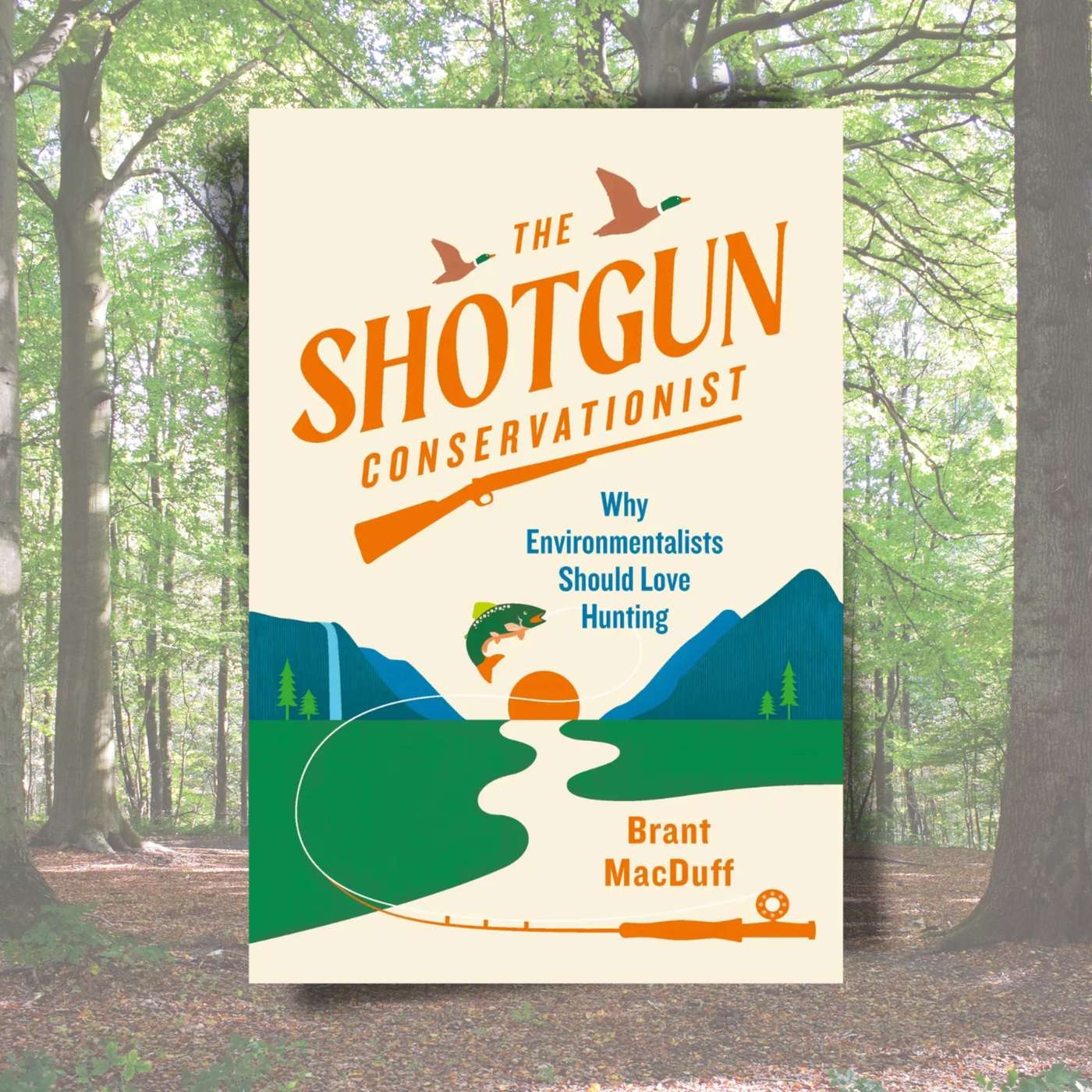
In this episode, Brett Barry talks with Brant MacDuff, author of The Shotgun Conservationist: Why Environmentalists Should Love Hunting. MacDuff describes his shift from a childhood opposed to hunting to a hunter who now argues that hunting is central to wildlife conservation. The conversation covers how license and excise-tax revenue funds conservation, the history of market hunting and how the U.S. reversed its decline in game populations, the role of regulated seasons and trapping in managing wildlife populations, what hunter education and mentorship involve, and why the “grip and grin” photograph might mislead people who don’t hunt. MacDuff also discusses gun culture, bowhunting, and his own role as a hunting mentor with Kinfolk Hunting Collective.
Frequently Asked Questions
Who is Brant MacDuff?
Brant MacDuff is a conservation educator, taxidermy historian, and author of 'The Shotgun Conservationist: Why Environmentalists Should Love Hunting.'
How does hunting help wildlife conservation?
Revenue from hunting licenses, tags, and excise taxes on ammunition goes directly into federal and state pots earmarked exclusively for wildlife conservation and habitat management.
What is market hunting?
Market hunting refers to the unregulated, commercial mass-harvesting of wildlife for meat, hides, and feathers—such as passenger pigeons and bison—which historically devastated animal populations before being outlawed.
Why is animal trapping necessary according to conservationists?
Regulated trapping helps fish and wildlife departments manage overabundant or invasive species, such as nutria and raccoons, to maintain healthy ecological balances when natural predators are scarce.
[00:00:00] Brant MacDuff: Especially if you really love animals, the idea that someone would go out with their free time to go hunting with the intention of killing an animal just made no sense to me. I didn't know why you would do it.
[00:00:17] Brett Barry: That's Brant MacDuff. He wasn't always a hunter and didn't even like the idea of it, but it was Brant's very love of animals that led him to hunting, which he argues in his book, "The Shotgun Conservationist," is key to conservation.
[00:00:33] Brant MacDuff: Your fish and wildlife department is not letting hunting happen. They're not allowing hunters to hunt and trappers to trap. That department needs hunters to hunt and trappers to trap. They want hunters to hunt and trappers to trap.
[00:00:51] Brett Barry: I'm Brett Barry, and this is "Kaatscast." If you're an avid hunter, an avid anti-hunter, or just curious about the role of hunting in the twenty-first century, Brant MacDuff's well-researched enthusiasm may just change your own consideration for the subject. Oh, and he's an excellent narrator. When I told Brant I'd be listening to the audiobook version, he suggested I listen at one point two five because the studio had him narrate slower than he wanted to. The following is a clip from "The Shotgun Conservationist" slightly sped up as per the author's direction, and then we'll jump right into our conversation about hunting, meat, conservation, and guns, and lots more. Here's that audiobook clip.
[00:01:39] Brant MacDuff: What I like about these particular bits of legislation is that they came about because sportsmen demanded the government tax them. You just don't see that every day. I like to imagine it went down something like this: Hunters and Anglers: "Hey, we want you to tax us." Uncle Sam: "What? Really? Okay! Why?" Hunters and Anglers: "Well, we've noticed a serious drop in wildlife populations all over the country. We think part of that is pollution, crappy farming practices, market hunting for meat and hides, plus some other assorted stuff. We figured, if we could pool our money, maybe you could use it to set up programs to buy up land and protect it for the animals, pay for some wildlife cops to prevent poaching, and maybe fund some research into what's happening to the animals, their habitats, and how we can bring their numbers back to what they used to be?" Uncle Sam: "So, you want your own private outdoor club?" Hunters and Anglers: "No, no. The land should be for everyone to enjoy—we'll just pay for it. We use it the most and recognize we remove some animals from it. So, we want lots of protected land for all the critters to live on. We want tons of animals, the way it used to be, Snow White-level, deer just falling out of trees 'n stuff." Uncle Sam: "Do deer live in..." Hunters and Anglers: "No. That was a joke. You need to get outside more."
[00:03:01] Brett Barry: Brant MacDuff, welcome to the show.
[00:03:03] Brant MacDuff: Thank you so much for having me.
[00:03:05] Brett Barry: Let's start at the beginning. Where are you from? Where have you been, and what brought you to the Catskills?
[00:03:13] Brant MacDuff: Oh, man, well, I grew up all over the East Coast. I was born in Long Island, but I didn't really grow up there at all. I don't remember—I have no memories of it. I grew up in a few different parts of Florida and lived in South Carolina. I went to a boarding school in Maryland. I went to college outside of Chicago and then came back to New York about 17 or 18 years ago, and I am still in the apartment that I moved into then 17 years ago, so definitely the longest I've ever been in one place.
[00:03:47] Brett Barry: And then the Catskills second place?
[00:03:50] Brant MacDuff: The Catskills I had been coming up to since I moved back to New York because I always liked to be outside, so I'd been coming up to the Catskills for just about as long. I worked at Eastern Mountain Sports in the city that was right in SoHo, and it was kind of a great place for a bunch of outdoor people to meet each other, so that became a good way to... I made lots of great friends there, a couple guys who I'm still very close to. That was a great place to meet people who also wanted to get out of the city, and it was a lot of Catskills and Adirondacks back then.
[00:04:24] Brett Barry: Yeah, so tell me a little bit about your background in the outdoors, and I know that you are a conservation educator and a taxidermy historian and a few other things, so where did that interest come from?
[00:04:39] Brant MacDuff: Well, I always liked being outside. When I was living in Florida, we lived in a safe community, and it was also the days when you were just a free-roaming kid, so I was able to just leave the house, and I would go find places to catch little snakes or turtles, things like that... try to go to the water's edge and look for manatees, so I always wanted to be outside, mostly because I was crazy about animals, and that's where the animals were, so it was my love of the outdoors that was really my love of animals and wanting to see them and wanting to be with them wherever they were. The taxidermy thing: my grandmother owned an antique store in Buffalo, and I grew up with a real love of old stuff and history through the objects that my grandma had or would show me about. So in her store, I would pick up a thing and be like, "What's this or what was this for?" And she would take me to estate sales, and I would do the same thing. I would run around looking at stuff I liked and bring it to her and be like, "What's this or what did this do?" And then they both kind of merged with my love of taxidermy, so now here was this old thing that connected me to the past and connected me to animals, and I loved that some of the pieces had such wild, intricate histories connected to us learning about species, like the early days of natural history and also the early days of conservation and learning about conservation, so I found taxidermy to be a kind of a perfect confluence and a tool for all of those things coming together—history, conservation, natural history, just sort of encompassing all those things I like at once.
[00:06:31] Brett Barry: Were you always an advocate for hunting?
[00:06:33] Brant MacDuff: No, no, when I was a kid, I was very anti-hunting, not in any real way. It's not like I was going to marches or having signs or anything like that. I was just a little kid who didn't like it, which I think is totally understandable for anyone. Especially if you really love animals, the idea that someone would go out with their free time to go hunting with the intention of killing an animal just made no sense to me. I didn't know why you would do it. I really wasn't connecting the food aspect and didn't know at all about the conservation aspect, which I think most people, those two things, also kind of miss because the first thing that comes to your mind is you are doing this on your own time because you want to, so the idea of its benefits as a part of the food cycle and the conservation cycle, I think those things get very quickly, not even lost—people don't even know to think about them. Anytime I would see an article from The Times or whatever talking about food systems in America and hunting was never included as any part of it, but it is truly the most sustainable form of food acquisition that there is, but that's absolutely not something that I was thinking about as a little kid. It was more the motivation and the idea that someone could go out and kill an animal that I just couldn't ever fathom doing.
[00:08:12] Brett Barry: What changed your mind?
[00:08:14] Brant MacDuff: Initially, I thought I wanted to be a wildlife biologist and run around the woods studying bears, or I really couldn't decide between bears or sharks, and as I was considering doing that, I just kind of thought, well, I didn't want to just know a lot about one particular species of animal. I wanted to know, how do I keep those animals around for the future? So I became more interested in conservation than species specifically, and so once I started, you know, I started studying the history of taxidermy and how that's connected to conservation, and then you started studying the history of conservation in America and around the world. It is absolutely impossible to not study and learn about hunting as a part of that, and there were, of course, really negative connections. Think about the passenger pigeon or the bison or, you know, beavers and what have you during the fur trade. Those species that we think of as being really cut down by completely unregulated hunting for the market, market hunting, and how that affected wildlife species across America. You really can't avoid that when you're studying conservation, but a part of that was also very quickly learning that, "Oh, if you just kill them all, then they're all gone," and if you want to look at it in the nice way, you say, "Oh, well, we want these animals around. We don't want them to all go away," and then if you look at it from the more just, like, purely from the market, "Oh, well, you're getting rid of your entire market." They're gone. You can't sell them if they're all gone, so for a variety of reasons, there was a big push to be like, "We don't want this to go away, so what do we do to make sure that this never happens again?" And that was actually kind of a new thing. America's so young, relatively, that we actually were able to make that pivot relatively quickly. We saw, oh, if we hunt them all, they all go away. Let's stop. Let's implement. Whereas a lot of other countries, they just killed off all their animals. They cut down all their trees, and then that was it, and so America was actually able to make that pivot very quickly, and today America has the most robust conservation system as a part of its laws and government and the way money is connected to it, more so than any other country.
[00:11:07] Brett Barry: That's surprising to hear, and it's a nice surprise, and by "market hunting," you mean I can't go out and shoot ten deer and then sell them at the farmers market. I'm not able to benefit financially from hunting.
[00:11:21] Brant MacDuff: Yes, that was the whole idea: market hunting was for the market, so if you were a market hunter and you focused on waterfowl, you know, you would go out to the wetlands, and you might have this little boat with a punt gun on it, which is basically this—you can either call it an enormous gun or a tiny cannon, and it's on the front of your boat, and you could just blow away scores of ducks at once. When they would go to capture passenger pigeons, they would cut down portions of the forest and create these wild swinging rigs that would swing around and catch all the birds at once, and they would box them. They would put them in crates, and then they would put the crates on the train and send those to market because if they were alive, they were fresher when they arrived at their destination. The bison... initially, they were taking the pelts or the robes and the tongues, and that was kind of it. They didn't even take the meat, and so that was all taking, taking, taking, taking from nature and nature getting absolutely nothing back, and also in these amounts that were just too many and no regard for how the species would replenish itself, so if we look at deer hunting today, there are very particular seasons, and depending on where you are, there are very particular regulations on... "Can you shoot a doe or a buck? Are there age restrictions?" And that's all set up by local fish and wildlife, who are determining the health of the population, whether or not that population needs to be thinned out a little bit and made smaller, or... "Are they trying to maintain the population exactly where it is?" So it's very zoomed in on local areas to make sure that the localized population is maintaining or growing in population and population health, but, yes, the market hunting was just to take anything, take as much of it as you can, and do it all at once, and then sell it, so if you look at market hunting in other countries, basically we just call that poaching now, so bushmeat poaching in Africa, poachers set out different traps, snare traps, and the idea is it doesn't matter what walks into it, so taking anything as much of it as you can, and then selling it.
[00:14:00] Brett Barry: All of this is detailed in your book, "The Shotgun Conservationist: Why Environmentalists Should Love Hunting," and in the introduction, you write: "To those both curious and ambivalent about hunting..."
[00:14:14] Brant MacDuff: If you compost, drive a hybrid or electric car, enjoy being outdoors, get your groceries from a farmer's market, pride yourself on buying regeneratively raised, 100% grass-fed beef or bison and sustainably sourced wild-caught Alaskan seafood, want to be more self-sufficient, and love animals, then you're in the right place. You are primed to become a hunter or hunting advocate.
[00:14:48] Brett Barry: We'll get into some of the reasoning behind that statement, but I'm curious what inspired the book in the first place.
[00:14:54] Brant MacDuff: So I had come from a place that I think a lot of people come from, which is this sort of skepticism or just blatant dislike of hunting, and the reason for that skepticism or blatant dislike is I think that same reason that I felt when I was a little kid, which was just, well, why would you want to go specifically and kill an animal? Why is that the thing you want to go do? I couldn't get past the motivation, and because I couldn't get past the motivation, I was nearly unable to look at anything else connected with hunting, and it was only my years of studying wildlife conservation that you just can't avoid it. You can't avoid hunting and its connection to conservation and its connection to our food structure. Why do you buy your food from the farmer's market? It's not even necessarily cheaper anymore to buy from the farmer's market. Why do people do that? Well, they want to support their local communities. There's this understanding that the food is coming from a process that is less environmentally detrimental than these enormous monocrop farms that are owned by these multi-billion dollar conglomerates, and so, basically, the answer is you're thinking local, and you're thinking about, "Okay, where does my money go? Who is my money supporting?" And when I kept going through this sort of scale of how environmentally responsible can I be, well, I thought about, okay, what is hyperlocal, and where does my money go? If I'm buying something from my local farmer, okay, I feel good about directly giving them my money. When I buy my hunting license, where does that money go? With all of the licenses and equipment that I need to go hunting, that money goes back into local and federal conservation funding. There's just no other food, not even meat, and no other food that I can buy that goes directly back to nature, so I am paying Mother Nature to just keep doing Mother Nature stuff, and I just couldn't think of a better place for my money to go, and then when you read about hunting, everyone talks about, like, "Oh, the connection to nature and being one with the..." And you kind of don't believe it or you don't understand it or how it could be any different than just going for a hike that day, and it wasn't until I started hunting that immediately you feel that... that it is a much different connection to nature because instead of passing through nature, walking through nature, and truly enjoying it, you know, the Japanese would call it "forest bathing." When you're hunting, you really have to. If you want to be successful, you really have to be able to look around and understand nature's signs. What is nature telling you about every plant or rub or scrape, or what's the food doing? What kind of droppings are you seeing, and what little pathways are there? So it makes you look at nature in a different way, and that really makes you feel more responsible for it in a way because season after season, you see how the environment is changing and become really connected to that.
[00:18:41] Brett Barry: And when you talk about the money going right back into conservation, that's a big theme throughout the book. This money comes from hunting licenses, tags, and even ammunition, right?
[00:18:52] Brant MacDuff: Yeah, so there's the sort of direct funding, which would be something like your license, so you're paying for your license, and if you're in a state, your license will generally be much less expensive than if you are out of state, and that's a way to bring in more revenue for those conservation programmings, and also make sure that if you're hunting from out of state, oh, well, it's a privilege. You want to come into our state and go hunting, then you will pay for that privilege, whereas if you are local to that state, the idea is to give access to people to go hunting at a really, I think, it's like $22 or something if you're an in-state [New York] hunter for your license, so to grant access to people who are in-state and then get revenue from people who are out of state, so there's that sort of direct form of funding. Also, I would categorize the duck stamp, the federal duck stamp, as a very direct form of funding. Now, this is a stamp that anybody can buy. I always recommend everybody buy one. They're 25 bucks at the moment, and 98 cents of every single one of those dollars goes directly to the purchase and maintenance of usually wetland habitats, so if you've ever been to a national wildlife refuge system, that space was largely paid for with duck stamp dollars. You are directly funding the government to do that work. That was a stamp that was created by hunters for hunters to make sure those spaces were protected, but anybody can buy one, and if you are a duck hunter, you must buy one. In terms of the purchaser, less direct funding methods, which, as you say, are ammunition, so let's say I buy a box of ammunition and it costs 60 bucks or something. 11% of that is an excise tax. Now, you, the purchaser, don't see that. It's already been built into the cost, but that money goes into a federal pot that then gets doled out to the states, but it is earmarked so that it can only be used for wildlife conservation.
[00:21:14] Brett Barry: What are the consequences environmentally, conservation-wise, and from a human health perspective across different scenarios, going to the supermarket and getting a shrink-wrapped piece of beef versus going to a farm and buying a piece of meat directly versus hunting? And also, I realize that not everybody can do this. Not everybody is going to hunt, and probably if they did, the whole system would collapse.
[00:21:42] Brant MacDuff: Yeah, absolutely, not everybody can hunt, not everybody wants to hunt, and that's totally fine. I think what I'm trying to have people see is [how close can we get to nature or mimicking] what nature does anyway, so let's say Tippy Tippy Top is you go out and you kill a white-tailed deer. Okay, you've paid your excise taxes and your license, and that money went to conservation. You brought home all that meat. Great, not everybody wants to do that. Not everybody can do that. Fine. What is next? What is next to nature just doing her thing? So next to that, especially if we're talking about meat, is regenerative agriculture. It's, you know, a hot term, but if you look at something like bison, I like to encourage people to buy bison. They live in places that benefit the soil. Bison create their own ecosystems by moving through landscapes. Their enormous bodies and heavy feet, they kick up the dirt, and they churn up the soil. They're taking these enormous dumps, and then the bison behind them is churning that right into the soil. They are fertilizing the soil. They're creating these microclimate habitats that bring in the insects. The insects bring in the birds, and now all of a sudden you have an ecosystem, so then what comes after that? Well, regenerative grazing is basically how can we graze cattle that mimics bison or that mimics what nature does, so instead of having a bunch of cattle just sort of free roam your property all over the place, what is done is that property would be segmented into spaces. You would move your cattle from one paddock, let them eat to their heart's content, and then you move them to another paddock, and you keep doing that, and so if you started with paddock number one, by the time it gets to paddock number ten, the grass and the soil have recovered in paddock number one, and it's able to regenerate, so you're basically mimicking the way those animals move through the landscape the way nature would. If you see, quote-unquote, "wild game" on a menu, kind of going back to our discussion of market hunting, if you are at a restaurant and you see elk or venison on a menu, those are from farm-raised, pen-raised animals. They do nothing for the environment especially, and they can often get wild animals sick. Pen sheep can get wild sheep sick, and they can bring that sickness up into the mountains with them. It's a big problem, so I like to focus on animals that are either truly wild or animals that are sort of the bison that are owned by someone, but they're kind of living their normal life the way they would anyway, so it does require a little bit of an annoying education on where did this food comes from. What is it? I think there are a lot of people who just assume that seafood must be more environmentally friendly than land animals or something like that, and that kind of couldn't be further from the truth. When you look at seafood, it is really the market hunting of today. You go out into the ocean. You take, take, take, take, take. Nothing is going back, whereas you get to be that sort of selective with wildlife and with meat animals on land.
[00:25:38] Brett Barry: You talk about trapping in the book, too, and you advocate for it, and I think a lot of non-hunters or even anti-hunters would say, "Oh, okay, well, if you're going to take a deer and eat it, that's one thing." Not every animal is...
[00:25:56] Brant MacDuff: A meat animal like a—yeah, sure, okay, so we'll let me get to that. Let me get to that for sure. I mean, first of all, yeah, they kind of are, but sure.
[00:26:05] Brett Barry: But nobody's eating coyote meat, right?
[00:26:06] Brant MacDuff: Right, no, no, not so much. So now we're talking about what is it [that we get from the animal], and what place does that type of hunting or trapping have to do with conservation and wildlife management? I think there is also a misunderstanding of what is wildlife management, and do we need to do it? Can't we just let nature do her thing? Why do we have to intervene? And really, the answer is, well, we have intervened in the absolute middle of nowhere in Alaska. There is enough space where you can actually see nature's cycles take place in a way that hasn't been as screwed up by people. There are definitely areas where it has, and you can see that, but pretty much everywhere else in America, you can see, "Oh, these habitats have been squeezed so much that that cycle—it can't really take place the way that it would normally," and because there are fewer hunters and definitely fewer trappers, you can see imbalances in wildlife populations and certain particular species, and how do those species respond to changes in predator populations? Or was it a really wet season, and then the turkey population didn't do very well? When it comes to wildlife management, your fish and wildlife department is not letting hunting happen. They're not allowing hunters to hunt and trappers to trap. That department needs hunters to hunt and trappers to trap. They want hunters to hunt and trappers to trap. They are the governing body who organizes it, but if you think about those departments, they're very small. They cannot be everywhere all the time. All they can do is... they collect data. They see where populations are doing really well. They see where populations have maybe gotten too big for the carrying capacity of the land or where populations are not doing well, and they will make decisions about what hunting and trapping is allowed in those areas based on that data, and at the end of the day, that is how they use hunters and trappers to manage population levels of species, so if you look at California, they outlawed trapping, so no more trapping. They didn't want people to buy trapping licenses and go out trapping. Well, California has a nutria problem, like a lot of other states. Nutria are adorable giant rats if you like giant rats like I do, and they are invasive. They're really not good for the habitats that they invade. We almost lost the Chesapeake Bay Watershed System due to the way-overabundance of invasive nutria, and so you have to have trappers come in and trap them. Well, California gets rid of trapping. Those were people who were willing, not only willing, but really wanted to go trapping, so they would trap nutria. They would pay the state of California for the privilege to do it, and then they would trap the nutria, and they would be able to sell nutria hides, so once you get rid of trapping, what happens? Well, those nutria still need to be trapped, and then what ends up happening is the Fish and Wildlife Service of whatever particular state goes, "Well, I don't have the time to do this," so you're either taking up their valuable time where they really should be focused on other big-picture work, and so either they have to do that using their own time and their own money that is coming out of that conservation programming, or they will pay some organization, some group, to come in and do the trapping for them, so in one fell swoop, if you outlaw trapping, you are getting the exact same number of animals trapped. That's not changing, but now the difference is you, the taxpayer who voted to outlaw trapping—you are now the one paying for that to happen instead of a trapper buying a trapping license, paying into the conservation system, and that money being earmarked for wildlife conservation, so while we don't eat the coyote or other animals that get trapped, there is an understanding of how many of these animals—what is the trapping allowance, let's say, for not even just a state, but an area within a state—how many people do we need trapping to make sure that those wildlife populations are in balance with each other? If you have too many raccoons, you could really hurt the turkey population. No one wants to make the raccoons go away or the coyotes go away, but those species, those populations, need to be in balance with one another [so that's small predators, large predators, and larger herbivores], so it's all about keeping the balance, and the fish and wildlife conservationists, wildlife biologists, and ecologists using hunters and trappers to kind of, quote-unquote, "Do the dirty work for them and pay into the conservation system while they do it."
[00:31:56] Brett Barry: And as you say, because of human activity, there is no true natural balance anymore, so we're rebalancing, or the fish and game departments are orchestrating some type of rebalance based on the amount of tags that they issue for certain species.
[00:32:12] Brant MacDuff: Yep, absolutely, so they are very, very agile. It's really cool, certainly the most agile part of government that I can think of, but that can happen season by season, so one season you might be allowed two turkey. You might be issued two turkey tags, and then they could say the next season, "You know what? We're not happy with the population levels. We're going to drop it down to one, so then you would be issued the following season just one turkey tag, or maybe they change the season dates." If there's an area where they have way too many deer and the deer are really causing a problem for forest regeneration, they could say, "Oof, we really need to thin out the deer herd in this one area. We are going to make sure that we have a really long season, and we want people to shoot does. We're going to remove antler restrictions. We're going to encourage people to shoot does," so they have the data to back up and say, "Here is how we want to manage the population and the wildlife in this one specific area." It's hyper-localized, which is truly part of the success of the whole system.
[00:33:28] Brett Barry: Some people think of hunters as gun nuts and yahoos, and there are certain political preconceptions as well. Can you give a sense of who really is hunting?
[00:33:41] Brant MacDuff: Oh, man!
[00:33:42] Brett Barry: You're a hunter.
[00:33:43] Brant MacDuff: Pardon me?
[00:33:43] Brett Barry: You're a hunter.
[00:33:44] Brant MacDuff: I am a hunter. Yeah, I am a hunter myself, and I will speak for some of my friends. We love our hunting guns, and we do nerd out about them. In the book, I kind of just compare them to shoes like, look, even if you're not Imelda Marcos, even if you're not a shoe nut, you have a pair of shoes that are for hiking, and you have your city shoes, and you have your flip-flops, and you have ... They perform different functions, and the way hunters think about their guns—there is definitely that. "Okay, this is my gun for a small game. This is my gun for turkey. This is my gun for..." So they have different purposes, and that could be a shotgun or a rifle. What caliber is it? All these different little factors, and then from there on, for sure people nerd out about, "Oh, well, this one's from the '80s, or this one came from this manufacturer," so people will nerd out in the same way they'll nerd out about anything, so that absolutely happens with firearms. The difference, and, you know, if we want to get straight to the sort of culture and how the culture of guns has changed in America, I would recommend people pick up a book called "Gunfight" by Ryan Busse, and that book really illustrates from an insider who worked in the firearms industry for years how gun culture has changed in America. Back in the day, the NRA was just an organization that taught gun safety and hunter safety. Kids had target shooting teams in school. It was just another thing connected to hunting and learning firearm safety, and as we got fewer and fewer hunters, he posits that the industry, which was interested in continuing to make money, had to find and/or create a new market of gun owners, and that is where you start to see the difference and the split between the hunters and the guns that the hunters own and the way hunters think about their guns as a tool, and this sort of new market of gun ownership and gun manufacturing and production, which was that sort of like home defense and the sort of military style and assault rifle and handgun segment, and so I think when a lot of people hear the word "gun," that is what they think of. They think of some atrocity in the news, or they think of some yahoo with a bunch of military guns in their closet, and the hunter kind of gets lost in all of that. People don't really think about the hunter anymore when they think of guns, so my relationship to guns is totally different. I grew up shooting sporting clays with my dad. I still love to shoot sporting clays. I think anyone can have a really good time going out and shooting sporting clays. It's like golf in the sky with guns. It's super, super fun, and if you've ever enjoyed a target game at an amusement park or whatever, it's really a lot of fun. That's how I grew up shooting and became comfortable with guns, but those are the types of guns that I am shooting and that I am interested in, and I think when you see something terrible happen in the news, it's not a hunter with a 28-gauge shotgun. You know, it is someone who is wielding a handgun or some sort of military-style assault rifle, and so gun and guns just become this sort of one word that encompasses everything, and I'm all for gun control. I just wish there were hunters and actual gun owners involved in that process, so like right now in New York State, I have to go through a full background check just to buy ammunition. It could be a single box of 12-gauge shotgun shells or something like that that I'm using to go sporting clay shooting, whatever. One box—I have to go through a full background check.
[00:38:00] Brett Barry: Is that a bad thing?
[00:38:01] Brant MacDuff: Yeah, I think so. It's just an annoying thing that probably makes me look even crazier because when I go to buy firearm ammunition, now I'm buying—well, I'm buying a ton all at once because I don't want to do it again. It's a pain in the... I got to wait the... however long it takes. I got to fill out this form and give it to them. They got to look it up on the computer. You got to wait for the information to come back, and then they can sign off on it. You know, it takes half an hour at least, and to what end? Now, I've just bought a whole case full because I don't want to do it again, so I buy crazy huge amounts more than I would normally, or I will go to a different state because it's just easier, so that's the thing with that state and those state-by-state regulations. I don't know that they necessarily do anything because you can just go, go do it in another state, but it is a huge pain in the butt, and I will buy it in a different way than I would otherwise.
[00:39:07] Brett Barry: The tools hunters have today have evolved, so there are semi-automatic rifles and laser rangefinders and GPS and trail cameras that are cell-enabled. Is that still fair chase?
[00:39:22] Brant MacDuff: So yeah, there is a lot of new gobbledygook. Trail cameras—I'm kind of on the fence about—certainly, people have taken a hard stance against any kind of drone footage, anything like that. In some instances, the thing that is most important to me. If I'm going hunting with the intention of killing an animal, what is the fastest way that that animal will die? That is the thing that concerns me most: nobody wants an animal to suffer. Anytime a hunter goes out, they want to take a really good shot, whether that be with a bow or a rifle, shotgun, or what have you, but they want that animal to die quickly, and so when I think about evolution in gear, it's funny because a lot of people, especially new hunters, they're really interested in bow hunting. They want to become bow hunters, which I think is great. I am a bow hunter. I use a vertical bow. I use a crossbow, but the amount of... I want people to really understand the amount of work that goes into being a bow hunter in terms of preparation and practice in order to get a shot that you really feel good about, and also an understanding that there are way fewer shot opportunities that you will be allotted if you truly want the best shot. A rifle has a lot more room in terms of "What is the space that you can make a good shot on an animal and be highly effective at killing that animal very quickly?" That window is much narrower with a bow, and it is also much more difficult for the hunter, and so I think there's a lot of... not misunderstanding, but sort of this idea that I'm a new hunter. I want to do it in this sort of traditional way, even though a vertical compound bow is unrecognizable from some traditional bow of 400 years ago [but people choosing a bow] because they think of it as more ethical in some way versus a firearm. We have been using firearms to hunt for a very long time, and so that's as traditional a method as any other, I believe, but I think it comes down to... that's the thing that concerns me: what is going to kill that animal quickly and something that is more reliant on me understanding where the animals are and how the animals are moving versus a technology? So that's kind of why I'm on the fence about trail cams. I definitely like them. They're definitely cool. I love it when my friends show me like, "Look at this bobcat or look at this." You know, you see really cool stuff on them. I think they're a fun thing. If you have a backyard or if you have a little piece of property, they're a fun thing to have on your property, so I don't necessarily have a problem with them, but certainly drones are out, and there are other technologies that I think a lot of hunters have said, "Well, this just kind of takes away the point of me connecting with nature."
[00:42:41] Brett Barry: And hunter education and mentorship has to be part of it, right? You say in your book you can't just get a license and go out, so what is that like? If I'm not a hunter and I want to try it, what all is involved in that?
[00:42:54] Brant MacDuff: So technically, you can go get a license. Well, you can go get a license after you have gotten your hunter education, so hunter education has really evolved. Today, it's really more hunter safety. A lot of states will call it "hunter safety," and that is making sure people understand their firearm or their bow, how to use it safely, and how to move through the woods safely with a bow or a firearm. If you're hunting with people like duck hunting or upland hunting for, like, pheasant, how to walk through the woods with someone next to you and make sure you don't shoot them in the face like Dick Cheney, so...
[00:43:35] Brett Barry: Exactly who I was thinking of.
[00:43:36] Brant MacDuff: Exactly, yeah, so how do you get in and out of your tree stand safely? The majority of hunting accidents and injuries come from someone falling out of a tree, so how do you act safely in the woods? It's very little about... "How do you hunt?" That is a very tiny portion of hunter ed, so you take your hunter ed, you pass, and now you can buy your license. What next? Certainly, the internet is full of good instructional videos on what to look for, how to move through the woods, and things like that, but it really does not compare in any way to real mentorship, and that's another reason why we've sort of seen a drop in the number of hunters throughout the country. It used to be that someone in your family taught you how to hunt. Usually it's dad or grandpa or something like that—someone in your family taught you to hunt, and then you learned and then hopefully kept at it yourself. I did not grow up in a hunting family, so I never learned to hunt that way, and it can be difficult to find mentorship. There are way, way more... even from before when I was writing the book, just from then to now, over the course of a few years, way more options and resources for people. With a few Googles, you should be able to get on the right track, but there are groups depending on where you are. Backcountry Hunters & Anglers is nationwide, and also your state and your local fish and wildlife office—they often have connections to people or have an idea of who you can connect with to learn and get mentorship. Here in the New York City-Catskill area, I am a hunting mentor for a group called Kinfolk Hunting Collective, and we really focus on people who are in or around the city who are interested in hunting, and there are a lot. We have way more people [apply to our programming] than we have mentors to take them out, and we always have a one-to-one mentor/mentee, and so we're trying to figure out how we can grow to meet the demand, but there are a lot of people who are interested in hunting. I don't have a quick, easy answer for finding a mentor, but they are out there. You can find them, but, yes, you have to do a little bit of Googling. You have to search around for mentorship, but it makes a huge difference not just in the education that you get on the ground but also meeting and building that community of hunting buddies, which is incredible. I love duck hunting, but I am too lazy to have all the duck hunting gear. You got to be a real gearhead if you want to get into duck hunting in a big way, so it's great to meet those duck hunting nerds who have all the crap, and then you can go hunting with them, and duck hunting is fun because it is very community and social, whereas deer hunting can be a little bit more isolating, but you still want that community or to have a deer camp with friends going out, so community is a big part of it.
[00:46:54] Brett Barry: Do you think that someone wanting to dip their toe into this would be intimidated by what they perceive as a less than diverse demographic?
[00:47:06] Brant MacDuff: Yeah, and that's something I try to touch on in the book, and when I talk about this stuff, it's that there are organizations that focus on diversity so that people can find a place where they feel really comfortable. Kinfolk focuses on being a really diverse group of people so that anyone—people who are younger women, people of color, or queer folks—that everybody can really feel like they are coming into a comfortable space and community, but especially within the city, there are much younger cohorts becoming involved, and I think you see some of that diversity spread just as sort of a piece of that younger generation becoming interested and involved, but, again, with a little bit of online searching, you can find those groups that are more geared towards a diverse crowd. I really don't want it to be a reason people avoid hunting or are nervous about becoming involved. There are places I know, from looking myself, that there are those groups and there are those people, even just one-on-one mentors who are really interested in expanding hunting to anyone who's really interested in it because sort of the old guard of hunters, the majority of those people that I've been lucky enough to meet are really more interested in, "Oh, who can I share this with? Who can I pass this down to?"
[00:48:48] Brett Barry: As someone who doesn't hunt, can you help me understand the psychology of the grip-and-grin?
[00:48:56] Brant MacDuff: Sure, oh, yeah.
[00:48:57] Brett Barry: And explain what that is.
[00:48:58] Brant MacDuff: So the grip-and-grin would be, if you think, if I say, "Picture a hunter," you might—this might be the image that you think of, which is some photograph of a hunter kneeling beside an animal they've shot, you know, a picture of a white-tailed deer, and holding that head up maybe by the antlers with a big smile on your face because you've been a successful hunter. Now, when I grew up, that was the image that I had in my head, and part of why I didn't like hunting because, again, it seemed like this was the beginning and the end of the whole thing. Here is a person who is really psyched that they just killed an animal, right? It feels really gross when you think about it that way, and I understand how people think about it that way because that is the only image that they see from that entire scenario, so the thing I want people to understand is there are a whole lot of photographs that don't get taken beforehand and after, but the grip-and-grin is that photograph, and what people don't see in that photograph is the most important part. That is all of the money and time and preparation that went into going on that hunt, and then after that photograph is the "Okay, well, now I've got to drag this deer out of the woods with my own two hands. I've got to take it home and butcher it. You know, what does that look like, and now how much meat is in my freezer, and I'm sharing it with people, and here..." So from one hunter to another hunter, the grip-and-grin: we like those photos. We like sharing them and saying, "Look, look," because the other hunter that you're showing it to—they understand everything that went in before and everything that's going to happen after. We understand that part 100%, so we don't need to see that or even talk about it that much. We get it. The part that we don't know is, what did you get? You know, any angler might do this, too. "Here's this brook trout I caught. Oh, here's a tiny little brook trout, but look how bright his colors are," or like, "This is a monster. This is the biggest trout I've ever caught in my life," and we still show those photos. It's the exact same thing, so angler to angler or hunter to hunter, we know we understand what went into that, and so it's just sort of that like, "Oh, wow, cool," or the other day I saw a photo of a friend who had shot a deer during—we're in archery season, and the deer had really wild antlers. I've never seen antlers grow like this. It could be because the deer was in an accident when it was younger that will often affect how their antlers grow, but it had these three crazy vertical spikes on one side, and the other antlers were turned down, and it was crazy looking, and so, yeah, we share these pictures a lot. It is unfortunate when the person who doesn't know—doesn't understand all the before and all the after—they see that photo, and that's really the only takeaway they have: it is here that someone who is psyched they just killed an animal, and if I am successful when I go hunting, I am really proud. I am really excited. That's meat I get to put in my freezer, and that is sort of proof that I did something right that day.
[00:52:23] Brett Barry: What are you most looking forward to this hunting season?
[00:52:27] Brant MacDuff: There's nothing like the first time I went out by myself and successfully shot a deer. That was incredible, but also I enjoy going out with my friends and making a plan with my friends, and we might all start at the same camp, and then we go our separate ways that morning and again—that community aspect of it, and when someone does come back to camp with a deer, it does sort of feel like an almost this primitive feeling of... "Wow, this is something people have been doing and feeling for all of humanity: going out as a hunting party with your tribe of people and then coming back home to camp and sharing stories around the fire. That is something that is truly unchanged in the human experience, and it's a really cool thing to be a part of," so it is that as much as I enjoy the escape and being in nature by myself and connecting to the wildlife and the landscape on my own, there is also that community feeling of it that is so wonderful to share [and then bringing home the... bringing home meat] and sharing meat with friends. They're my friends who do not hunt and have no interest in taking up hunting. They are thrilled when I bring home venison and can share that with them, and so it is that sharing and community aspect of it that I have grown to love and understand more than I had when I started hunting merely as a way to bring home environmentally and ethically sourced food. Now, it has become a much richer part of my life.
[00:54:17] Brett Barry: "Kaatscast" is a production of Silver Hollow Audio. This interview was recorded by our production intern, Elana Healy, and transcribed by Jerome Kazlauskas, and I'm Brett Barry, your host and producer. "Kaatscast" is distributed freely on all the podcast platforms, including Apple Podcasts and Spotify, with a full episode archive at kaatscast.com. Just because it's free to listen doesn't mean it's free to produce, and that's why we're so appreciative of our listener members and community sponsors. Find out more at kaatscast.com/support, and connect with me anytime on the contact page.


